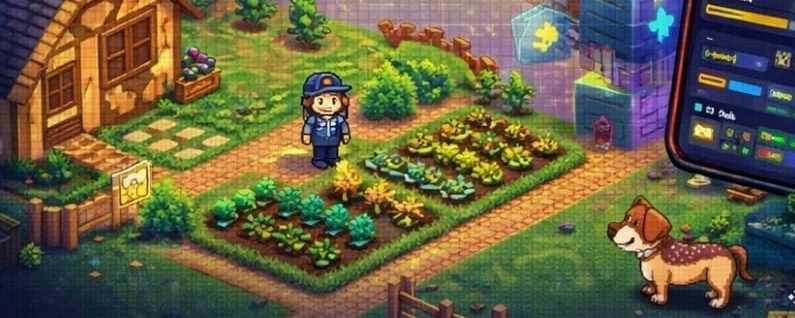
@Pixels $PIXEL #pixel The word "Pixel" is a portmanteau of "Picture" and "Element." Just as atoms are the building blocks of matter, pixels are the fundamental units of every digital image, video, and display we interact with today. Whether you are scrolling through social media, watching a 4K movie, or playing a high-end video game, your experience is being constructed, one tiny square at a time.
1. The Anatomy of a Pixel
At its simplest, a pixel is a point of programmable color. However, beneath the surface of your screen, a pixel is a complex intersection of physics and light.
The RGB Model
Most modern displays use the RGB color model. Each pixel is composed of three sub-pixels: Red, Green, and Blue. By varying the intensity of these three primary colors of light, a single pixel can reproduce millions of different shades.
Additive Color: Unlike paint (which is subtractive), pixels use additive color. When all three sub-pixels shine at 100% intensity, the result is pure White. When they are all off, the result is Black.
Bit Depth: The number of colors a pixel can display depends on its bit depth. An 8-bit per channel system (24-bit total) allows for 2^{24} or approximately 16.7 million colors.
Display Technologies
How a pixel is physically created depends on the hardware:
LCD (Liquid Crystal Display): Uses a backlight that shines through liquid crystals and color filters.
OLED (Organic Light Emitting Diode): Each pixel produces its own light. This allows for "True Black" because a pixel can be turned off completely.
2. Resolution and the Race for Density
In the early days of computing, pixels were large and visible—a look now celebrated as "Pixel Art." Today, the goal is often to make pixels invisible to the human eye.
Understanding PPI (Pixels Per Inch)
Pixel Density determines how sharp an image looks. A 50-inch TV with 1080p resolution has a much lower PPI than a 6-inch smartphone with the same resolution.
The Retina Standard: Coined by Apple, this refers to a density where the human eye, at a typical viewing distance, can no longer discern individual pixels.
3. The Megapixel Myth in Photography
In digital cameras, a Megapixel (MP) represents one million pixels. While higher MP counts allow for larger prints and more cropping flexibility, they do not always equate to better "quality."
Sensor Size: A large sensor with 12MP (like those on pro cameras) often produces better low-light photos than a tiny smartphone sensor with 108MP because each individual pixel is larger and can "catch" more light.
4. Pixel Art: From Limitation to Aesthetic
In the 1980s, artists had to work with grids as small as 16 \times 16. This forced a style where every single pixel had to be placed with intent.
Today, Pixel Art is a thriving movement in indie gaming (Stardew Valley, Celeste). It evokes nostalgia while proving that you don't need billions of pixels to tell an emotional story.
5. The Dead Pixel: A Digital Tragedy
A Dead Pixel occurs when a transistor fails, leaving a permanent black spot on the screen. A Stuck Pixel happens when one or more sub-pixels stay permanently "on," resulting in a bright red, green, or blue dot. In a world of millions of pixels, a single failure can be a glaring distraction.
Character Profile: "Vector" the Pixel Paladin
To give a face to this technical concept, meet Vector, a character designed to represent the life and struggle of a single pixel.
Name: Vector (Element-01)
Species: Digital Sprite
Role: The Guardian of the 1080th Row
Appearance
Vector is a perfectly square, glowing entity. He doesn't have a fixed color; instead, his "skin" shifts constantly through the RGB spectrum. When he is excited, he glows a vibrant Cyan; when he is resting, he dims to a deep Indigo. He wears a translucent "Glass Shield," representing the protective layer of a monitor.
Backstory
Vector lives in the Great Grid of Silicon, a sprawling metropolis of 2,073,600 inhabitants. He is part of a "Triad" with his two best friends: Rojo (the impulsive Red) and Vert (the calm Green). Together, they occupy a single coordinate on the screen.
Personality
Precision-Obsessed: Vector hates "Blur." He believes every edge should be sharp and every color should be accurate.
Team Player: He knows that alone, he is just a tiny dot. He only finds meaning when he coordinates with his neighbors to form a shape.
Resilient: He endures millions of refreshes every second without complaining.
The Conflict
Vector's greatest enemy is The Artifact (compression noise) and the dreaded Ghosting Effect. His life’s mission is to stay "In Sync" with the Refresh Rate. If he falls out of time, he risks becoming a "Stuck Pixel," frozen in a single color forever—a fate worse than deletion in the digital world.
Special Ability: "Gamma Burst"
When the user turns the brightness to 100%, Vector can emit a blinding white light by syncing perfectly with Rojo and Vert, sacrificing his energy to ensure the image is seen even in direct sunlight.