
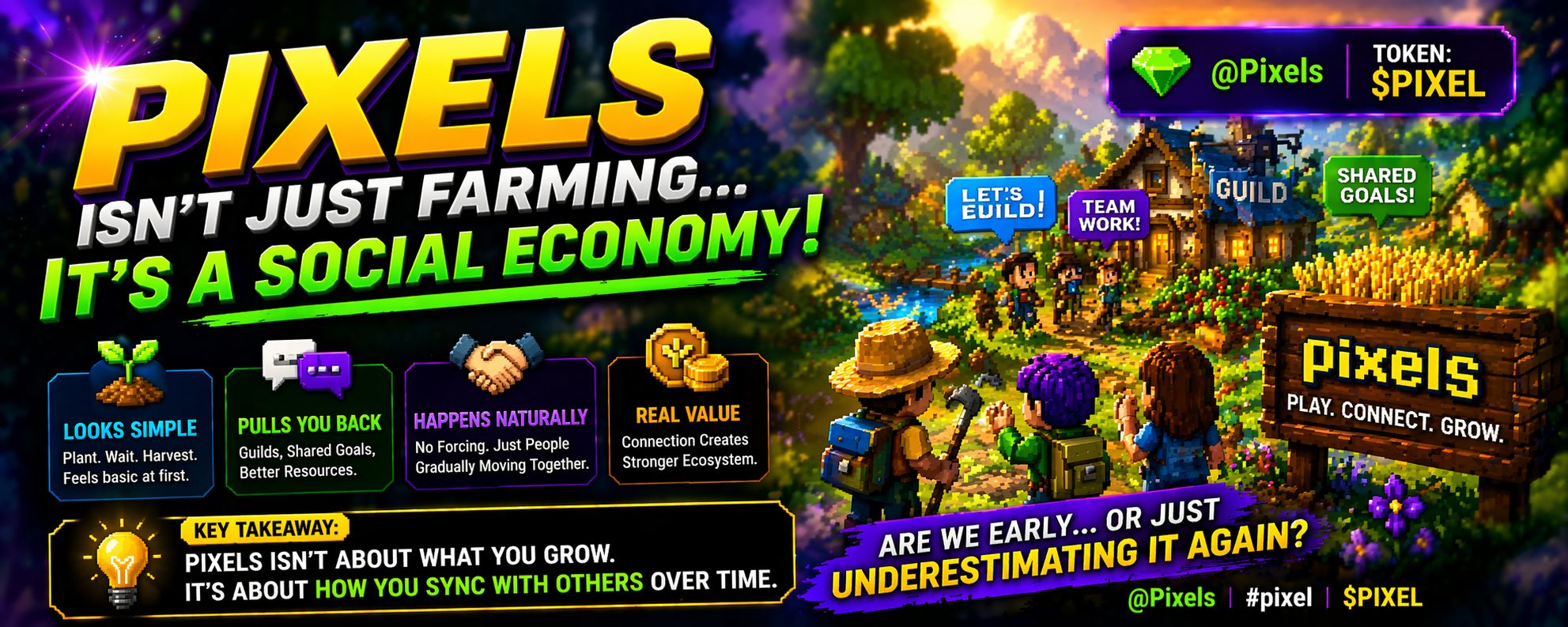
At first glance, Pixels looks simple. You plant, you wait, you harvest. That loop feels familiar, almost too basic to stand out in today’s Web3 gaming space. I had the same thought in the beginning.
But after spending more time, something starts to shift.
The farming itself isn’t what keeps people coming back. It’s what forms around it. As you progress, your actions begin to overlap with others—shared spaces, resource competition, small collaborations. Without forcing it, the game slowly turns into a social layer where individual progress connects with a wider network.
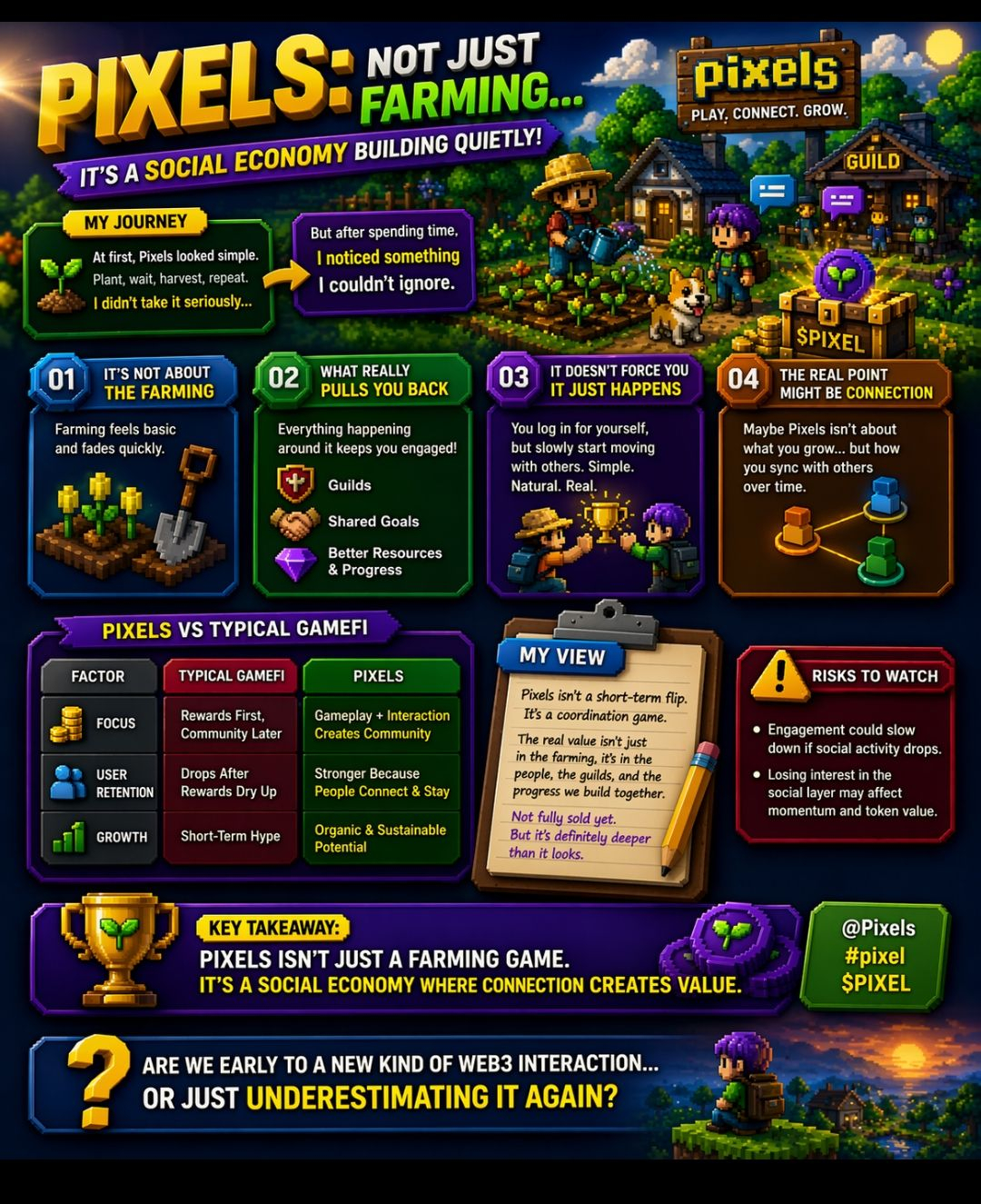
This is where @Pixels separates itself from typical GameFi projects. Most games rely on rewards first and community later. Here, the interaction grows naturally, and that creates a different kind of retention.
This is important from the standpoint of ecosystems. In contrast to tokens motivated solely by transient incentives, this strengthens the foundation of $PIXEL.
Still, it’s not risk-free. If engagement slows or players lose interest in the social layer, momentum can fade. So it’s something to watch, not blindly trust.
My view: Pixels isn’t about farming. It’s about coordination. And that’s where the real value might be building.
So the question is—are we early to a new kind of Web3 interaction, or just underestimating it again?


#Kalshi’sDisputewithNevada #CharlesSchwabtoRollOutSpotCryptoTrading