
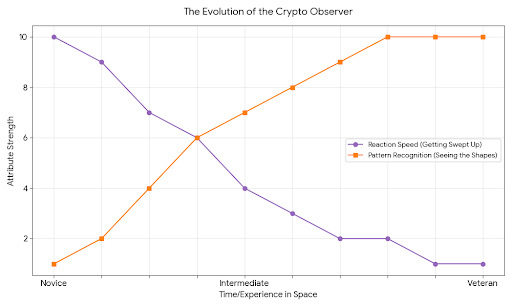
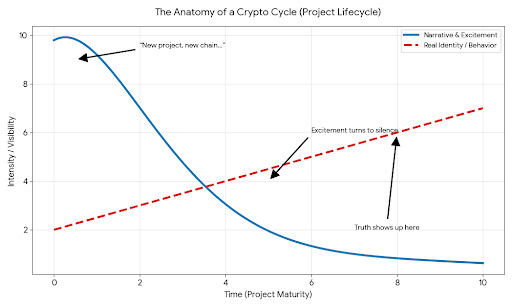
I’ve been around this space long enough now that I don’t really get swept up the way I used to. I notice things earlier, but I also trust them less. There’s a kind of pattern recognition that builds over time in crypto—you start to see the same shapes repeating, just dressed in different language. New project, new chain, new narrative… but underneath it, it often feels like the same cycle trying to restart itself again and again.
At first it all looks different, of course. Every project does. The wording is sharper, the ideas feel “new,” and there’s always that sense that this time something might actually stick. But experience has a way of slowing your reaction. You stop taking things at face value. You wait a bit longer before forming an opinion, because you’ve seen how quickly excitement can turn into silence.
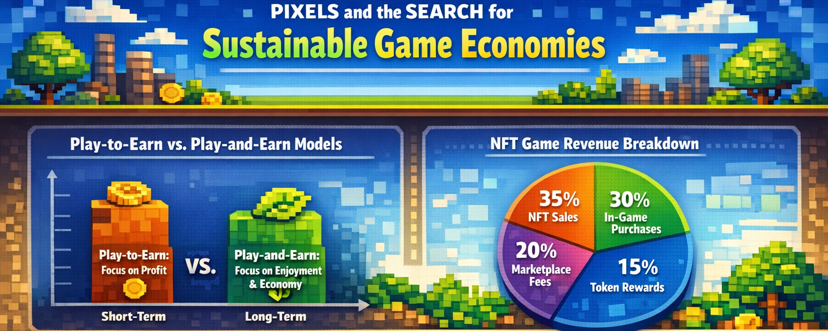
That’s more or less how Pixels came into my view too. Nothing dramatic. Just another name in a long list of Web3 games trying to connect play, ownership, and economy into one space. Farming, exploring, building—these aren’t new ideas. They’ve been used before in different forms, with different levels of success. So my first reaction wasn’t curiosity. It was more like quiet familiarity. “I’ve seen this shape before.”
But I didn’t fully move on from it either.
Because sometimes it’s not the idea itself that matters—it’s what it’s trying to solve underneath all the familiar packaging. And in Pixels, if you sit with it long enough, you start to notice it’s touching a problem that this entire industry still hasn’t really figured out.
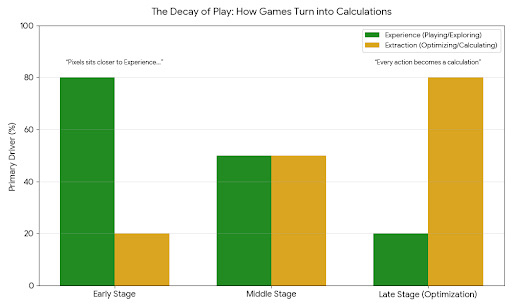
Crypto games always say they want people to “play,” but most of them slowly turn into something else. People stop playing and start optimizing. Every action becomes a calculation. Every moment becomes a way to extract value. And once that happens, the “game” part starts to disappear, even if everything on the surface still looks like a game.
That tension is hard to avoid. Maybe even impossible with the way incentives are usually designed here.
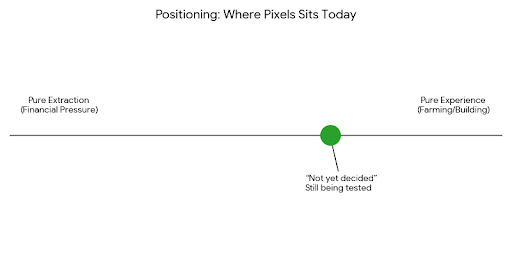
Pixels feels like it’s trying, at least in some small way, to sit closer to the “experience” side of things instead of the pure extraction side. It doesn’t scream at you with constant financial pressure, or at least not in the same way many others do. It leans into slower activities—farming, building, exploring—things that are meant to keep you inside the world rather than push you out of it.
But I’ve also learned not to trust that balance too quickly.
Because in crypto, even systems that feel calm at the beginning can change once real pressure shows up. Once rewards shift, once attention fades, once people start finding the most efficient way to move through it—that’s usually when the real identity of a project shows itself. Not in the early days, but later, when the easy excitement is gone.
So with Pixels, I’m not really deciding what it is yet. I’m just observing how it behaves over time. How people actually use it when they’re not being guided by hype. Whether they stay because they enjoy it, or because they’re trying to extract something from it before moving on.
That’s usually where the truth shows up in this space—not in announcements, not in promises, but in behavior.
And honestly, that’s the part I’m still unsure about. It’s interesting enough that I don’t want to ignore it, but not stable enough that I want to believe in it. It sits somewhere in between, still forming, still being tested by real usage rather than narrative.
So I just keep it in the background of my attention. Nothing intense. Nothing emotional. Just a quiet kind of watching that comes from having seen too many things either fade away or change into something completely different once they meet reality.
And right now, Pixels still feels like one of those things that hasn’t decided what it will become yet.
So I’m still here, still observing… and still waiting to see where it actually goes when the noise eventually dies down.