
I have been thinking about this for a while after going through recent updates from @Pixels At the beginning, it felt like a simple Web3 farming game where you could play, explore and earn some $PIXEL along the way.
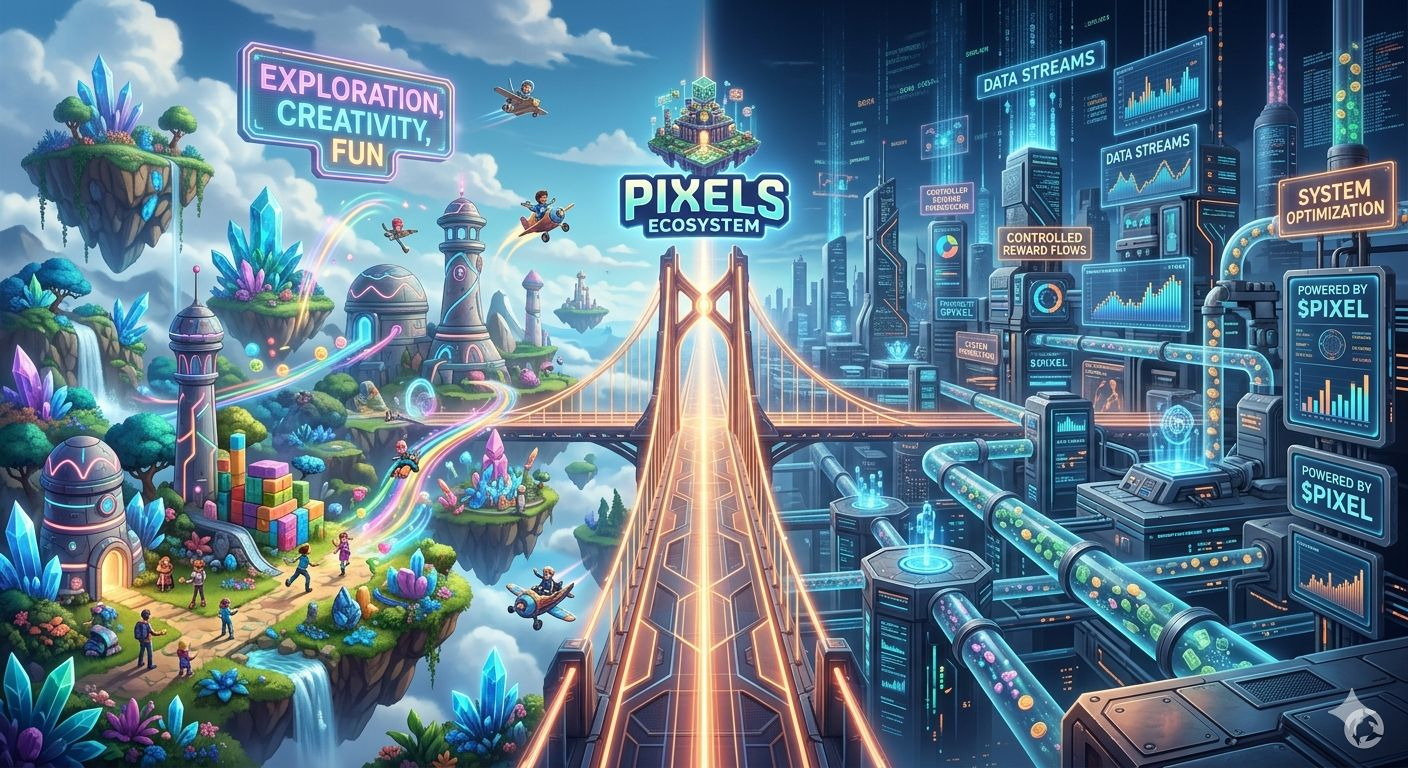
But now the direction seems different. With the introduction of systems like Stacked and more structured reward distribution, the #pixel ecosystem is starting to feel less random and more controlled.
On one hand, this makes a lot of sense. Most play to earn models failed because rewards were too easy to exploit. People came in, farmed tokens, and left. That cycle created constant sell pressure and weakened the entire system. So moving toward smarter reward targeting feels like the right step.
But at the same time, I keep asking myself something. If everything becomes optimized around behavior and efficiency, what happens to the fun part? Because games are not just about outcomes, they are about experience.
What @undefined is trying to do feels like a balance between two worlds. One side is fun and exploration, and the other side is a structured economy powered by $PIXEL . The challenge is keeping both alive without letting one take over the other.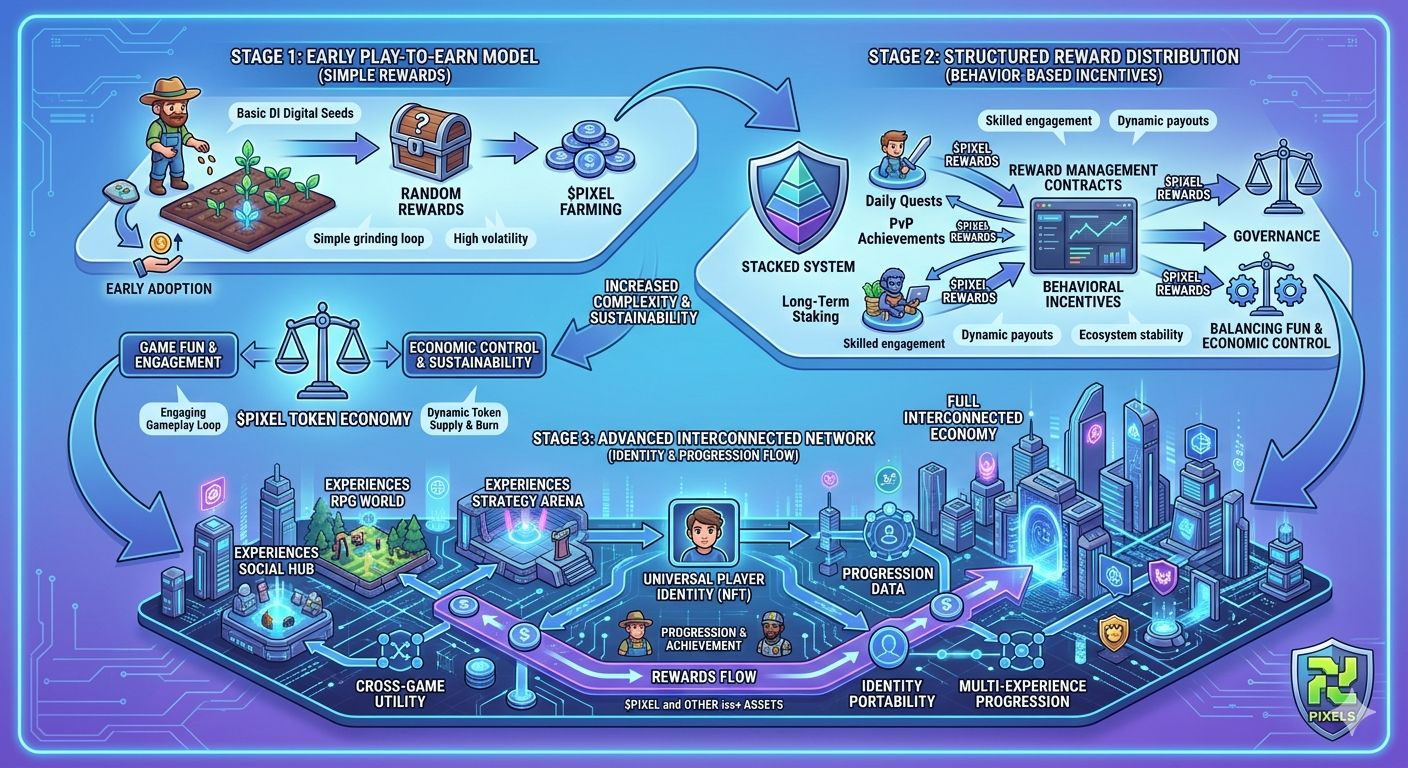
Another interesting layer is how this system might evolve in the future. If rewards, identity and progress start connecting across different experiences, the #pixel ecosystem could become more like a network rather than a single game. That sounds powerful, but also complex.
From my perspective, this is where things get interesting. Pixels is not just improving a game, it is experimenting with how game economies should work in Web3. And honestly, I am not fully sure where this leads yet.
Maybe this approach creates a more sustainable system, or maybe it changes how we define games entirely. Either way, it feels like something worth watching closely.