
At first, Pixels doesn’t really feel like anything special.
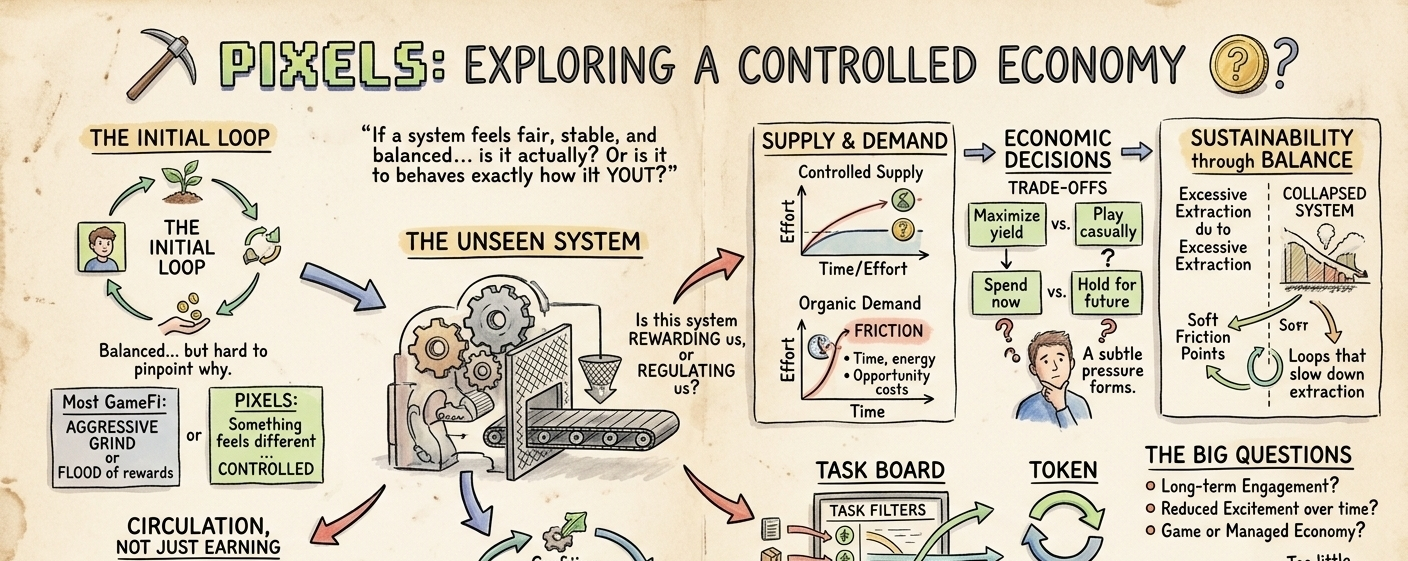
You log in, do the usual routine-plant something, gather a few resources, complete one or two tasks. Rewards come in, not too fast, not completely slow either. It feels balanced… but it’s hard to pinpoint exactly why.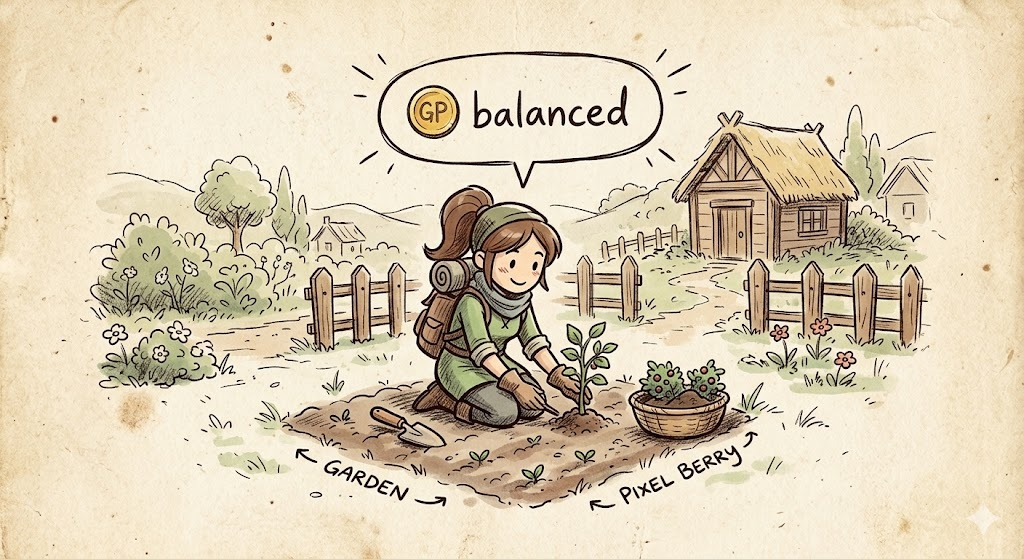
In most GameFi games, you can figure out their agenda within the first five minutes-either they push you into aggressive grinding, or they flood you with rewards early on, only for everything to feel empty later. The pattern is familiar.
But here, something feels different. Not broken… just controlled.
The more time you spend, the more you start noticing that rewards aren’t just rewards. They feel paced, filtered-as if they’ve passed through some invisible checkpoint.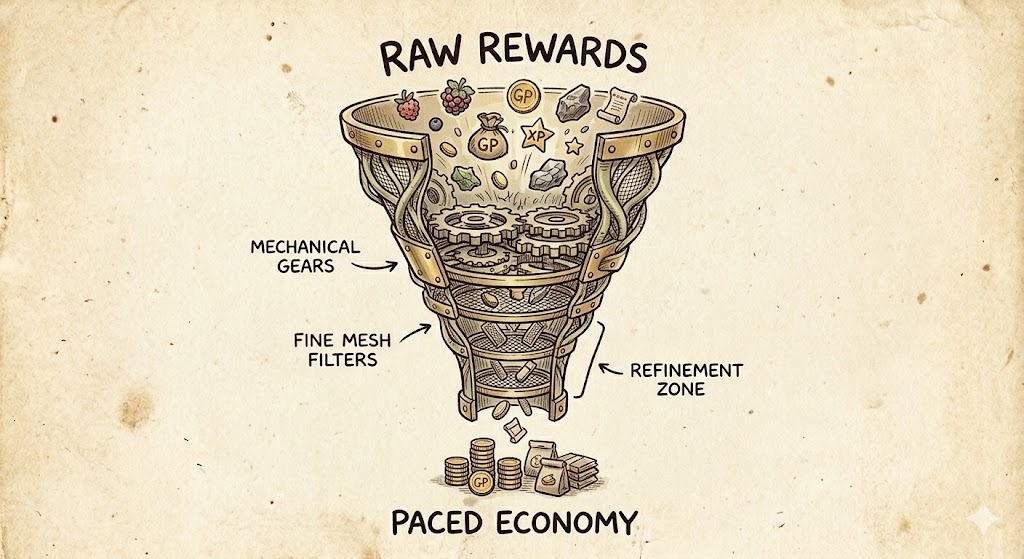
That’s when a small thought creeps in:
is this system actually rewarding us, or regulating us?
Because if you look deeper, the economy isn’t built for instant gratification. It’s built for circulation.
Tokens don’t just sit in your wallet once you earn them. They move-into crafting, upgrading, trading, and time investment. It doesn’t feel like earning in the traditional sense, but more like participating in a loop that constantly rebalances itself.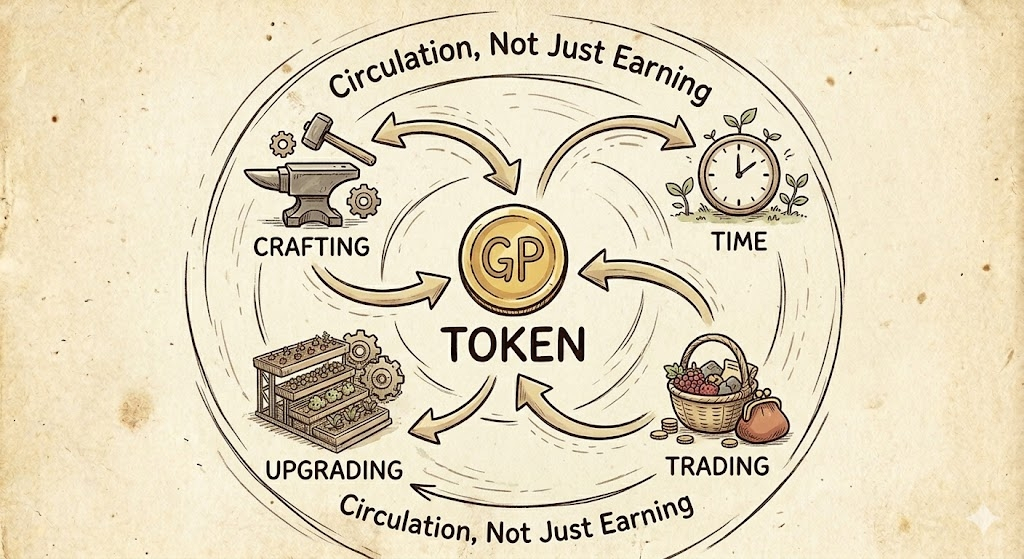
So when you receive a reward, is new value actually being created, or is it just being redistributed in a smarter way?
Supply is tightly controlled through time, effort, and specific mechanics. Demand doesn’t feel artificial-it emerges from friction. To progress, you need resources, but acquiring them always comes with some cost-time, energy, or opportunity.
And that’s where every action starts to carry weight.
Now you begin to think-should I maximize yield from this task, or just play casually and accept slower progress?
Should I spend tokens now, or hold them for some uncertain future advantage?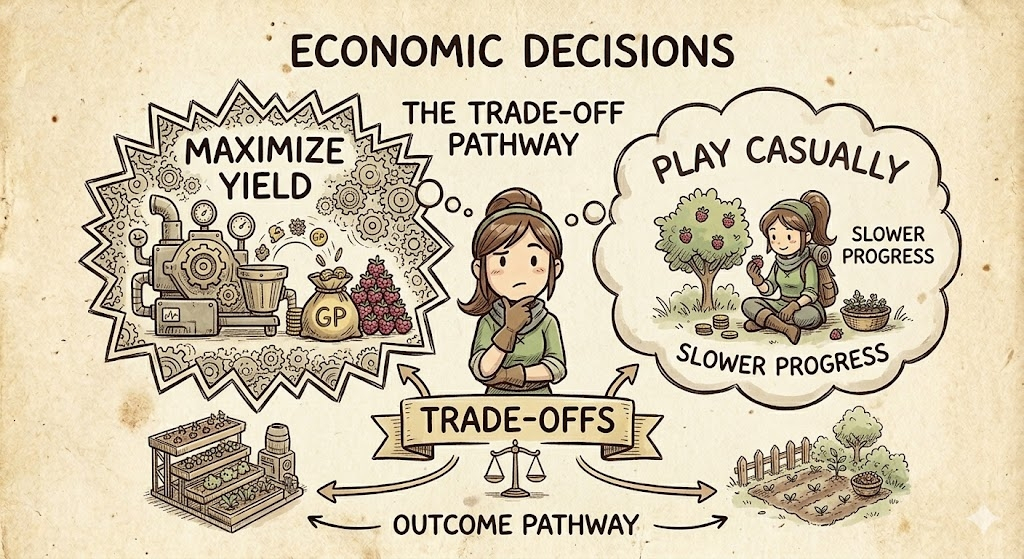
These stop being simple gameplay choices-they become economic decisions.
The system doesn’t force you to min-max, but it makes you aware that you can. And once that awareness kicks in, a subtle pressure forms-not enough to ruin the experience, but enough to influence behavior.
You start thinking in trade-offs.
If I do this, what am I giving up?
If I skip that, what am I missing?
Efficiency is rewarded, but also gently nudged.
And yet, what’s interesting is that the system doesn’t collapse under optimization.
In many GameFi systems, once players discover the most efficient path, everything else becomes irrelevant. The economy narrows, value concentrates, and eventually breaks.
Here, that doesn’t happen so easily.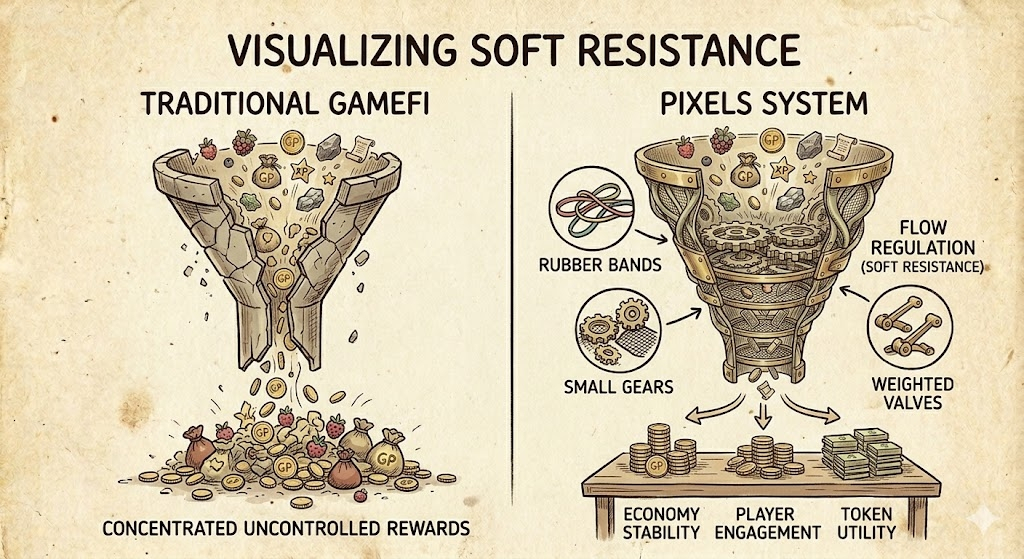
Why? Because the system has soft friction points built in. Not hard barriers-just slight resistance. Loops that slow down excessive extraction. Mechanics that redirect value so it doesn’t accumulate in one place.
That’s why the task board doesn’t feel like just a list of tasks.
It feels like a filter.
It decides how value flows through the system-not just what players do, but how fast the economy moves.
And the token?
It’s not just a reward.
It’s a unit of circulation.
As long as it keeps moving, it holds value.
This creates a different kind of sustainability-not driven purely by constant user growth, but by maintaining balance. Keeping the system active, without letting it overheat.
But with that balance come some important questions.
Can such controlled pacing keep players engaged in the long run?
Will limiting reward speed slowly reduce excitement?
And once players fully understand the system, will it still feel like a game-or more like a managed economy?
There’s always a tension.
Too much control feels restrictive.
Too little invites collapse.
Right now, Pixels sits somewhere in between-carefully.
It doesn’t overwhelm you with complexity upfront. It lets you discover it layer by layer, decision by decision.
And maybe that’s the real shift.
You’re no longer just extracting value.
You’ve become part of how that value flows.
Whether this becomes truly sustainable in the long term-or just a slower version of the same GameFi cycle-is still unclear.
But one thing is worth thinking about:
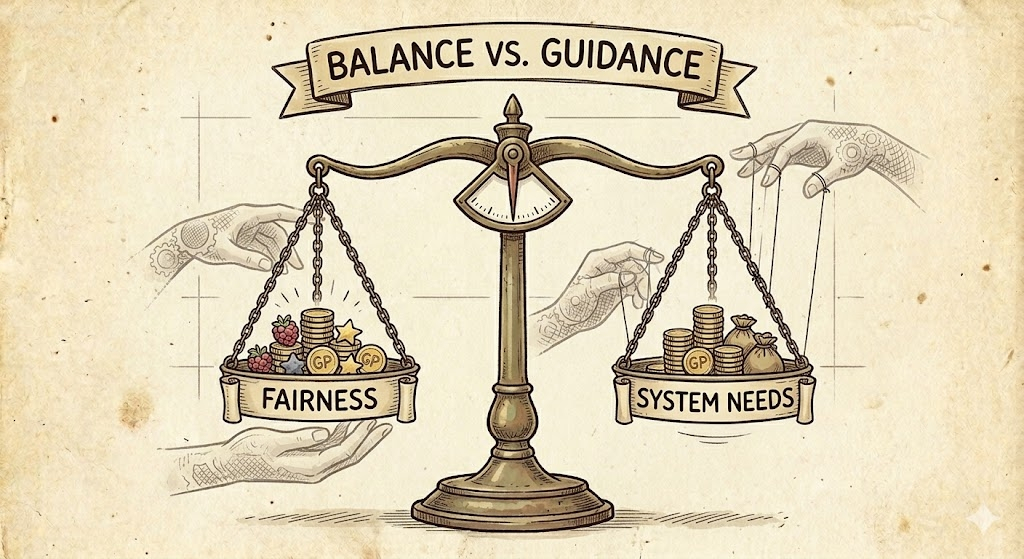
If a system feels fair, stable, and balanced…
is it actually that way?
Or is it simply guiding you-very intelligently-to behave exactly how it needs you to?