
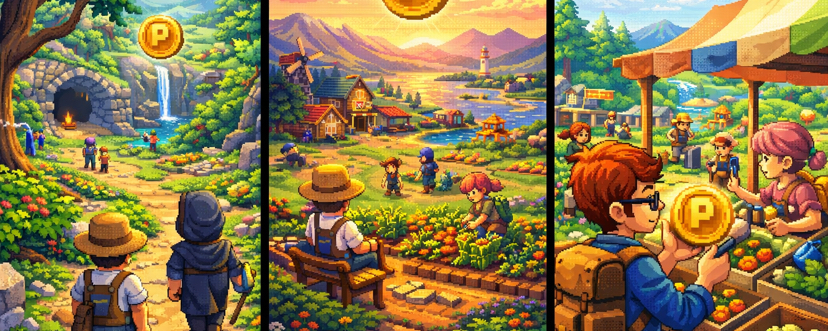
Pixels ($PIXEL ) is one of those games that doesn’t try too hard to explain itself at the start. You load in, walk around, maybe chop a tree or plant something, and for a while it just feels like a simple farming game. Nothing complicated. No big instructions telling you what to do next. And honestly, that’s probably the first thing you notice — it gives you space.
It’s built on the Ronin Network, which you might expect to matter a lot while playing. But in the beginning, it doesn’t really show up in an obvious way. You’re not constantly thinking about blockchain or tokens. You’re just… playing. That part feels intentional. You can usually tell when something is trying too hard to remind you it’s “web3.” This doesn’t do that, at least not right away.
The world itself is open, but not in a massive, overwhelming way. It’s more like a place you slowly get familiar with. You walk past the same patches of land, recognize certain spots, maybe notice how other players are doing things differently. That’s where things get interesting. It’s not just about what the game tells you — it’s also about what you pick up from others without even trying.
Farming is at the center of it. You plant, wait, harvest, repeat. On paper, it sounds basic. And it is, in a way. But after a while, you start thinking about efficiency. Where to place things. What to grow next. How to manage your time. It becomes less about clicking actions and more about small decisions stacking up. Nothing feels rushed, though. You can leave things, come back later, and it still makes sense.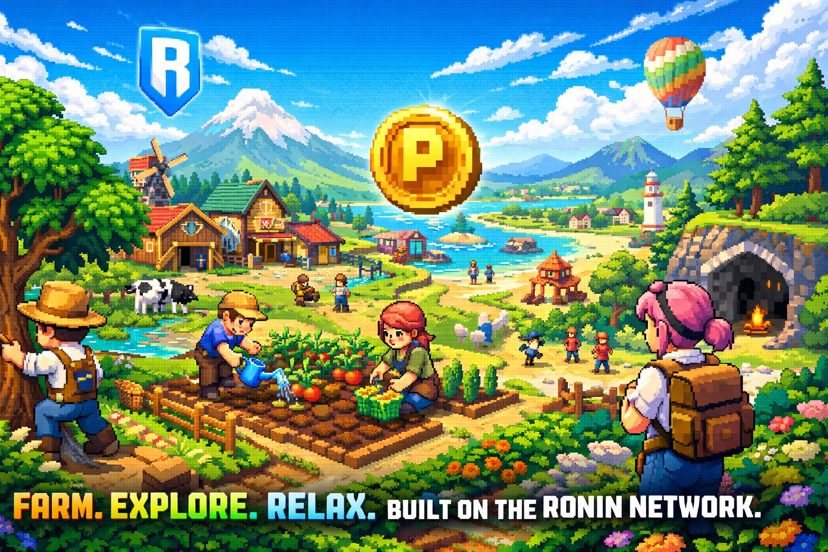
Then there’s exploration. Not the kind where you’re chasing objectives or unlocking dramatic new areas every few minutes. It’s quieter than that. You wander. You notice small details. Sometimes you don’t even realize you’re exploring until you’ve already gone somewhere new. The map opens up slowly, almost without announcing it.
And because it’s a social game, other players are always around. Not in an overwhelming way, just… present. You see someone farming next to you, or walking past, or setting something up differently. It adds a layer without forcing interaction. You can ignore it, or you can lean into it. That choice stays with you the whole time.
Creation is another piece that doesn’t fully reveal itself early on. At first, you’re just working with what’s there. Later, you start shaping things a bit more. Your space begins to feel like yours, even if it’s simple. That’s usually when the game shifts slightly in your mind. The question changes from “what do I do here?” to “how do I want this to look or work?”
Somewhere in all this, the @Pixels token exists. But it’s not constantly pushed in your face. You become aware of it gradually. Maybe through trading, maybe through rewards, maybe just by noticing how others interact with the game economy. It becomes obvious after a while that there’s a layer underneath the gameplay — something tied to ownership and value. But it doesn’t interrupt the flow unless you go looking for it.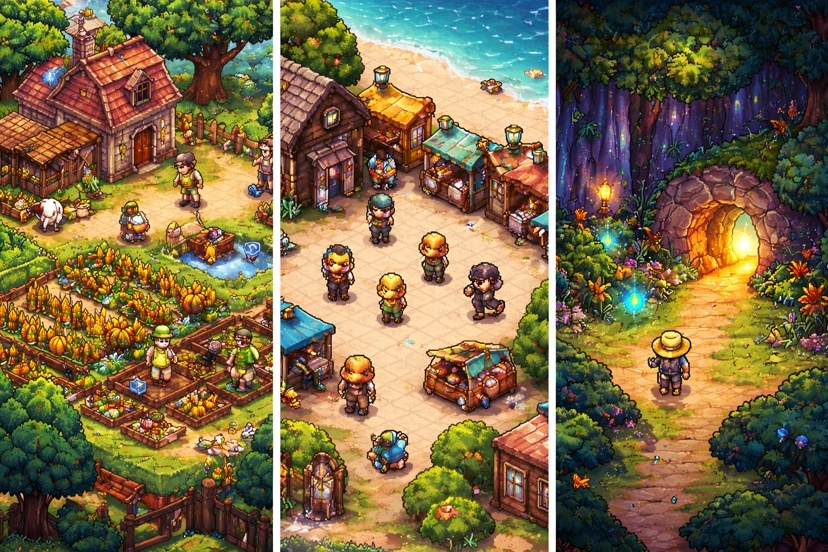
That balance is probably what stands out the most. The game doesn’t rush you into needing to understand everything at once. You can stay on the surface level and still enjoy it. Or you can go deeper, piece by piece. There’s no moment where it suddenly demands commitment.
At the same time, you start to notice patterns. Some players move faster than others. Some seem more invested in optimizing, trading, or expanding. Others just log in, do a few things, and leave. Both approaches seem to work. The game doesn’t force one style over the other, which is rare.
There’s also this feeling that the game is still figuring itself out. Not in a broken way, just… evolving. You can sense that things might change over time — mechanics, economy, maybe even how people interact with it. That uncertainty isn’t loud, but it’s there in the background.
And maybe that’s part of the experience. You’re not stepping into something fully fixed. You’re stepping into something that’s still moving a little. Some people might find that uncomfortable. Others might find it interesting.
If you spend enough time in #Pixels , you stop thinking about it as a “web3 game” and start seeing it as just a place. A routine, almost. Log in, do a few things, notice something small, log out. Then come back later and pick up where you left off.
Nothing about it feels urgent. There’s no strong push telling you you’re missing out if you don’t act fast. And in a space where a lot of projects rely on that kind of pressure, this stands out more than you’d expect.
Over time, you start to understand it not through explanations, but through repetition. Through small habits. Through watching how other people move around the same space.
And even then, it doesn’t fully settle into one clear idea. It kind of stays open-ended. Like it’s still asking a question more than giving an answer.
