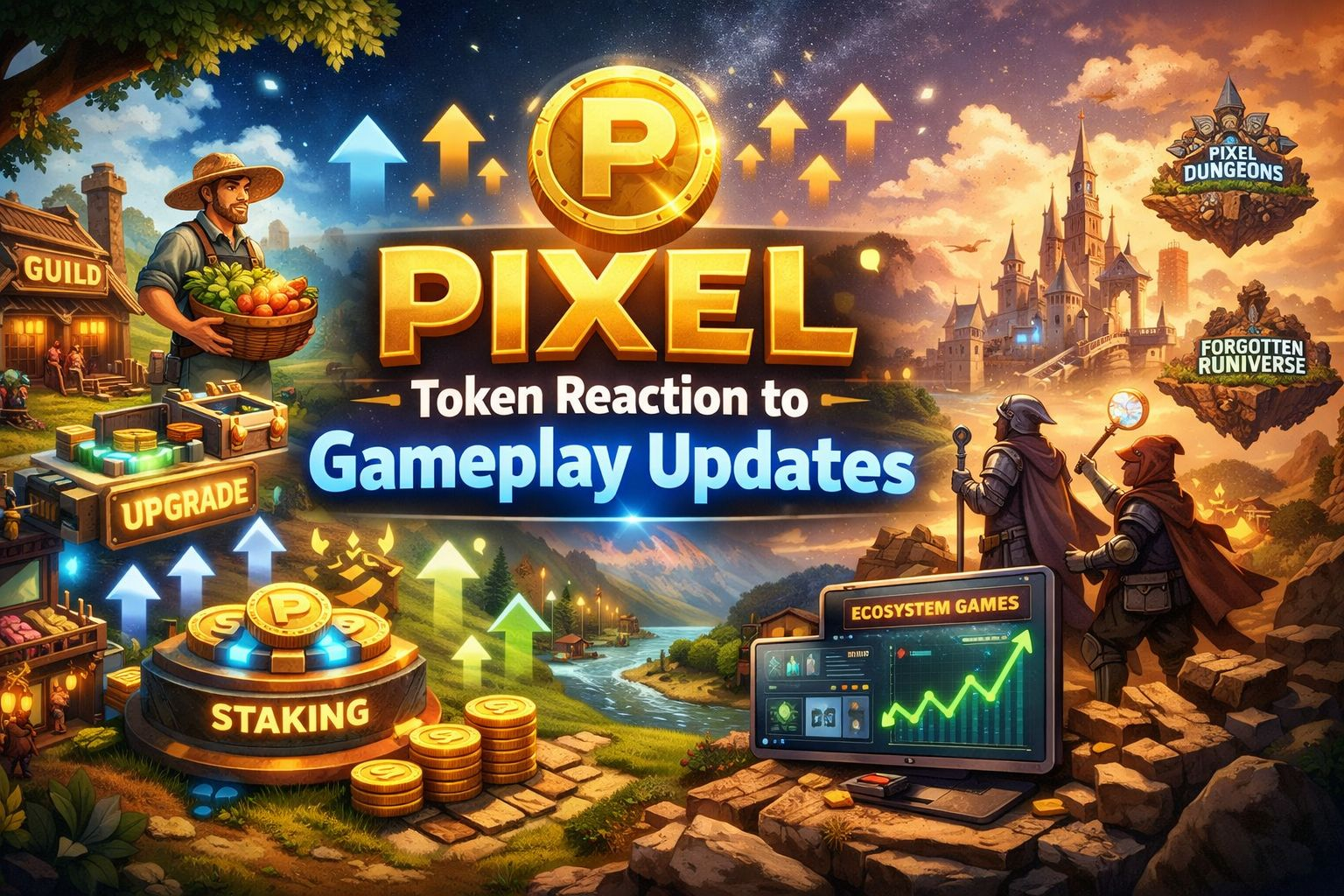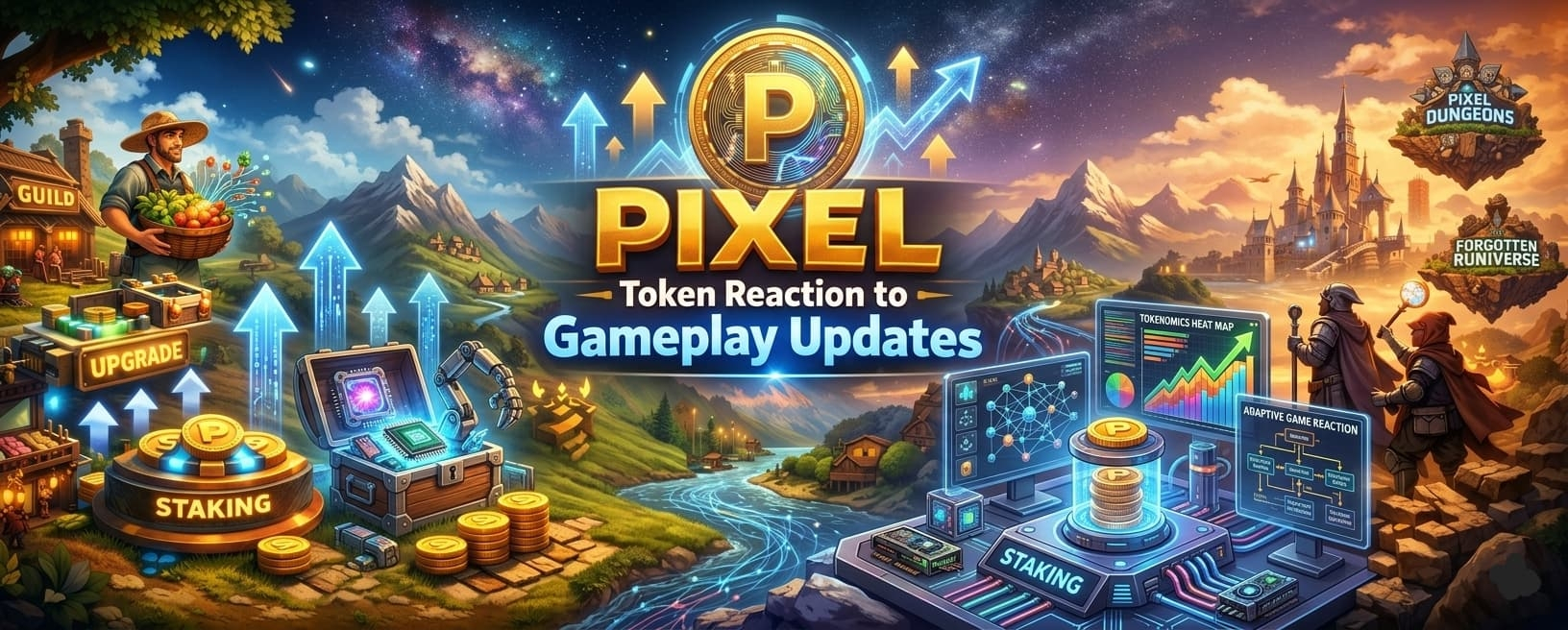
The story of the $PIXEL token has become much more interesting as Pixels shifts from being just a popular Web3 farming game into a broader game ecosystem with deeper progression, stronger social systems, and a more deliberate token economy. That shift matters because the market no longer looks at PIXEL only as a reward token. It is increasingly being judged as a token tied to how well the game keeps players engaged, how effectively it creates reasons to spend, and how successfully it expands beyond one title. Official Pixels documents now make that strategy very clear: the team is trying to fix weak economic loops, add more durable in-game sinks, and connect PIXEL to staking, governance, partner games, and long-term ecosystem rewards.
One of the biggest reasons gameplay updates matter so much for PIXEL is that Pixels itself has openly admitted where the old model was weak. In the latest litepaper, the project says Core Pixels had two major problems: coins were being recycled without enough sinks, and the game had limited end-game activities, which encouraged players to withdraw rather than reinvest. To address that, the team outlined concrete gameplay changes such as progressive upgrades with escalating costs, durability systems for stations, tools, and consumables, and broader improvements to the core loop. That is important for token holders because better sinks and better retention usually mean healthier demand. In simple terms, the market likes updates that give players more reasons to stay, spend, and compete instead of just farming and leaving.
Chapter 2 is at the center of this new narrative. The official Pixels site now says “Chapter 2 Is Here,” while the whitepaper explains that this phase introduces large gameplay changes built around guild coordination, new resource tiers, and land-based production limits. Instead of every player being able to endlessly access the same resource flow, Chapter 2 moves toward a structure where land usage becomes more strategic and guild trust becomes more valuable. Only one player can use a given industry, crafting table, or piece of soil at a time on a land plot, according to the Chapter 2 guild design. That change pushes Pixels away from a simple solo farming routine and toward a more social and competitive economy. Investors and players often react positively to this kind of update because it suggests deeper gameplay and stronger player commitment.
The same pattern shows up in the token’s utility. PIXEL is no longer being presented only as an in-game reward or speculative asset. The whitepaper says it remains the main governance and staking asset, and players can use it to support individual games and influence how ecosystem incentives are distributed. Staking also comes with practical rules that lower friction: there is no lock-up while staked, the unstake delay is three days, and in-game staking can start from 100 PIXEL for active users. That is a meaningful design choice. A token tends to look stronger when it is tied to participation and influence instead of just emissions. In other words, gameplay updates are now feeding directly into token demand because the more games, systems, and rewards are attached to PIXEL, the more reasons users have to hold or deploy it rather than ignore it.
Another major support for PIXEL is the way the ecosystem is being expanded. Official documentation says ecosystem rewards are no longer meant only for Core Pixels. In the current beta setup, selected games include Core Pixels, Pixel Dungeons, and Forgotten Runiverse, with a fixed monthly allocation. The next phases shift toward dynamic pools, where staking will help decide how a global monthly reward budget is divided among games. Pixels also says future partner studios must integrate PIXEL and vPIXEL into their reward systems and share revenue back into staking pools. This is a powerful message for the market. It tells traders that the team is trying to turn $PIXEL from a single-game token into an ecosystem token with wider utility and broader reward pathways.
Recent market data suggests that traders are responding to this broader thesis with renewed interest, even if volatility remains high. CoinGecko shows PIXEL recently trading around $0.0076, up about 8.1% over 24 hours, about 8.5% over 7 days, 18.7% over 30 days, and roughly 72.7% over one year. The same source also shows daily trading volume near $29.6 million, up sharply from the previous day, which points to stronger market activity. Historical data from mid-April 2026 shows the token moving in a tight but active range, with daily closes around the high-$0.006 to low-$0.008 area. This does not mean gameplay updates alone are driving every move, because crypto prices always reflect wider market sentiment too. Still, when price, volume, and a clearer product roadmap improve together, the market usually reads that as a sign that confidence is returning.
What is especially encouraging is that Pixels is no longer pretending token value can survive on hype alone. The official litepaper frames the long-term goal around Return on Reward Spend, better targeting, stronger retention, and a healthier game economy. That is a more mature approach than the old play-to-earn formula that depended too heavily on emissions. The team is effectively saying that sustainable token appreciation must come from fun gameplay, useful sinks, social coordination, and measurable economic efficiency. For readers and investors, that changes how PIXEL should be judged. The real question is no longer whether the token can spike on news. The more serious question is whether gameplay updates can create habits that keep users active and spending.
Looking ahead, the future benefits for PIXEL are easy to understand. If Chapter 2 succeeds, the token could benefit from deeper guild participation, stronger land-based strategy, more resource competition, and better reasons to spend inside the game. If staking adoption grows, PIXEL could gain from reduced circulating pressure and stronger alignment between players and the broader ecosystem. If partner games continue to join, the token may gain a wider base of demand beyond the original Pixels player community. On top of that, the official site continues to promote two-week update cycles, pets, and ongoing content expansion, which helps keep attention alive in a market where stagnation is punished quickly.
The current appreciation for PIXEL, then, is not just about price. It is about a change in perception. The token is starting to look less like a short-term farming asset and more like a core part of an evolving game economy. That does not remove risk, and the token is still far below the kind of valuations many holders once hoped for. But compared with the earlier model, the direction is stronger now. Pixels is building around gameplay depth, token sinks, staking, and ecosystem expansion at the same time. If the team can execute consistently, PIXEL’s reaction to gameplay updates may continue to improve, because the market usually rewards projects when their token finally starts to make sense inside the product.