
It’s funny how, in a game like $PIXEL , people get so hung up on the "value" of land. You spend enough time walking around, and you start to notice that the map isn't just a grid of colored pixels. It's a living, breathing economy, but not in the way you’d expect.
If you’re looking for what makes a plot "rare" or valuable, you have to look past the floor price on a marketplace. Anyone can look at a chart. The real rarity, the kind that doesn't belong to just anyone, is tied to location and industrial utility.
The Invisible Hierarchy
You can usually tell a veteran player’s land from a distance. It’s not about the flashiest decorations. It’s about the industrial footprint.
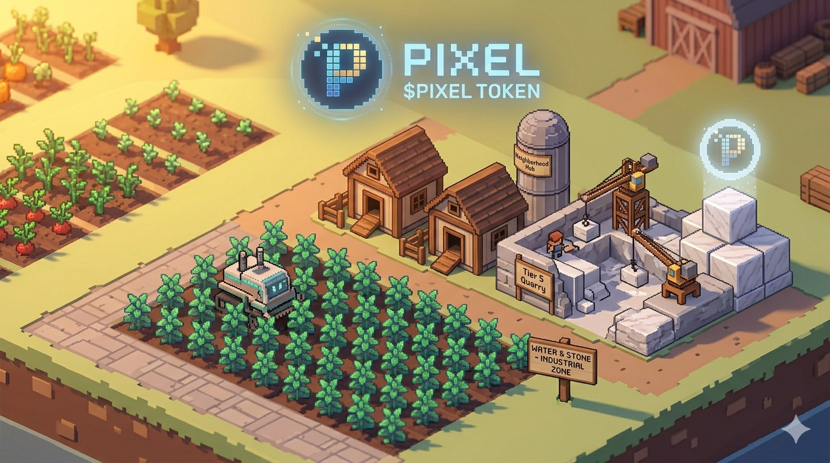
When you look at the map, you’ve got three main types: Land (Green), Water (Blue), and Space (Purple). But that’s just the surface. That’s where things get interesting:
*Water Lands** are the only places where you can cultivate Watermints and extract Marble.
*Space Lands** are the only zones for Astracactus and Voidtonium.
*Land (Green)** is the domain of Clay.
The "rare" isn't necessarily the plot itself; it’s the exclusive access to a specific resource chain. If you own a plot that allows you to bridge those production gaps—say, a highly optimized Water land positioned near high-traffic paths—you aren't just holding an NFT. You're holding a node in a functioning, player-driven economy.
Why "Rare" Doesn't Mean "Static"
It becomes obvious after a while that a "perfect" plot changes as the game evolves. Because Pixels introduces systems like Tier 5 industries and expiring slots, the value of a plot is tied to its utility window.
A plot might be a powerhouse this month because of a specific crop cycle, but next month, the meta shifts. The people who really "get it" aren't buying for a quick flip. They’re buying for the flexibility of the plot’s industrial infrastructure—the coops, the silos, and the specific density of the trees that allow for faster automation.
The Real Rarity
The rarest thing you can find in pixel isn't a digital asset. It’s contextual location.
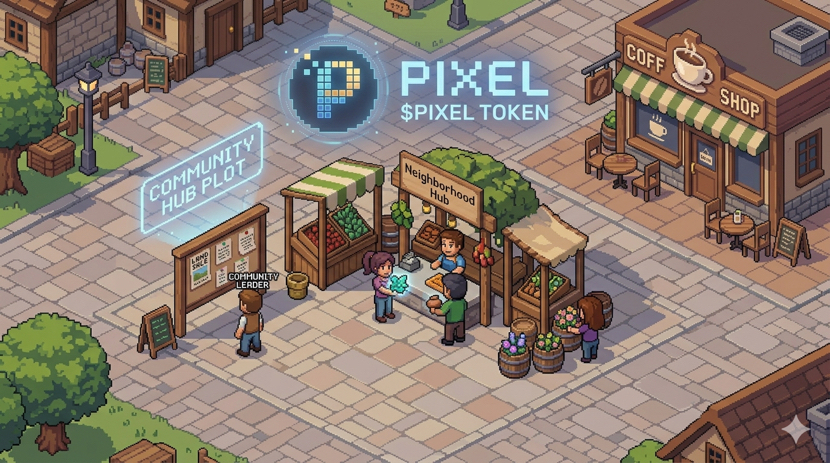
Most people just look for "big land." But if you want something that truly stands out, look for the plots that serve as hubs. Look for plots that are situated near key NPCs or transit points, where players naturally congregate to trade or gather resources. These plots act as "gravity wells." They attract foot traffic, which in this game, is a currency all its own. You’re not just farming; you’re managing real estate in a growing digital town.
The question changes from "how much can I sell this for" to "how can I make this land a place people actually need to visit."
It’s a different way of thinking about Web3. Most people treat this stuff like a casino. But if you walk around long enough, you start to see it’s actually a simulation of a neighborhood. And in any neighborhood, the most valuable spot isn't the biggest house on the hill. It’s the corner lot where everyone passes by, and everyone stops to talk. That, to me, is the real rarity.
It’s quiet, and that’s the beauty of it. You’re not just holding an asset. You’re building a presence. And that takes time.
