
Lately I have been thinking about how @undefined is evolving, and the direction feels a bit different from what we usually see in Web3 games. At first, it looked like a simple farming experience where players could enjoy the game and earn some $PIXEL on the side.
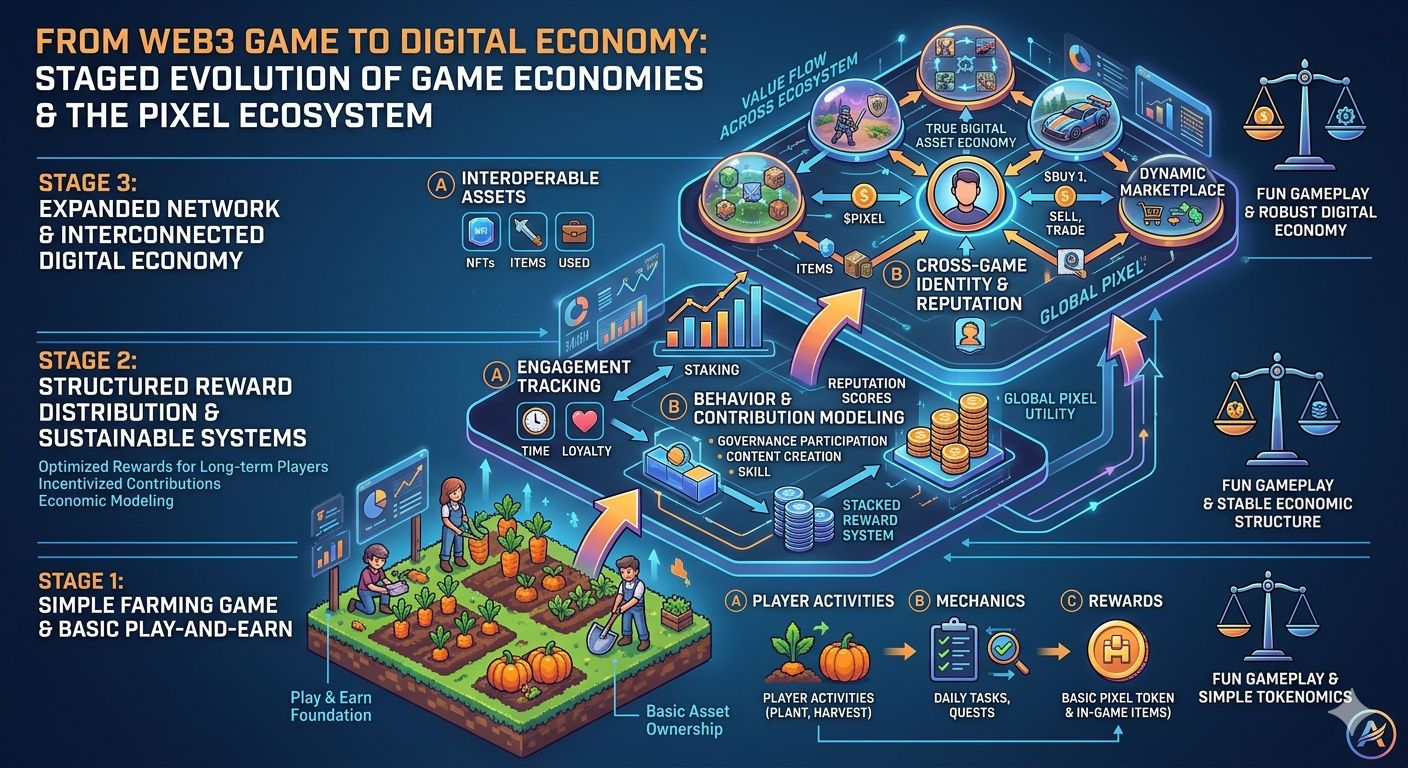
But now, with systems like Stacked and more structured reward flows, the #pixel ecosystem is starting to look more like an economy than just a game. Rewards are not random anymore. They are being directed based on behavior, engagement and contribution.
On one side, this feels like a necessary evolution. We have already seen how most play to earn systems fail. Easy rewards attract short term users, tokens get sold, and the system loses balance. So building a more controlled reward structure around $PIXEL actually makes sense.
But at the same time, I keep coming back to one question. When everything is optimized for efficiency, does the experience lose its spontaneity? Because games are not only systems, they are also about emotion, discovery and fun.
What makes @Pixels interesting is that they are trying to operate in both spaces at once. They still emphasize fun gameplay, but at the same time they are building a deeper economic layer underneath. That balance is not easy, and it is probably where most projects struggle.
Another layer to this is the idea of expansion. If rewards, identity and systems start connecting across multiple games, then the #pixel ecosystem could evolve into something much bigger than a single title. It could become a network where value flows continuously between players and experiences.
From my perspective, this is where the real experiment is happening. Pixels is not just asking how to make a game better, it is asking how to design a system where players, rewards and data all work together.
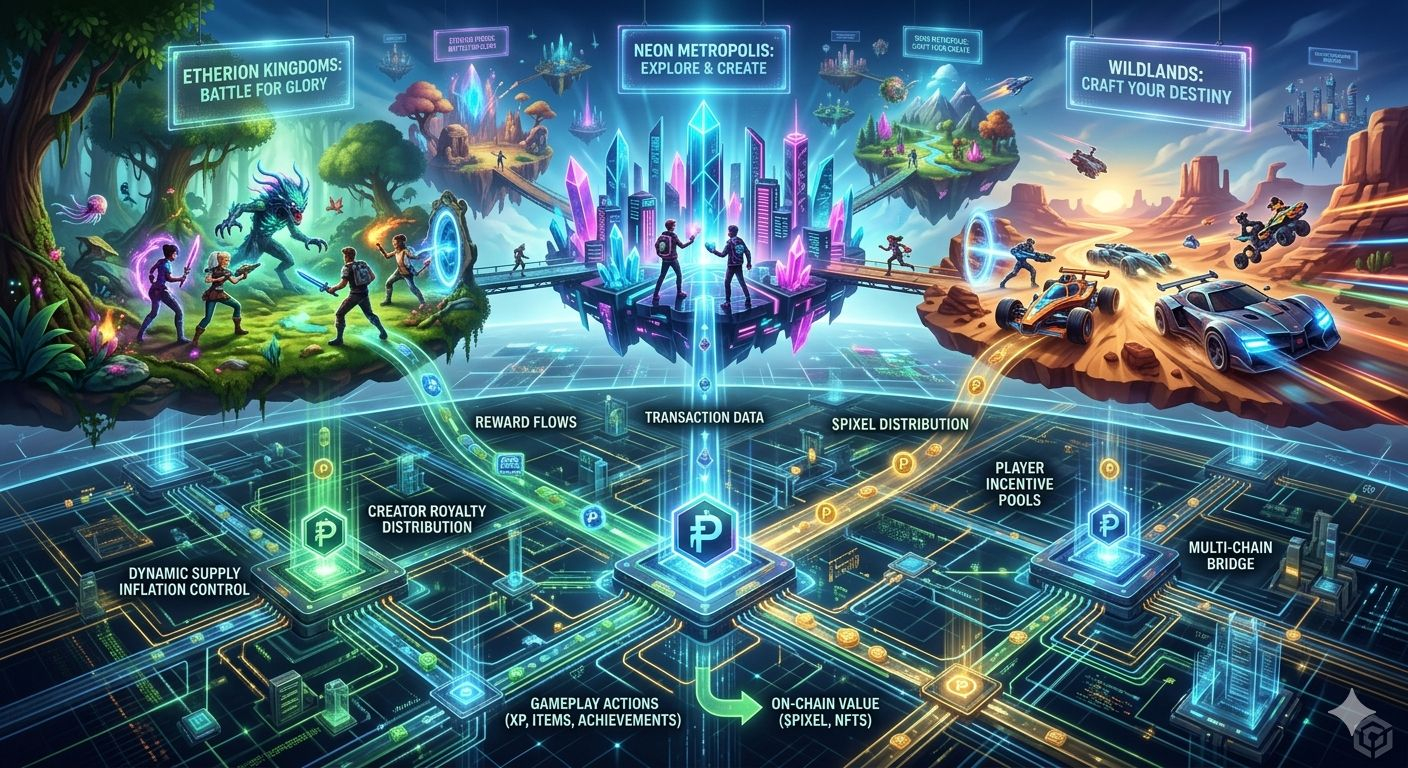
Maybe this leads to a more sustainable future, or maybe it introduces new challenges we do not fully understand yet. Either way, it feels like we are watching a shift in how games might be built going forward.