I’ve spent a lot of time digging into the Pixels transition from BERRY to $PIXEL , and honestly? It’s probably one of the best case studies I’ve ever seen for how to fix a broken game economy. When I look back at the historical shift, I see a classic battle between short-term growth and long-term survival. 👀
The BERRY Era: Why I think it had to go
When I look at the old BERRY model, I see exactly what goes wrong in most P2E games. It was meant to be the soft currency, but it became a "bot magnet." Since BERRY was on-chain and liquid, the incentive was just to farm it and dump it.
It was essentially an inflationary death spiral. I remember watching those charts—roughly 2% daily inflation was just unsustainable. It wasn't about playing the game anymore; it was about extracting value.Most people playing #Pixels today weren’t around for its earlier economy—and that context matters more than it seems. 🔍
Because the move from BERRY to PIXEL wasn’t just a simple upgrade. It was a signal. 🤔
In Web3 games, replacing a core currency usually points to something deeper. Not necessarily a failure, but a system that stopped behaving the way it was designed to. Instead of endlessly tweaking it, teams often introduce a new token to reset the balance.
That’s exactly what happened here.
BERRY was the original in-game currency—the classic “soft” token. You earned it through gameplay, spent it on upgrades, and used it for everyday actions. It followed a model we’ve seen for years in traditional free-to-play games: one currency flows freely, while another holds scarcity and long-term value.
On paper, that system works.
In practice, it often doesn’t.
🔍 The issue with soft currencies is simple: they stack up.
The more committed the player, the more they accumulate—until eventually, they have more than they can realistically spend. And once that surplus builds, value starts to fade. Not just in price, but in meaning.
BERRY followed that exact trajectory. Too much supply, not enough ways to remove it from circulation. Over time, it stopped feeling like something you needed to manage—and more like something you just had.
That’s where PIXEL comes in.
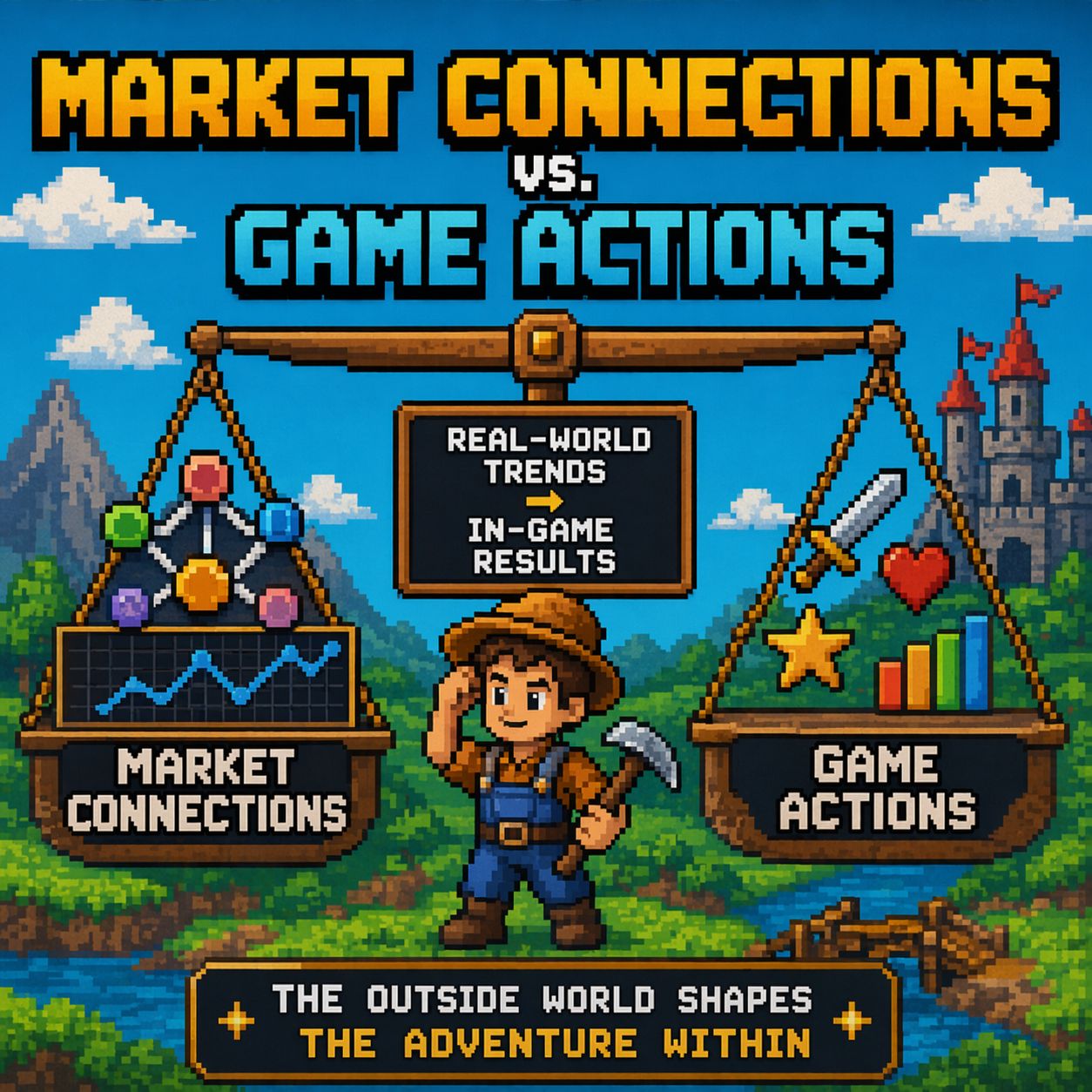
@Pixels wasn’t just introduced as another token—it became the new center of the economy. Tied to markets, tradable, influenced by real-world pricing. Suddenly, the game’s core currency wasn’t just about gameplay anymore—it was about value.
And that shift changed how people play almost instantly. 👀
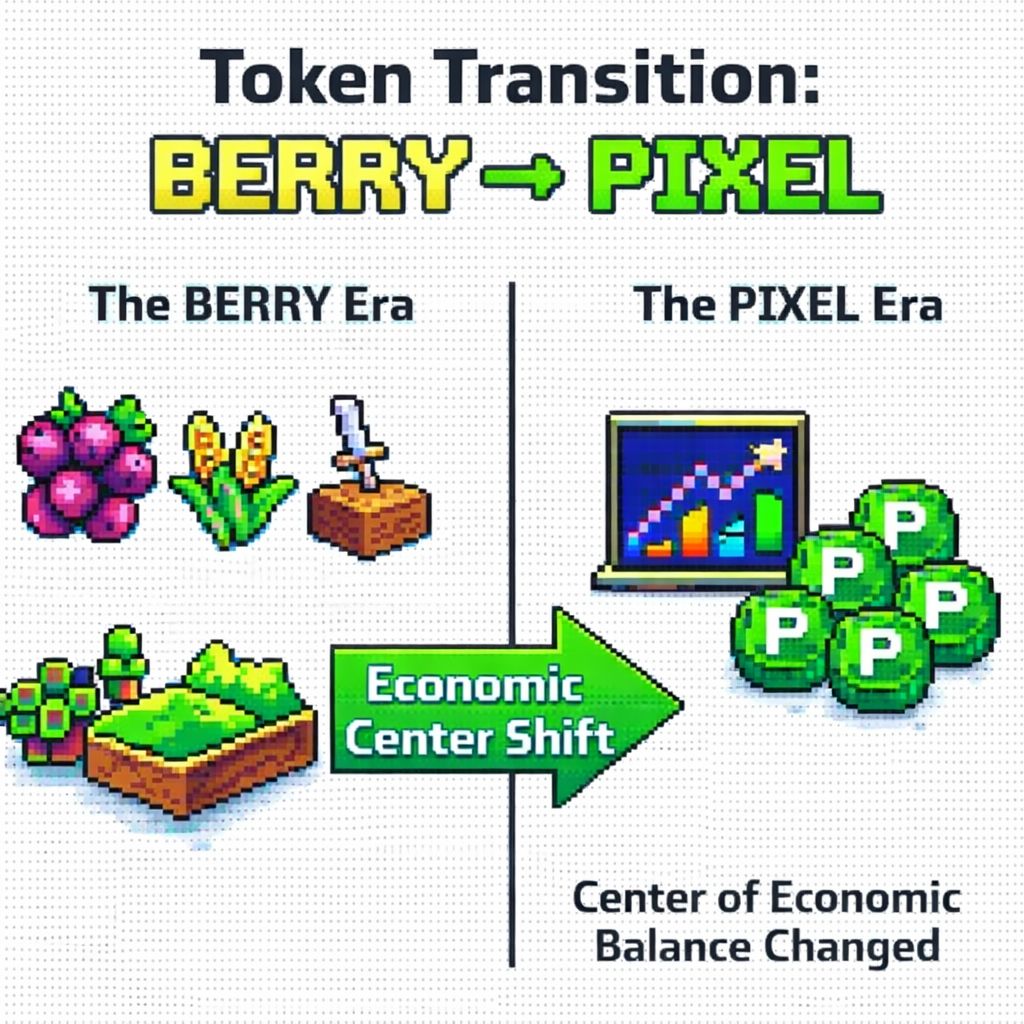
Before, decisions were straightforward:
“How much do I need to grind to afford this?”
Now, there’s a second layer:
“What is this worth right now—and is it worth spending?”
🤔 That small change creates a completely different mindset.
The game stops being purely about progression and starts blending with financial thinking. Every upgrade, every purchase, every action gets weighed against external market conditions.
That comes with trade-offs.
On one hand, it adds real stakes. Your time and resources feel more meaningful.
On the other, it introduces volatility into places it didn’t exist before.
🔍 Suddenly, your decision to upgrade tools might depend on how the crypto market is performing. Something that should be a simple gameplay choice becomes tied to external price swings.
And whether that’s a good thing really depends on what you came for.
If you wanted a farming game with a smooth, self-contained economy, BERRY made more sense. It was simple, predictable, and gameplay-focused.
If you’re here for exposure to a growing crypto ecosystem, PIXEL delivers that connection. It brings the game closer to real financial systems.
At its core, this shift answers a bigger question:
Is #Pixels a game with an economy…
or an economy with a game attached?
👀 The BERRY era leaned toward the first.
🤔 The PIXEL era leans toward the second.
Neither is inherently right or wrong. But it is a choice.
And most players today are experiencing the result of that decision—without ever seeing what came before.
🔍 That’s why understanding this shift matters more than most guides will ever explain.What I’m Watching Now
To me, the most interesting part isn't even the token shift itself—it’s the "Industrial Expansion" we’re seeing in 2026. The shift from simple farming to complex resource management and guild-based trade is where the real value is being built.
It feels like they successfully moved from a game that is a market, to a game that has a market. I’m curious to see if this model becomes the industry standard for Web3 gaming, because frankly, it should be.
Do you think the current industrial mechanics are doing enough to soak up the PIXEL supply, or are you looking for more burn mechanisms? 🤔👀👀$PIXEL #pixel @Pixels