
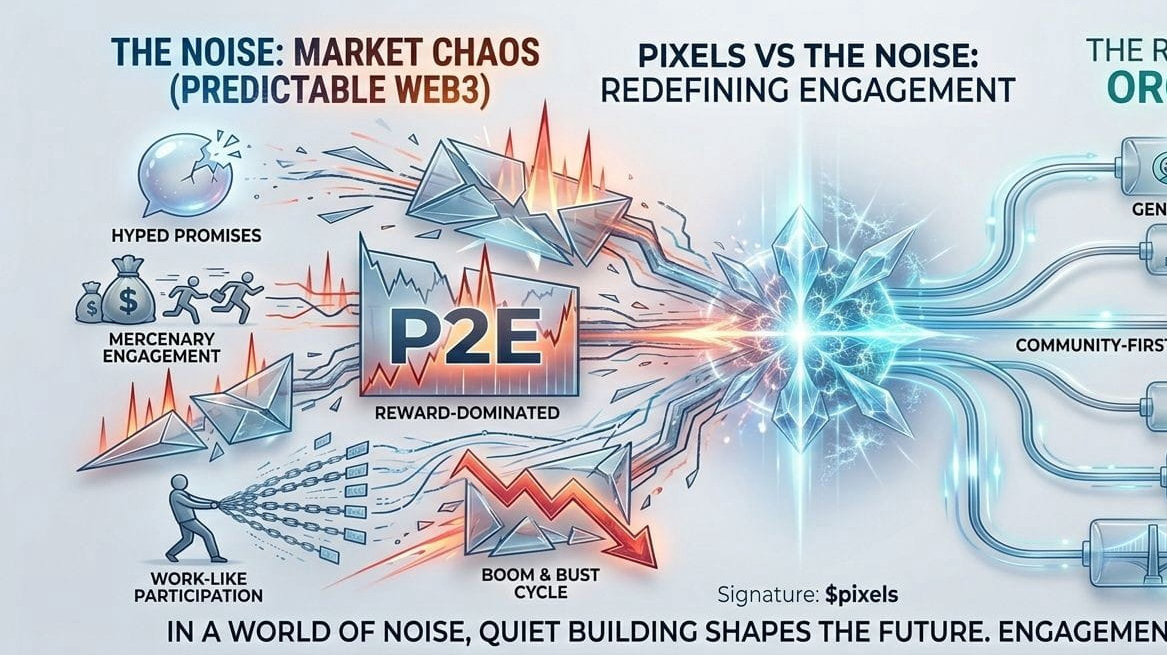
In Web3 gaming, most projects have tried to attract players through rewards. Pixels is quietly proving that real engagement begins long before rewards even matter. At a time when attention moves faster than understanding, Pixels is not chasing noise—it is building an experience that naturally pulls players in.
For a long period, the Web3 gaming landscape felt predictable. New launches arrived with massive promises, token incentives dominated conversations, and communities formed around expectations rather than experiences. Many believed success depended on how loudly a project could enter the market. Over time, however, players began to recognize the difference between temporary excitement and genuine enjoyment.
Pixels introduced something different. Instead of forcing economic mechanics from the very first interaction, it allowed users to explore, socialize, and simply play. That subtle shift changed player behavior. Engagement no longer felt like work—it felt like participation. The world inside Pixels began to grow through interaction rather than incentives alone.
Interestingly, the real battle was never Pixels versus another single project. The true competition has always been Pixels versus noise. Noise attracts attention quickly but fades just as fast. Experience, however, compounds over time. As players returned daily—not for rewards, but for connection and progression—Pixels demonstrated that sustainable ecosystems are built through consistency.
This evolution reflects a broader change across the digital economy. Communities are becoming more selective. Users now look for environments where time spent feels meaningful. Pixels aligns with this shift by prioritizing gameplay first and allowing economic layers to develop naturally around player activity instead of controlling it.
What makes this moment powerful is its quiet momentum. There is no sudden explosion defining success—only steady growth supported by real participation. Each update strengthens the environment, each player interaction deepens community bonds, and each shared experience reinforces long-term trust.
As Web3 gaming matures, the projects that survive may not be the loudest, but the most dependable. Pixels represents a model where entertainment leads and economics follow. When players stay because they want to—not because they are required to—a digital world begins to feel alive.
In the end, Pixels is not merely competing within the market—it is redefining expectations. Attention may bring players through the door, but authentic experiences convince them to stay. And in a space filled with constant noise, the projects that build quietly may ultimately shape the future of Web3 gaming.