

Bitcoin ATM operator, Bitcoin Depot, has filed for Chapter 11 bankruptcy protection and shut down its network of more than 9,000 crypto kiosks marking one of the biggest collapses in the cryptocurrency ATM industry as regulators intensify scrutiny over fraud and compliance failures.
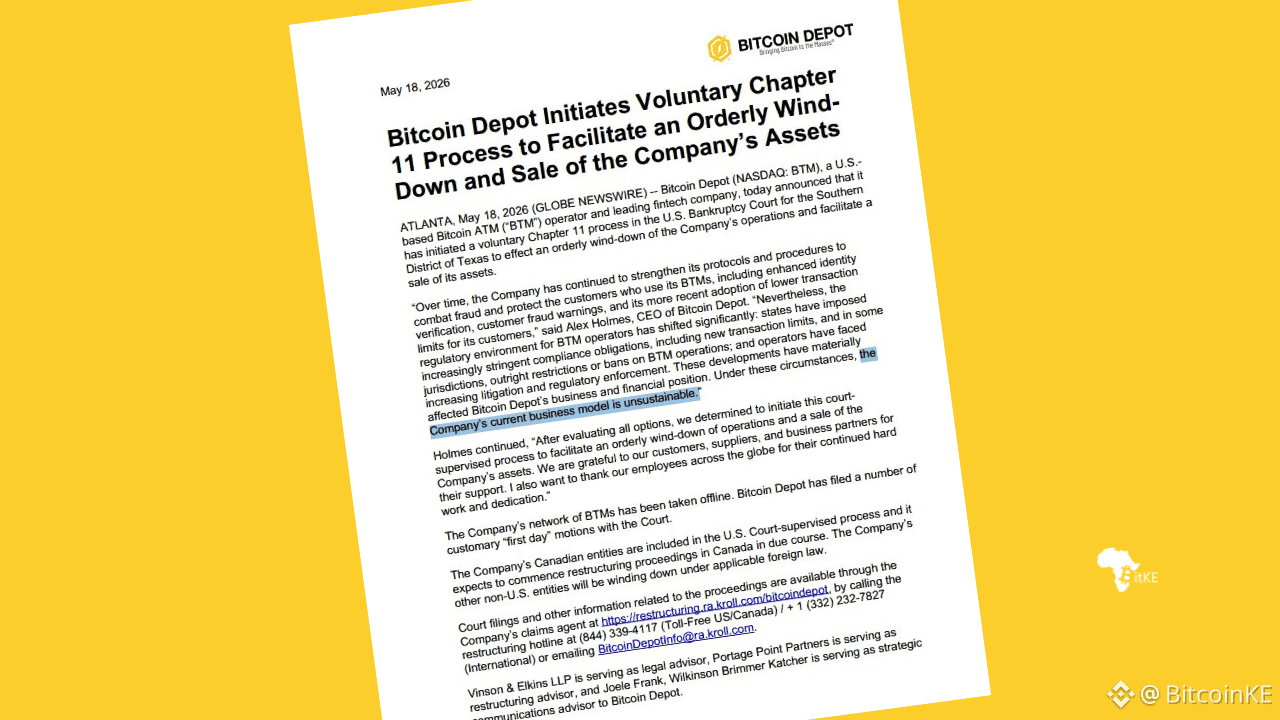
The Atlanta-based company, founded in 2016, said it had begun an ‘orderly wind-down’ of operations after evaluating all options and would seek to sell its assets through court-supervised proceedings in Texas. Chief Executive, Alex Holmes, said the company’s business model had become ‘unsustainable’ amid
rising litigation,
tighter state regulations and
mounting compliance costs.
Bitcoin Depot, which went public on Nasdaq in 2023 under the ticker, BTM, had rapidly expanded during the retail crypto boom by placing kiosks in gas stations, convenience stores, and pharmacies across North America.
The machines allowed users to buy Bitcoin and other digital assets using cash, often charging transaction fees far above those offered by mainstream crypto apps.
The company said several U.S. states had introduced
stricter transaction limits,
tougher licensing rules and, in some cases,
outright bans on crypto ATMs.
Regulators and law enforcement agencies have increasingly linked the kiosks to scams targeting elderly and vulnerable users.
REPORT | Crypto Scams Accounted for Most Costliest CyberCrimes in 2025, Says FBI
Older Americans were hit hardest with those aged 60 and above losing roughly $4.4 billion while crypto ATM fraud also surged generating hundreds of millions in losses as scammers exploited… pic.twitter.com/Ibk6wMO5Uc
— BitKE (@BitcoinKE) April 8, 2026
According to the FTC:
“Consumers over the age of 60 were more than three times as likely as younger adults to report losing money to Bitcoin ATM scams. Across all ages, the median loss reported in the first half of this year was a staggering $10,000.
The majority of scam losses involving Bitcoin ATMs come as a result of government impersonation, business impersonation, and tech support scams. The lies told by scammers vary, but they all create some urgent justification for consumers to take cash out of their bank accounts and put it into a Bitcoin ATM. As soon as consumers scan a QR code provided by scammers at the machine, their cash is deposited straight into the scammers’ crypto account.”
The numbers tell the story. Bitcoin ATM fraud totaled over $65 million in H1 2024 alone with the FBI recording over 13,000 complaints related to crypto kiosks with total reported losses at almost $400 million and a 10x increase since 2020.
REPORT | New FTC Data Shows Massive Increase in Losses to Bitcoin ATM Scams
According to Alex Holmes, CEO of Bitcoin Depot:
“These developments have materially affected Bitcoin Depot’s business and financial position. Under these circumstances, the Company’s current business model is unsustainable.”
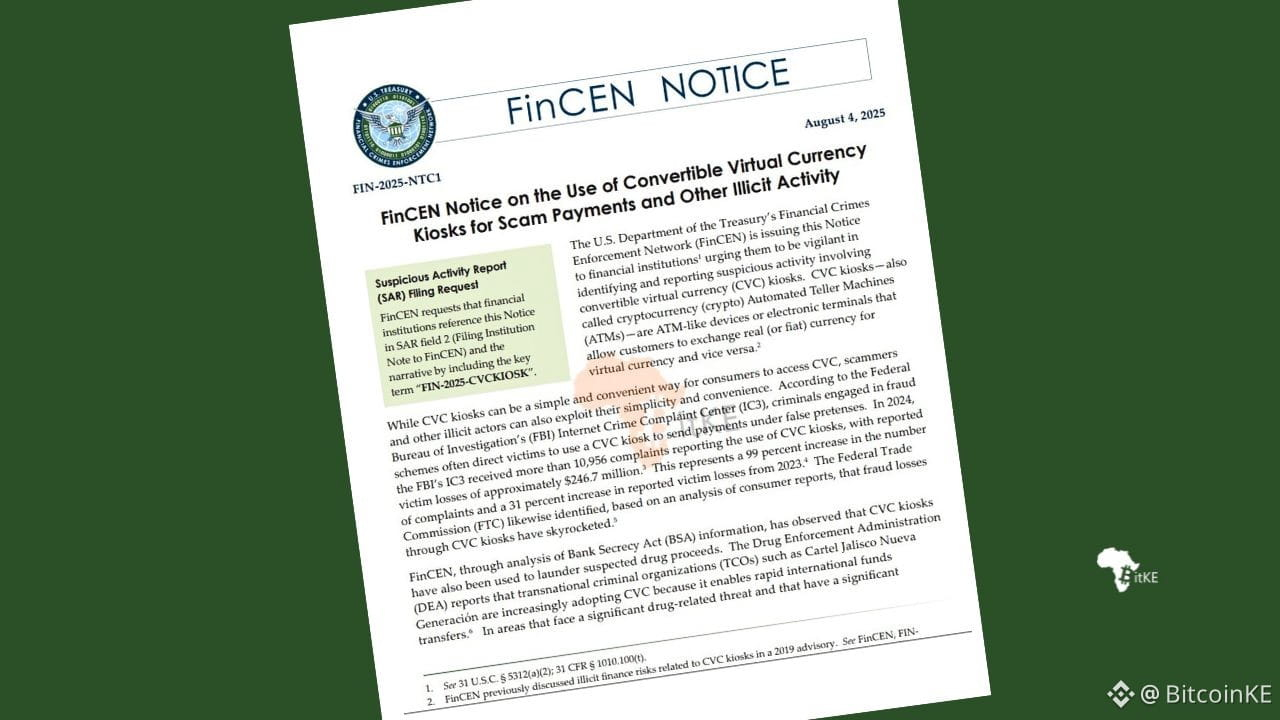
In an August 2025 notice by The U.S. Department of the Treasury’s Financial Crimes Enforcement Network (FinCEN), virtual currency (CVC) kiosks or crypto ATMs, were identified for scam payments and other illicity activity.
The notice said:
“CVC kiosk operators generally facilitate money transmission between a CVC exchanger and a customer’s CVC wallet or operate as a CVC exchanger themselves and, as such, are considered money services businesses (MSBs) under the BSA.
CVC kiosk operators that meet their obligations under the BSA play a key role in combating fraud and other illicit activity.
In some states, CVC kiosk operators may also be subject to state law designed to, among other things, deter illicit activity and protect customers from fraud, including by imposing additional requirements on businesses subject to those state laws.
The collapse follows a sharp deterioration in Bitcoin Depot’s finances. The company reported a nearly 50% decline in first-quarter revenue and swung to a $9.5 million net loss from a profit a year earlier. It also disclosed weaknesses in cash-handling controls and faced lawsuits alleging the machines facilitated fraudulent activity.
Over time, Bitcoin Depot accrued over $20 million in litigation costs while stricter KYC controls cut transaction throughput while fraud warnings and lower limits reduced machine revenues. The compliance economics of charging a 20% on transaction fees were stripped out resulting in collapse.
Industry observers say the bankruptcy underscores broader challenges facing crypto ATM operators whose growth has slowed since the 2022 crypto market crash and the collapse of firms such as FTX. Operators have also struggled to compete with mobile crypto platforms like Coinbase and cash transfer integrations that offer lower fees and stronger compliance systems.
According to FBI data cited in recent reports, losses tied to crypto ATM fraud reached hundreds of millions of dollars in 2025 prompting lawmakers in several jurisdictions to push for tighter restrictions or bans on the machines.
CASE STUDY | How Spain’s Largest Crypto Exchange Pivot from Retail to Infrastructure for Banks and Law Enforcement is Proving Successful
Stay tuned to BitKE for insights into crypto crime globally.
Join our WhatsApp channel here.
Follow us on X for the latest posts and updates
Join and interact with our Telegram community
_________________________________________