
Lately I’ve been paying more attention to projects trying to build real infrastructure around AI instead of just using “AI” as a marketing keyword. Most of the market still feels flooded with flashy narratives, but every now and then you come across a project that actually looks like it’s trying to solve something meaningful. For me, @OpenLedger has slowly become one of those projects.
What caught my attention first was the whole Proof of Attribution concept. The idea sounds simple at first: contributors should be rewarded when their data helps power AI systems. But the more you think about it, the more complicated the problem becomes. How do you accurately measure the impact of data? How do you track contribution fairly? And how do you build a transparent reward system around that?
That’s where OpenLedger feels different. Instead of ignoring those questions, they’re actively building systems around them. Nodes, contribution tracking, attribution layers and AI-focused infrastructure all seem designed to create a more transparent AI economy.
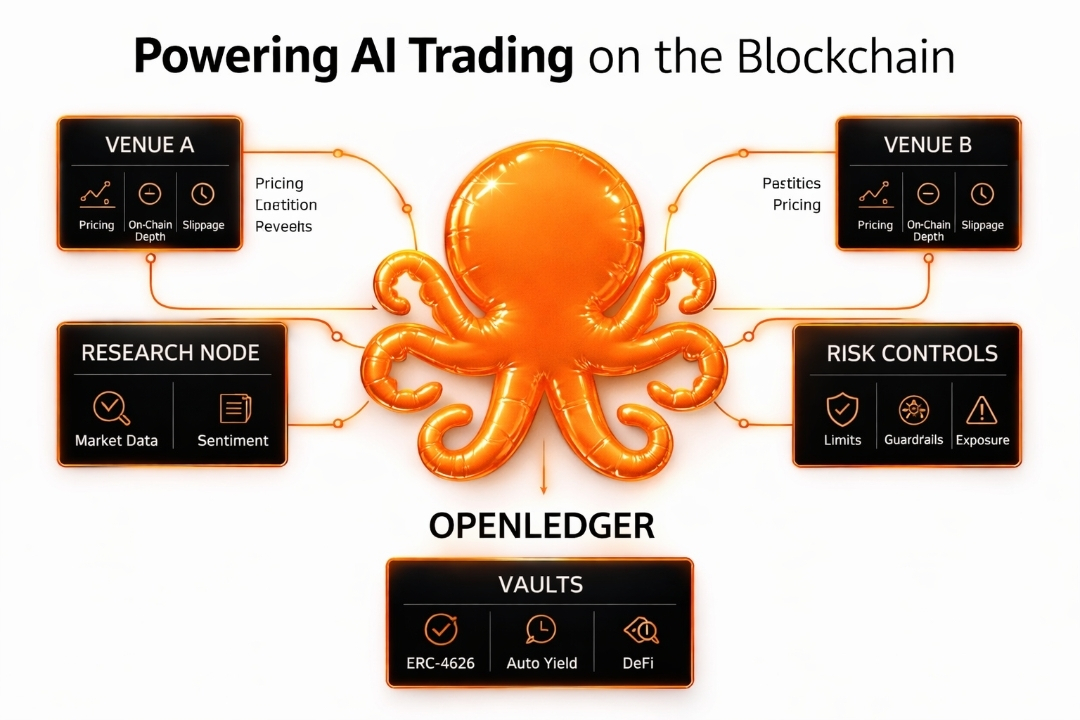
Then there’s the OctoClaw side of the ecosystem, which honestly feels like one of the most practical directions in the AI x crypto space right now. We’ve seen enough AI chatbots already. What interests me more are AI agents that can actually execute tasks, automate workflows and interact with DeFi in real time. The idea of deploying an intelligent trading or workflow agent in seconds is much more exciting than another AI token with no utility behind it.
I also think their adoption of ERC-4626 standards is underrated. Standardized vault infrastructure could become a major part of automated DeFi in the future, especially if AI-managed capital systems continue to grow. The concept of capital never sitting idle again sounds ambitious, but it also feels like the direction DeFi is naturally moving toward.
The recent OPEN Network EVM Bridge launch on Ethereum is another sign that they’re thinking beyond just short-term hype. Smooth asset movement and protocol-level infrastructure are things serious ecosystems eventually need.
Of course, the project is still early and there’s a lot left to prove. But that’s exactly why I find it interesting. OpenLedger doesn’t feel like a finished product pretending to have all the answers. It feels more like an evolving experiment at the intersection of AI, blockchain and automated finance.
And honestly, those are usually the kinds of projects worth watching closely before the broader market fully understands them.