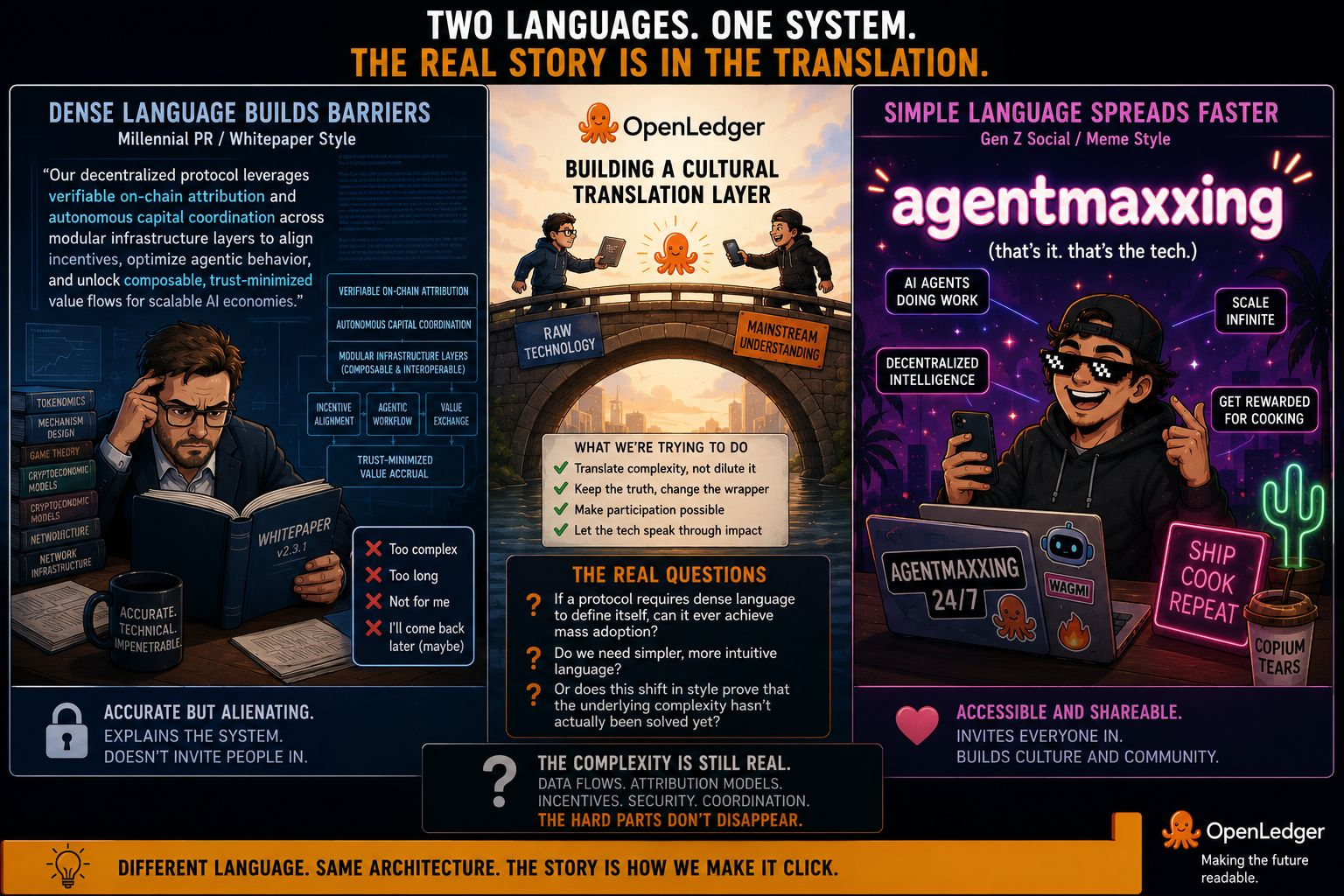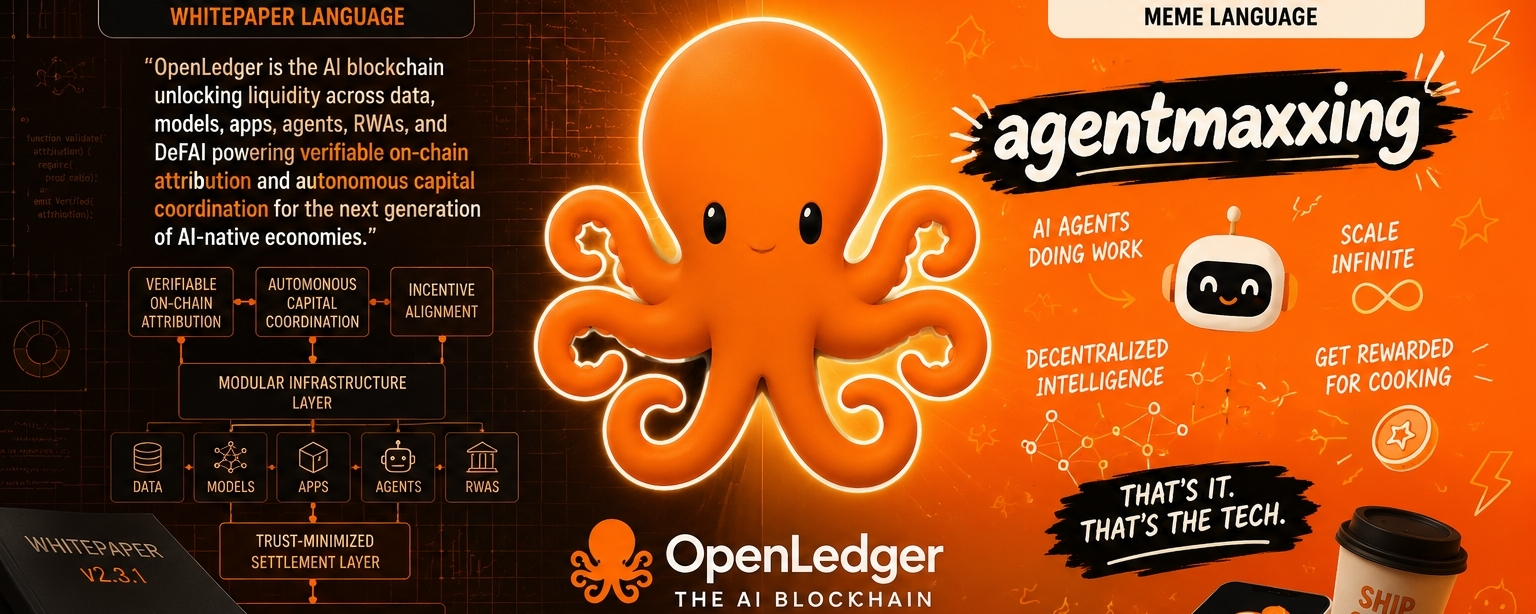
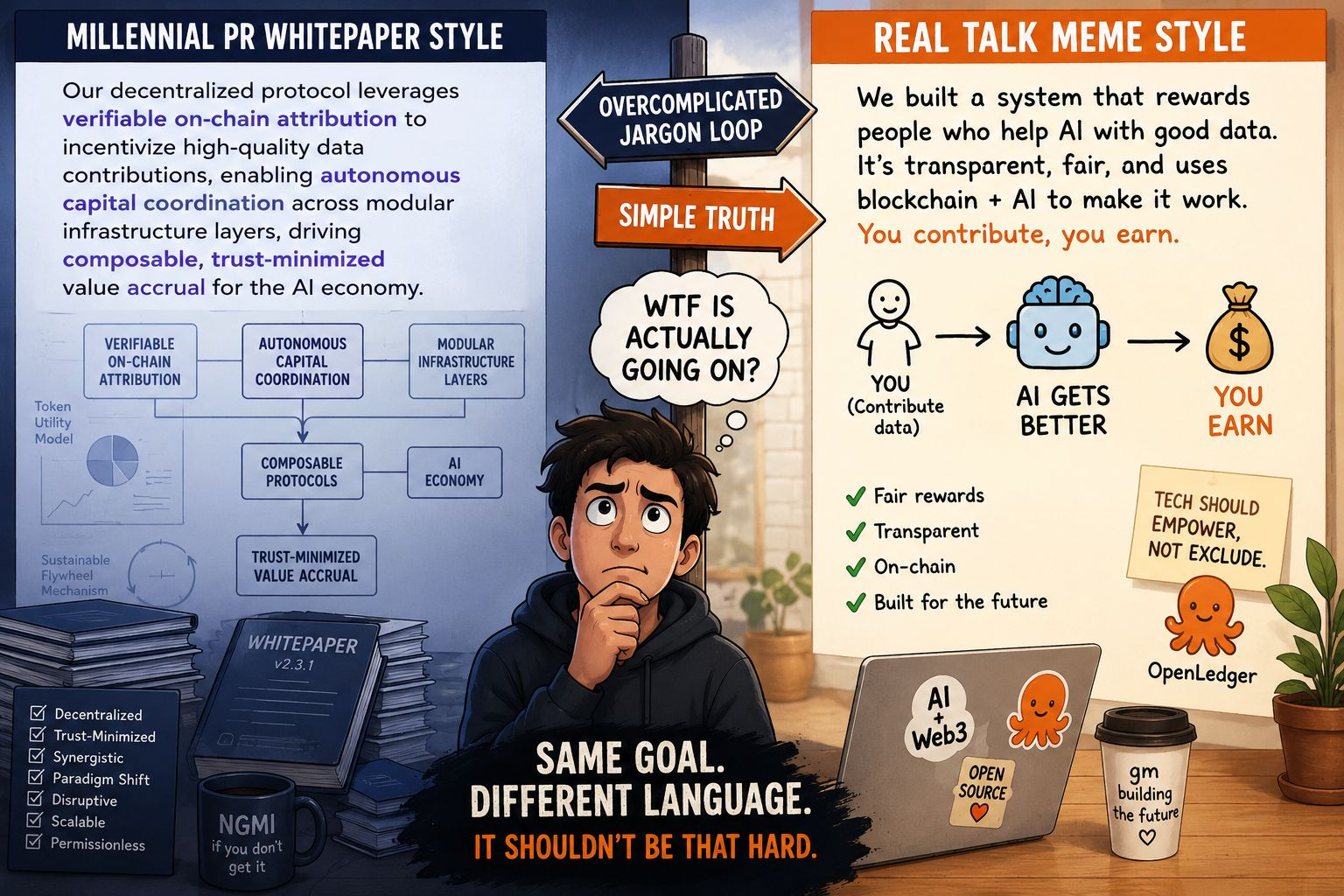
$OPEN --- I often wonder if Web3 and AI projects are actually this intricate, or if we are just trapped in a loop of overcomplicating them with dense jargon. At first glance, the technical explanations seem clear, but look closer and it often feels like circular phrasing masking the real innovation. This dilemma is perfectly captured in the recent meme from @OpenLedger . On one side, you have the Millennial PR style delivering heavy, corporate whitepaper terminology—like verifiable on-chain attribution and autonomous capital coordination—which, while accurate, completely alienates the average user.
On the flip side, the Gen Z social team reduces that entire sophisticated architecture into a single phrase: "agentmaxxing." It sounds like a joke initially, but the underlying engineering concept is identical—AI agents, system scaling, and decentralized intelligence coordination. This raises a critical question: does this hyper-simplification actually make the tech accessible, or does it just hide the real complexity? After all, the structural realities of data flow, attribution models, and incentive mechanics remain incredibly difficult, even if the language used changes how we perceive them.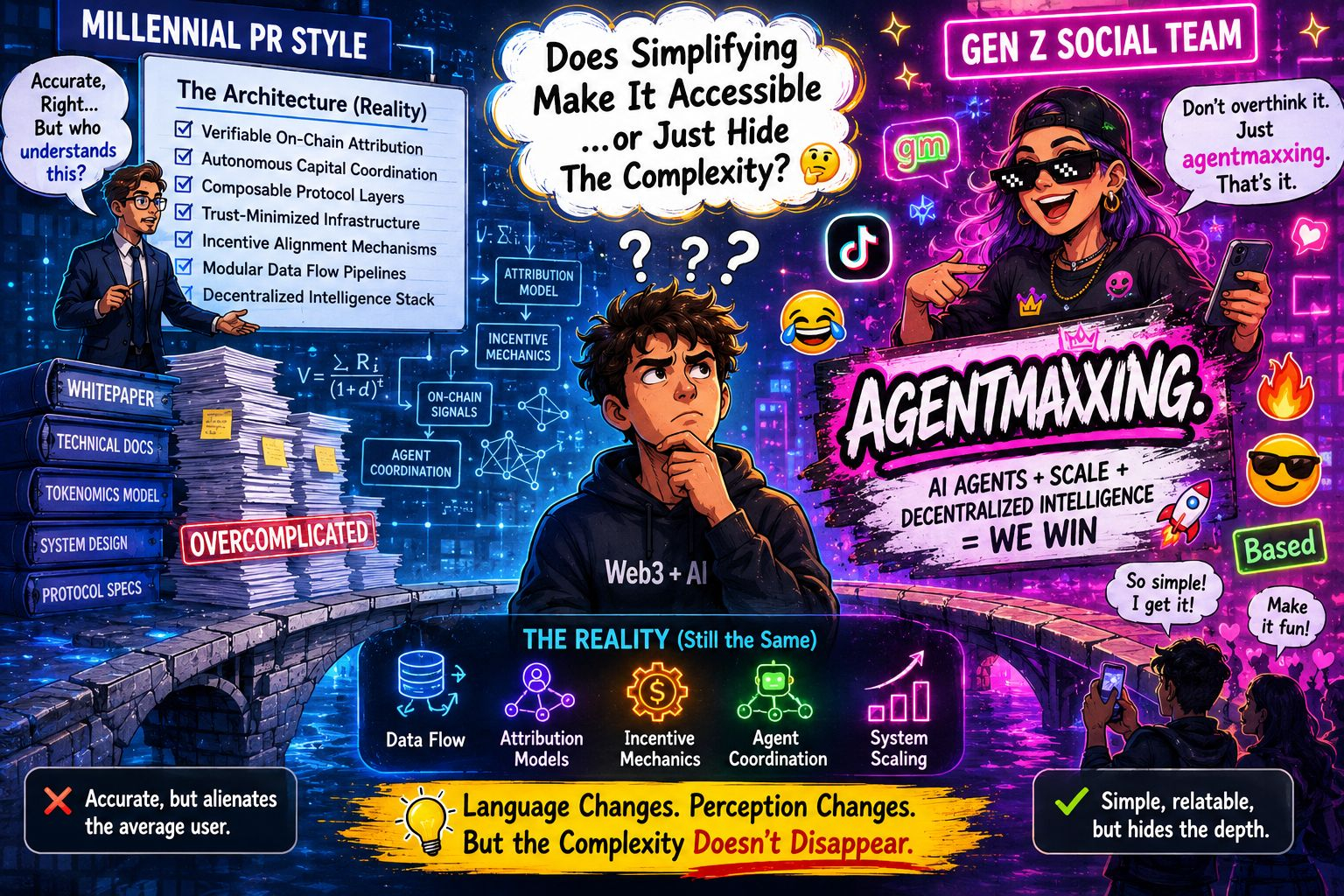
Ultimately, @OpenLedger feels like it is trying to build a cultural translation layer, bridging raw technology with mainstream understanding. But if a protocol permanently requires dense language to define itself, can it ever truly achieve mass adoption? Does it need a simpler, more intuitive language, or does this drastic shift in style prove that the underlying complexity hasn't actually been solved yet? The contrast between these two communication styles tells the real story.