
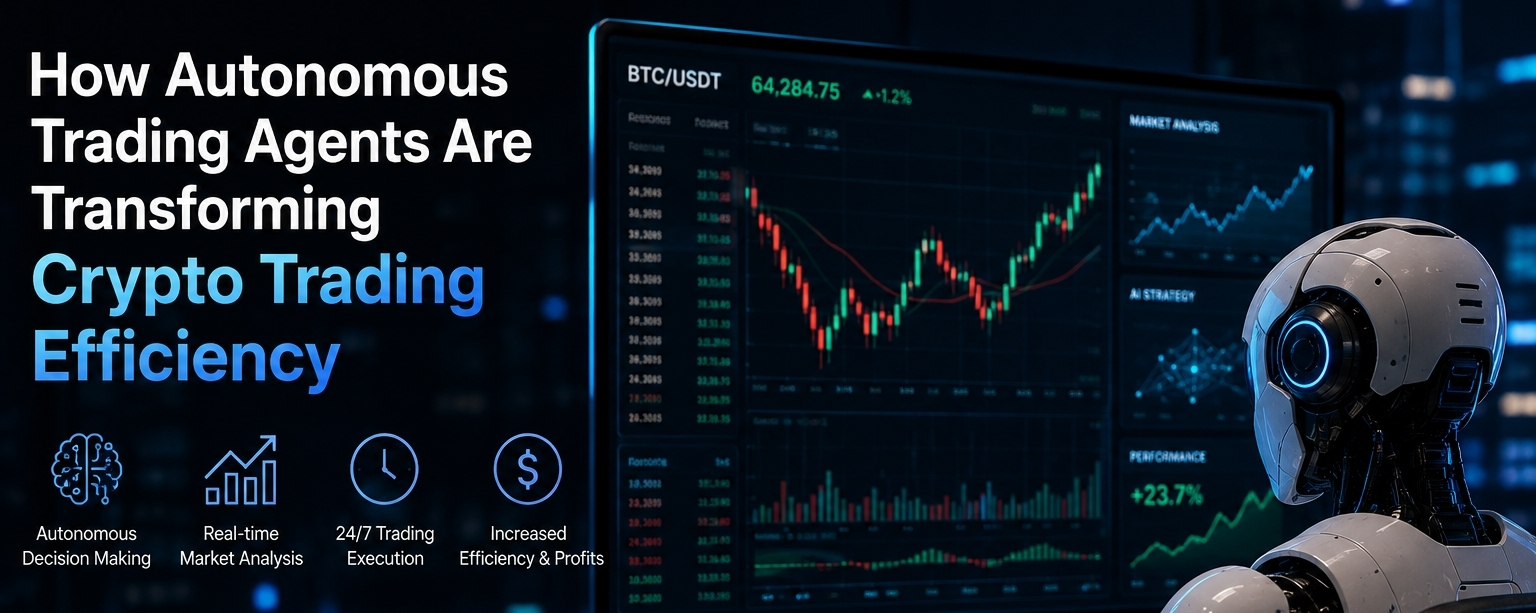
The world of crypto trading is evolving faster than ever. Traditional bots once dominated automated trading, but now a new generation of autonomous trading agents is transforming how on-chain execution works. These intelligent agents are not just following simple buy-and-sell rules — they are analyzing markets, adapting strategies in real time, and optimizing every transaction for maximum efficiency.
In decentralized finance (DeFi), speed and precision matter. A delay of even a few seconds can mean the difference between profit and loss. Autonomous trading agents solve this problem by operating continuously without human intervention. They monitor liquidity, gas fees, slippage, market volatility, and arbitrage opportunities across multiple blockchains simultaneously.
Unlike older trading systems, autonomous agents use advanced AI-driven logic. They can identify patterns, react instantly to changing market conditions, and execute trades with minimal latency. This creates a more efficient trading environment where opportunities are captured faster than manual traders could ever manage.
One of the biggest advantages of these agents is smart execution routing. Instead of placing trades through a single decentralized exchange, autonomous systems search across multiple liquidity pools to find the most efficient route. This reduces transaction costs and improves execution quality for traders.
Risk management is another area where autonomous agents are changing the game. Modern agents can automatically adjust position sizes, implement stop-loss strategies, and avoid high-risk conditions during periods of extreme volatility. This level of automation helps traders reduce emotional decision-making and maintain more consistent performance.
On-chain efficiency also benefits from predictive analytics. Autonomous trading agents can analyze blockchain data, wallet activity, and market sentiment to anticipate movements before they happen. By reacting early, these systems can gain a competitive advantage in highly crowded markets.
As blockchain ecosystems continue expanding, cross-chain trading is becoming increasingly important. Autonomous agents are now capable of interacting with multiple chains at once, enabling seamless asset movement and arbitrage opportunities between ecosystems like Ethereum, Solana, and Base. This interconnected approach improves overall market efficiency and liquidity distribution.
However, the rise of autonomous trading agents also introduces challenges. Security remains a major concern, as vulnerabilities in smart contracts or AI models could lead to significant losses. Additionally, regulators are beginning to pay closer attention to fully automated financial systems operating without centralized oversight.
Despite these concerns, the future of autonomous trading agents looks incredibly promising. As artificial intelligence and blockchain infrastructure continue to improve, these systems are expected to become smarter, faster, and more autonomous than ever before.
The next generation of on-chain trading may no longer rely on humans making every decision manually. Instead, intelligent autonomous agents could become the backbone of decentralized financial markets — executing trades, managing risk, and optimizing capital around the clock with unmatched efficiency.