
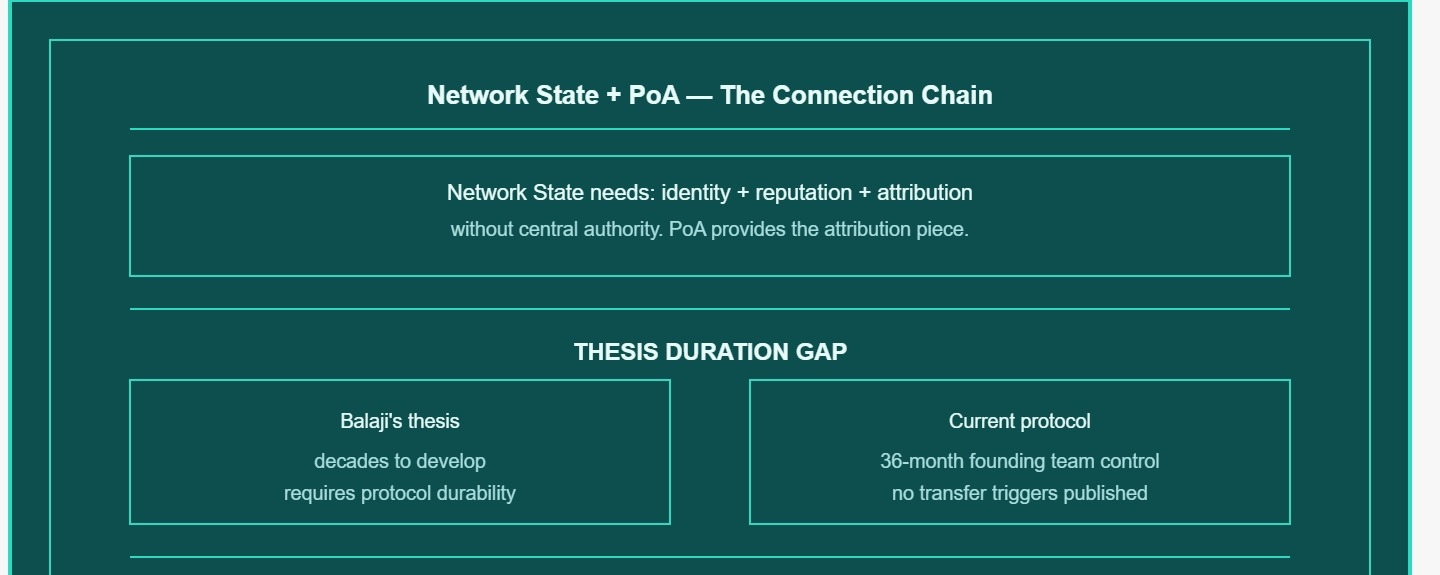
Thinking about how Balaji Srinivasan's Network State Thesis conects to the specific design choices in $OPEN's Architecture and the liink is More direct than ANY coverage i HAve seen actually examines.
Was re reading The Network State fremework when something clicked about why Balaji specifically becked OpenLedger rather than any other AI infrastructure PR0ject.
The Network State thesis Argues that the next evolution of Human 0rganization is digitalfirst communities that can compete with nation states.
these communities need verifiable, trustless infrastructure for three things
identity, reputation, and attribution. not controlled by any government. not controlled by any corporation. mathematically verifiable.
PoA is exactly that for AI attribution. it creates a verifiable, onchain record of who contributed what to which AI output without requiring trust in any central authority.
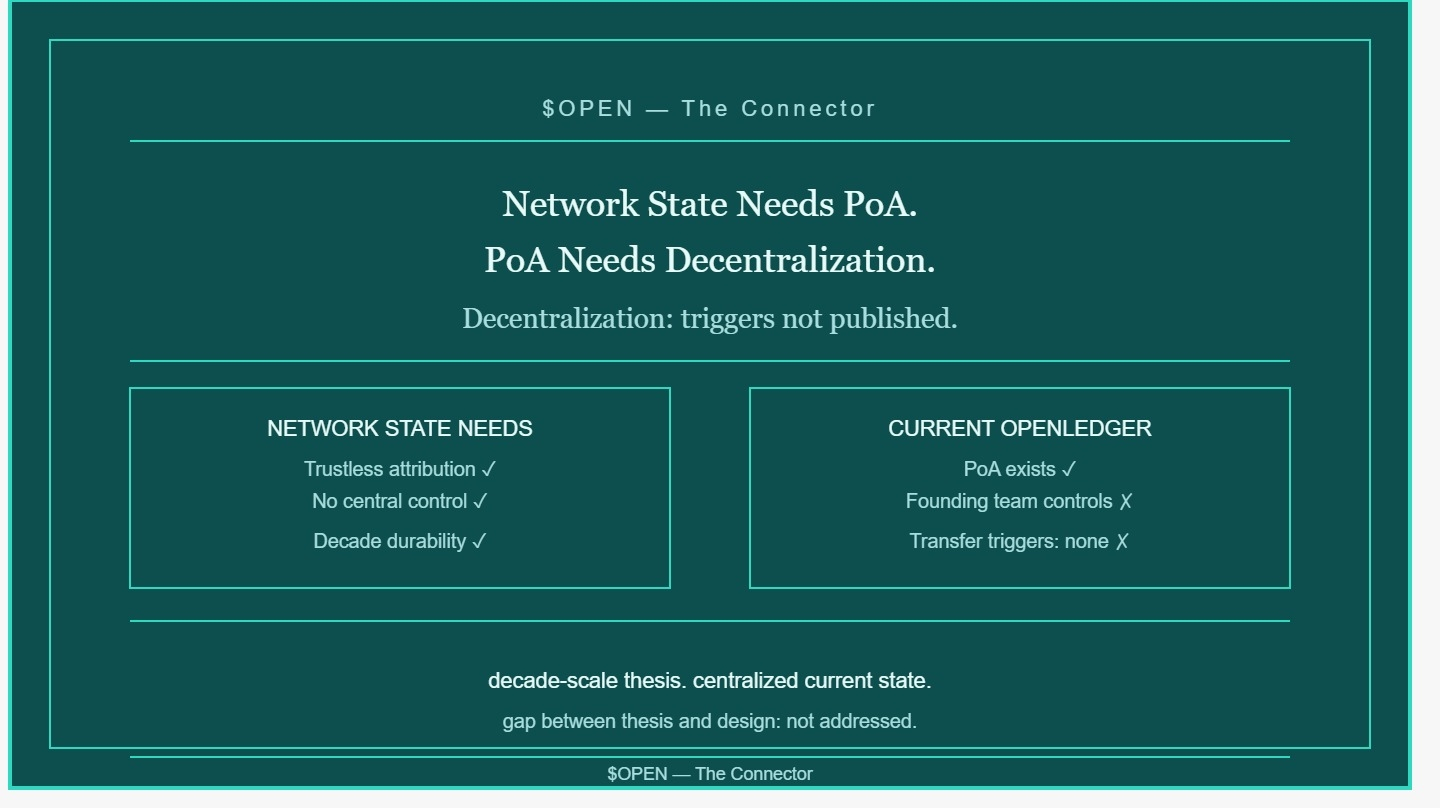
In the Network State framework, this is infrastructure for communities that want AI systems whose training data provenance is transparent and auditable without relying on big tech attestation.
the Network State thesis is explicitly long-duration. Balaji describes this as a decades-long process. the infrastructure needs to work in twenty years, not just in 2026.
that means OpenLedger needs to be designed for longevity protocol stability, governance that survives founding team turnover, and economic sustainability across multiple market cycles.
the current design has founding team control over core parameters, no published governance transfer triggers, and a token economics structure heavily dependent on the founding team's execution over the next 36 months.
an investor backing OpenLedger for the Network State thesis is making a bet that the founding team builds infrastructure durable enough to outlast their direct involvement.
the gap between that thesis and current protocol design — concentrated control, undocumented transfer triggers — is the execution risk embedded in the investment.
does OpenLedger's current centralized phase represent responsible protocol bootstrapping on the path to a Network State-compatible infrastructure? or does the absence of published decentralization triggers mean the Network State thesis backer is holding a protocol that may never reach the design philosophy that motivated the investment? 🔗