
Yes, the ongoing conflict in the Middle East has significantly affected the cryptocurrency market. Like stock markets and oil prices, crypto has reacted strongly to rising geopolitical tensions, especially during periods of uncertainty involving Iran, Israel, and global energy routes such as the Strait of Hormuz.
When the conflict escalated earlier this year, Bitcoin and other major cryptocurrencies experienced sharp price swings as investors rushed to reduce risk. Reports showed that billions of dollars were liquidated from the crypto market within hours after major military developments were announced.
At the same time, the crisis also increased interest in crypto in some regions. Stablecoins such as USDT and USDC saw a major rise in usage across the Middle East as businesses and individuals looked for faster and borderless payment methods during financial uncertainty. Some reports even showed crypto trading volumes in the region rising sharply in 2026.
Interestingly, despite the volatility, Bitcoin has shown resilience compared to traditional markets. Several analysts noted that crypto recovered quickly after initial panic selling, with institutional investors continuing to buy Bitcoin through ETFs and corporate investments.
Overall, the Middle East conflict has made the crypto market more volatile, but it has also highlighted crypto’s growing role as an alternative financial system during global uncertainty.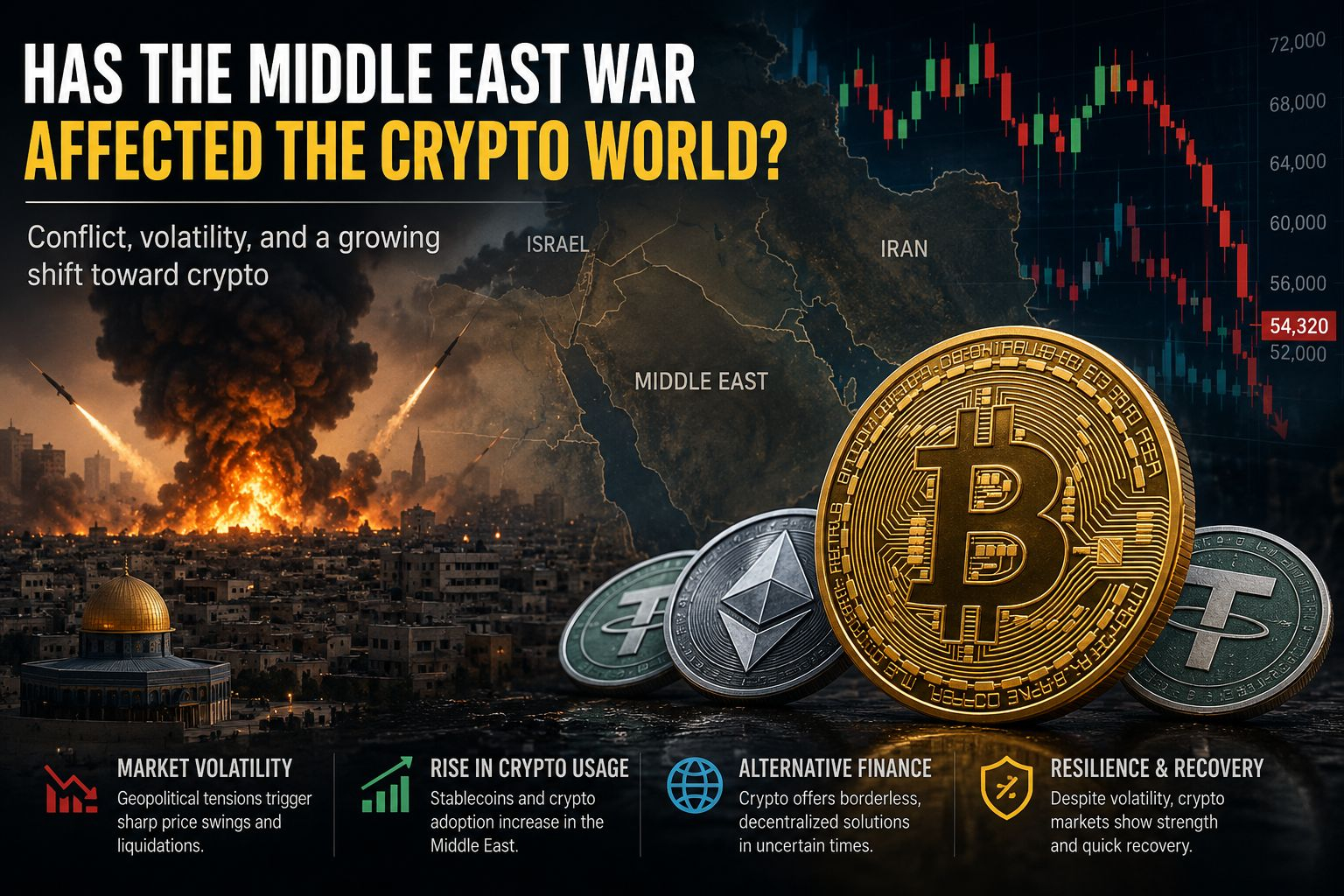
#MiddleEastCrisis #war #crypto $BTC
