

I used to think a good answer was mostly about how clean it sounded on the surface. But the more I watch how digital intelligence is being built, the more I feel that the real story often begins before the answer appears. The quiet part is the context behind it, and that context is becoming too important to disappear.
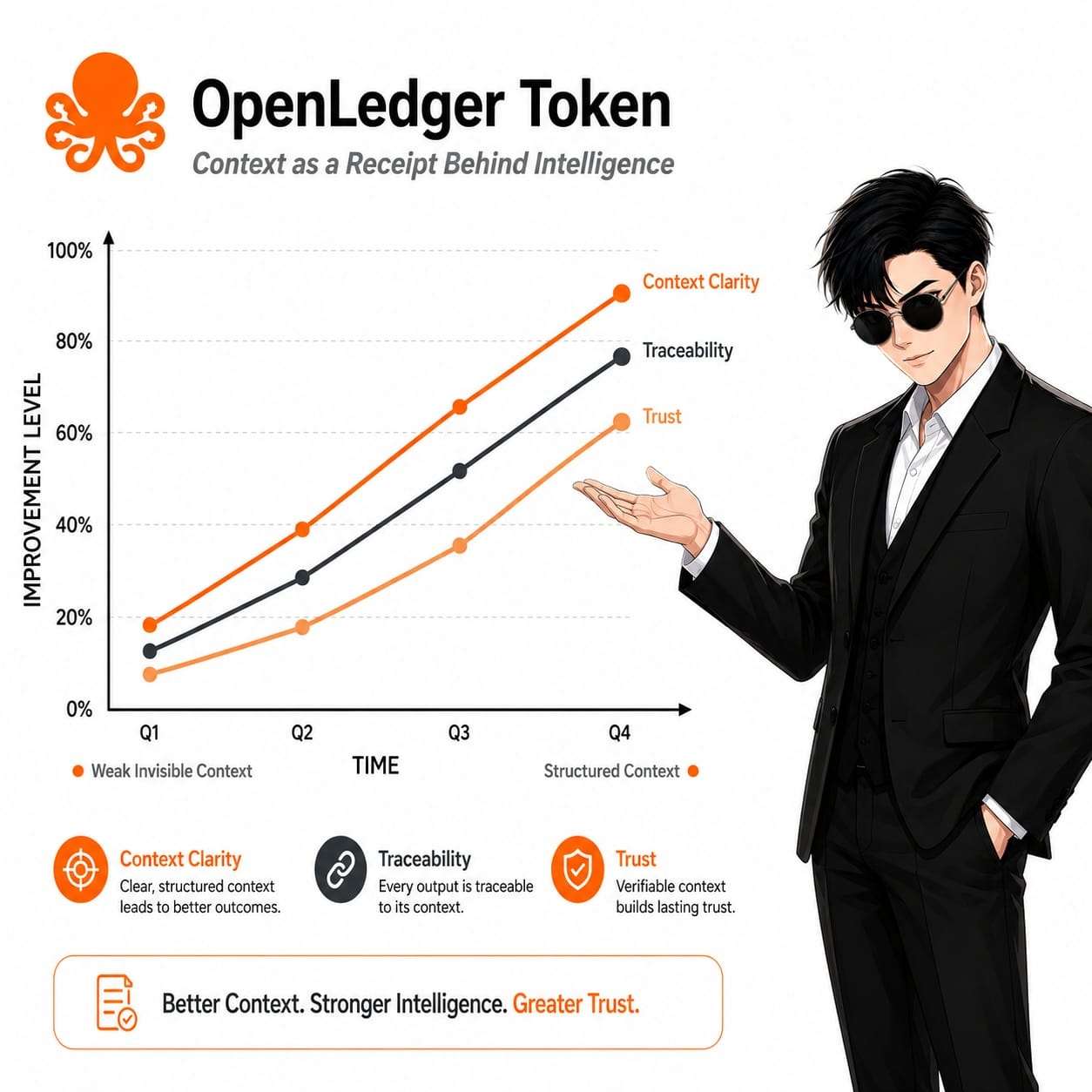
Every useful response carries something behind it. There is intent, timing, examples, domain knowledge, past correction, and sometimes one small detail that changes the whole meaning. We may only see the final line, but the answer did not come from empty space. It was shaped by signals, and those signals deserve more respect.
This is where open ledger token becomes interesting to me. Not because it makes a loud promise, but because it points toward a better way of thinking about context. Context should not always be treated like temporary background noise. Sometimes it is the real reason an answer becomes useful, sharp, and trusted.
I think we are entering a stage where records matter more than ever. When context disappears, we lose the receipt of why something made sense. We may remember the answer, but forget the situation that gave it meaning. That is a quiet weakness, becuase future systems can repeat the surface without carrying the deeper understanding.
For specialized knowledge, this matters even more. A small missing signal can change the direction of a response. One outdated detail can make a confident answer feel strong while standing on weak ground. That is why open ledger token feels connected to a bigger idea: intelligence should not only produce, it should also account for what shaped the production.
I like this angle becuase it feels more honest. We do not need every process to become heavy or confusing, but we do need better memory around what mattered. Some context is useful. Some context is noise. Some context comes from real effort, while some only looks relevant from far away. Without a clear trail, all of it can get mixed together.
For me, open ledger token represents that positive shift from invisible input to visible value. It suggests that context can have a history, a role, and maybe even a fairer place in the system. That does not mean everything becomes perfect. It simply means we start asking better questions before trusting a polished answer.
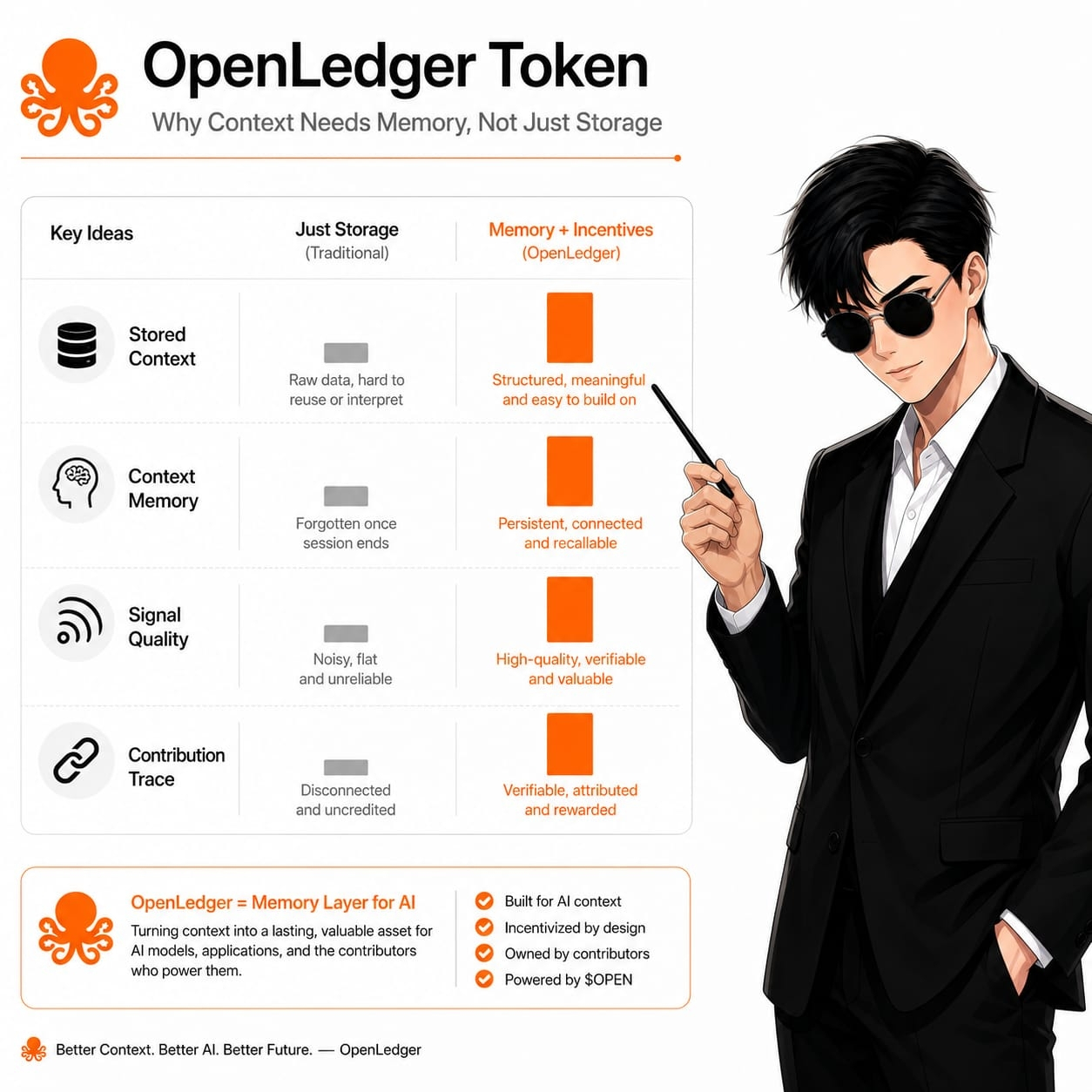
I also think this can make contributors feel more seen. When people add useful knowledge, correction, or domain signals, their work should not vanish the moment the final output arrives. open ledger token makes me think about a future where contribution is not just used, but remembered in a more structured way.
There is something inspiring in that. We are not only building faster systems; we are learning to build more accountable ones. open ledger token fits into this conversation because it reminds us that context is not a small thing. It is the ground under every useful result, even when nobody notices it at frist.
And maybe that is the bigger lesson. The future will not belong only to the biggest answers, but to the clearest foundations behind them. If we can protect the meaning behind context, we can build trust with more patience and honesty. That is why open ledger token feels important to me, and why I believe context needs a receipt before intelligence can truly feel complete.
