For years, the digital world has been obsessed with production.
More posts. More videos. More data. More content.
The challenge was always creating enough.
Now something interesting is happening. AI is making creation easier than ever, and suddenly a different question is starting to matter.
Where did all of this come from?
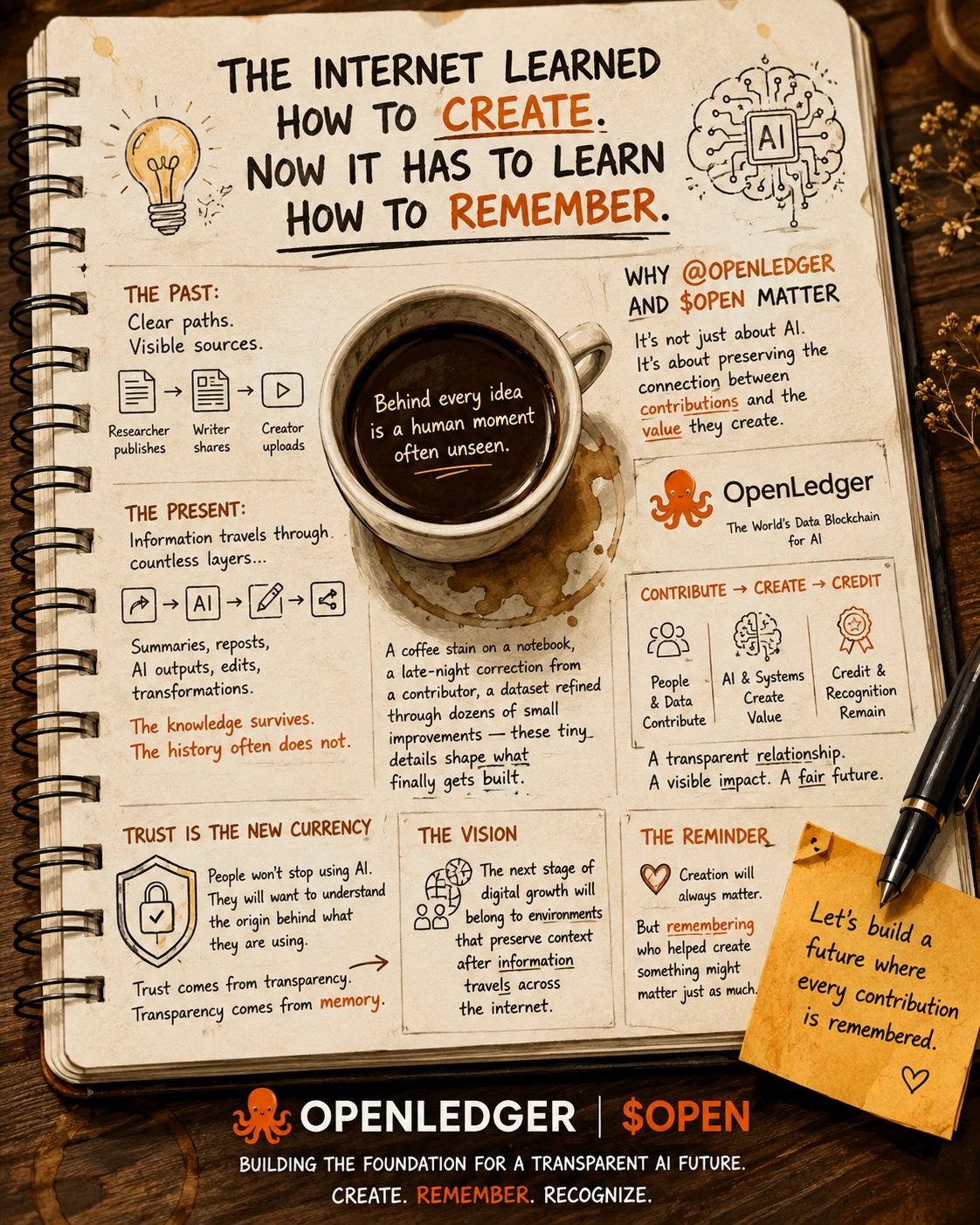
A few years ago, finding the source of an idea was often straightforward. A researcher published a paper. A writer shared an article. A creator uploaded a video. The path could usually be followed.
Today that path feels much less stable.
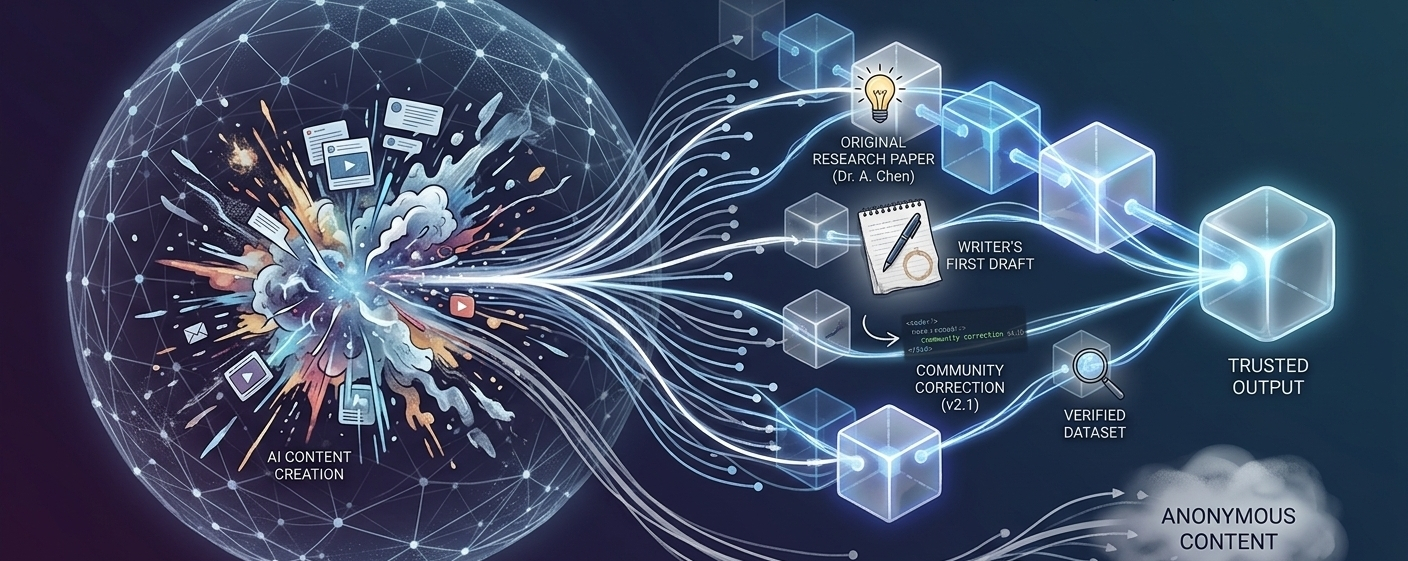
Information moves through countless layers of summaries, reposts, AI outputs, edits, and transformations. By the time something reaches a large audience, the original contribution may be almost invisible.
The knowledge survives.
The history behind it often does not.
That is one reason I find the conversation around @OpenLedger and $OPEN increasingly relevant.
What stands out is not simply the AI component. Plenty of projects are building AI tools. What feels more important is the attempt to maintain a visible relationship between contributions and the value those contributions create.
That distinction may sound small at first.
It isn't.
If data helps train a system, if expertise improves an output, or if community participation strengthens a network, those inputs become part of the final result. Yet in many digital environments, the connection between contribution and outcome gradually disappears.
Everyone benefits from the finished product, but few people can clearly see how it came together.
A coffee stain on a notebook, a late-night correction from a contributor, a dataset refined through dozens of small improvements these tiny details rarely receive attention. Yet they often shape the quality of what eventually gets built.
As AI-generated content becomes more common, trust may become one of the most valuable assets online.
Not because people will stop using AI.
Because people will want to understand the origin behind what they are using.
The next stage of digital growth may not belong exclusively to the fastest models or the biggest systems. It may belong to environments capable of preserving context after information begins traveling across the internet.
Creation will always matter.
But remembering who helped create something might matter just as much.