
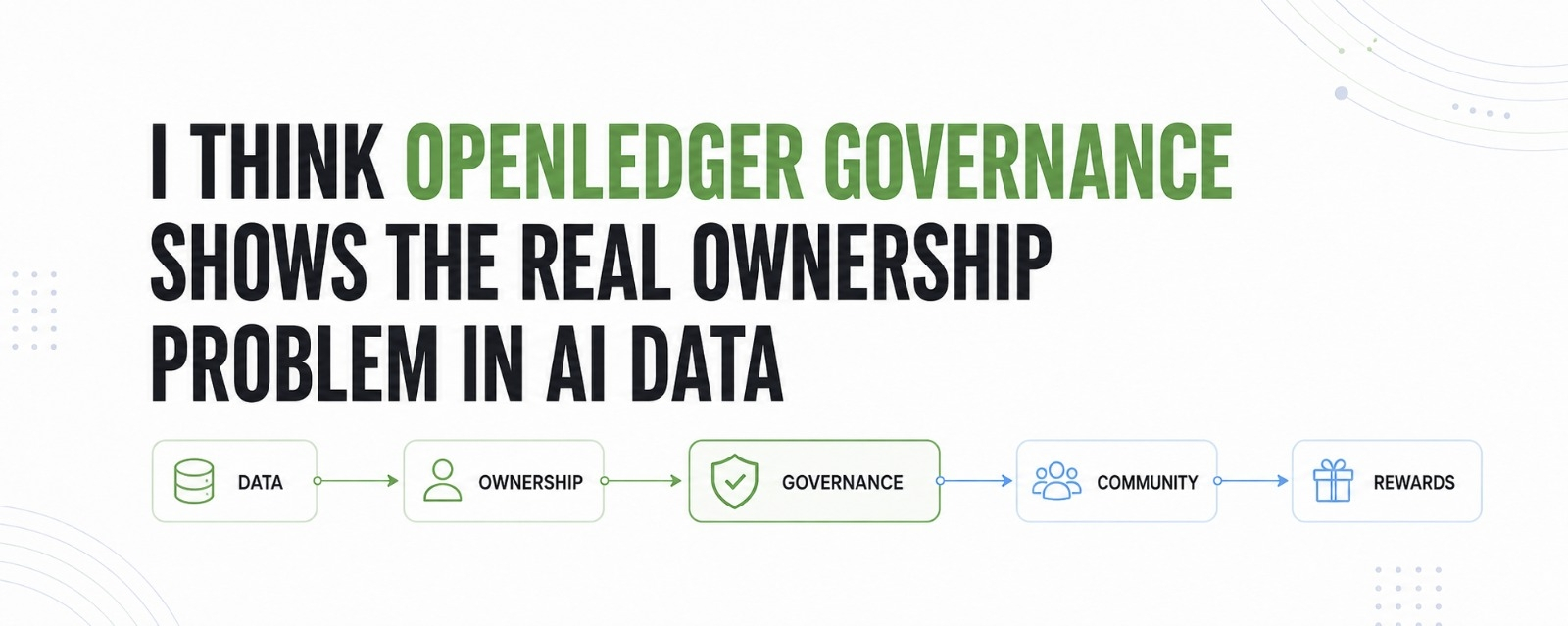
I did not pay much attention to @OpenLedger governance at first. I thought it was just another voting feature written for token holders. But when I looked at it properly, it felt more connected to the real problem OpenLedger is trying to solve.
OpenLedger is not only talking about AI models. It is talking about data, Datanets, contributors, rewards, and ownership. So the question becomes simple. Who should help decide the rules of this system?
That is where governance matters.
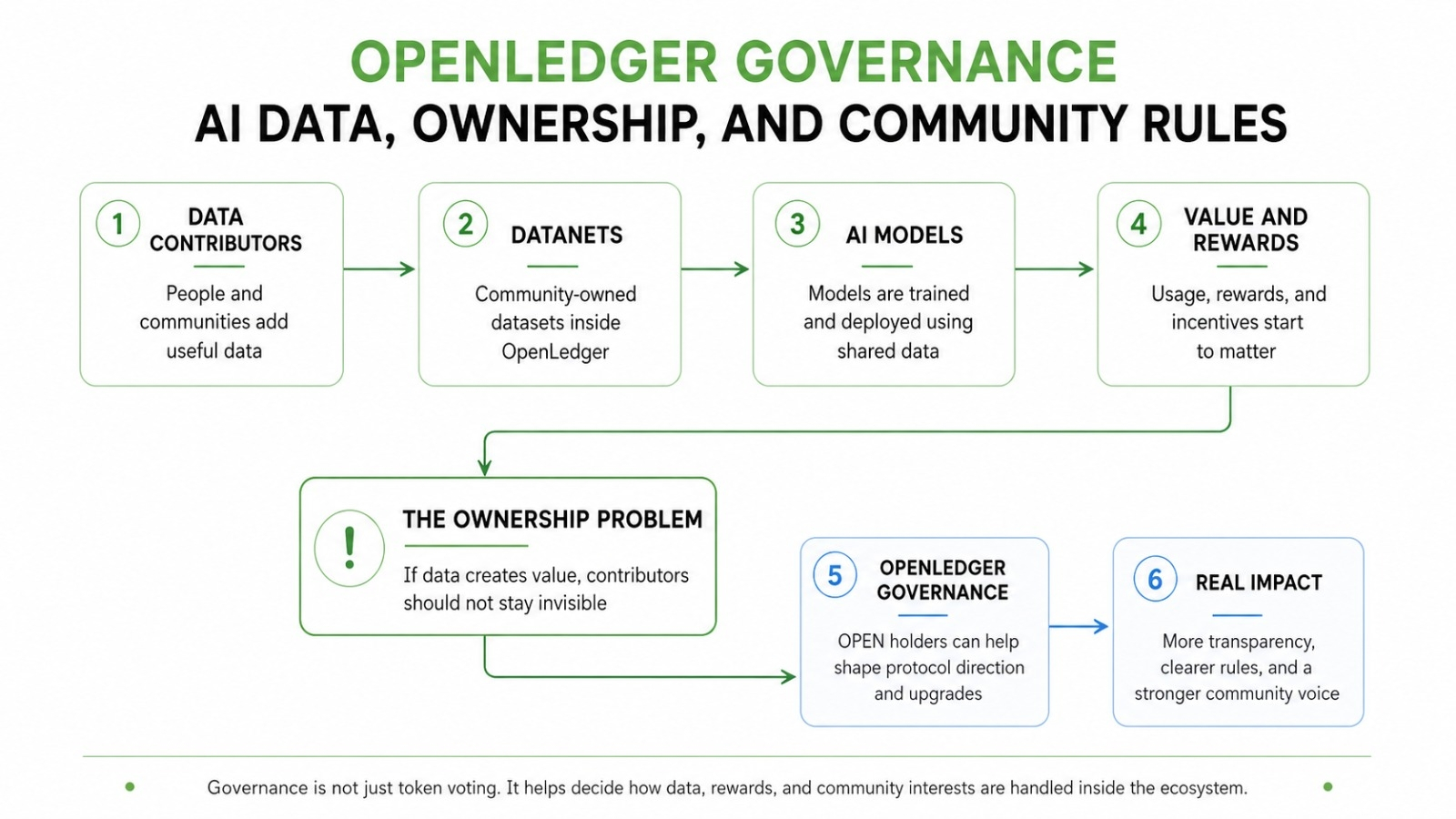
#OpenLedger says its governance is powered by a hybrid on-chain system using OpenZeppelin’s modular Governor framework. In simple words, $OPEN token holders can take part in protocol direction and upgrades. This means governance is not sitting outside the project. It is part of how the network may grow over time.
For me, this is important because AI has a quiet problem. A lot of data helps train models, but the people behind that data are often invisible. They may not get credit. They may not get reward. They may not get a voice.
OpenLedger’s idea feels interesting because it connects AI data with blockchain-based ownership and decision-making.
If Datanets are the data layer, then governance is the rule layer. It can affect upgrades, incentives, reward systems, and how value moves inside the ecosystem.
There is also a social side here. If communities are helping build useful datasets, they should not only be treated as users. They should have some role in shaping the system too.
But I would not pretend governance solves everything.
Token voting can still favor big holders. Small users may ignore voting. So the real test is not only the technology, it is participation.
That is why OpenLedger governance matters to me. It shows that AI data ownership is not just about building models. It is also about who gets to make the rules.