
I used to think the biggest problem in AI was the model itself.
Bigger. Faster. Smarter. Better benchmarks. That's what we all chase, right?
But then something started bothering me. A question that kept coming back late at night while scrolling through yet another "breakthrough" announcement.
Who actually creates the value of all this AI?
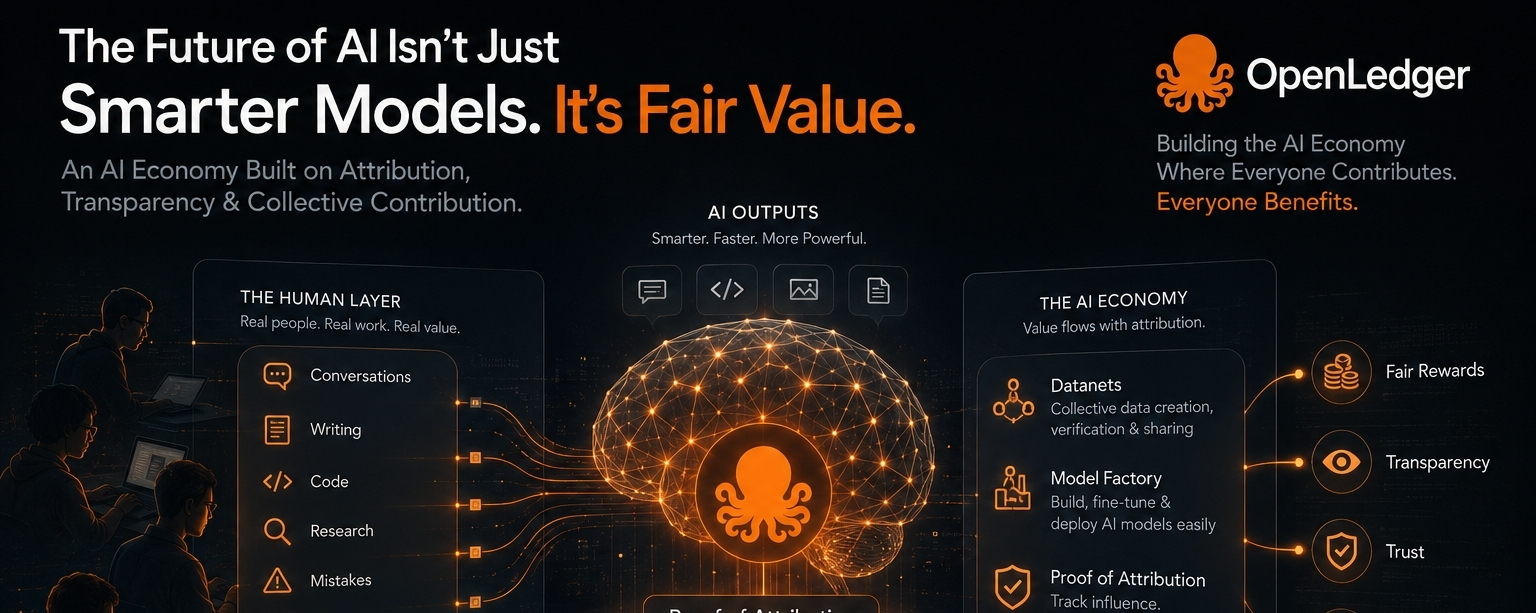
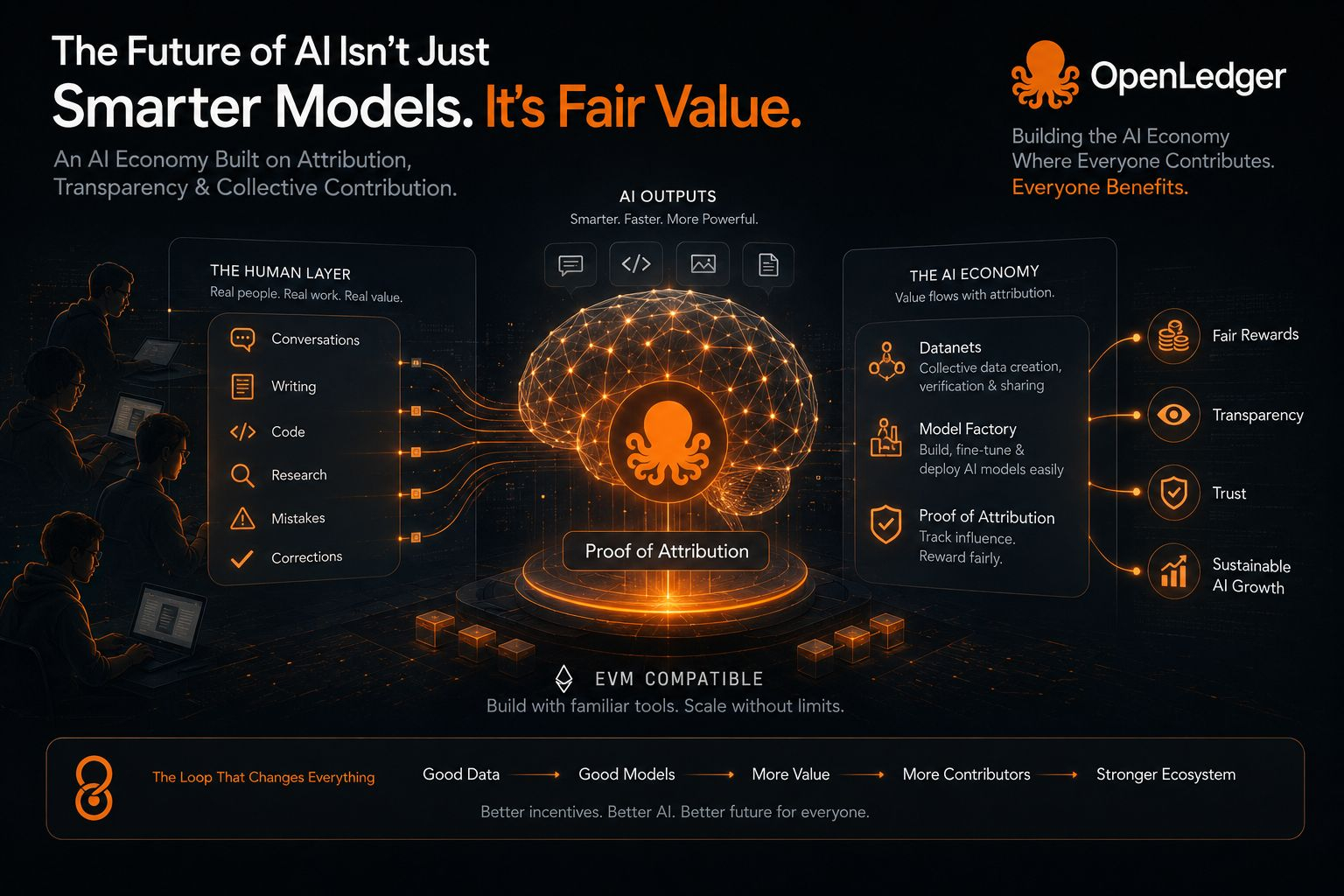
Think about it. Every smart thing an AI does sits on top of data. And that data isn't magic—it's human. Conversations, writing, code, research, mistakes, corrections. Real people making real stuff. But when value comes out the other end? Mostly flows to the model owners. The people who fed the system? Often get nothing.
That didn't sit right with me.
So I looked at @OpenLedger . At first glance, it looked like ten other AI + blockchain projects out there. A lot of them just slap "AI" on the name and call it a day. But digging deeper, I saw something different.
They're not asking "how to build a better model." They're asking something harder.
Can we build an AI economy where contributions are actually measured and rewarded?
That changes everything. Three pieces stood out to me.
First, Datanets — treating data as collective effort, not just something you pull from anywhere. People create, verify, and share data for specific AI use cases. Simple idea, but it flips the incentive.
Second, Model Factory — lowering the technical wall. Lots of people have AI ideas but can't move forward cause building or tuning models is too hard. If that gets easier, innovation doesn't stay locked in big labs.
Third — and this is the real difference — Proof of Attribution. Right now, when AI produces something, you can't tell how much each data source contributed. Everything gets mixed up. This tries to solve that. Track influence. Reward accordingly. If it works at scale? That's huge.
Also worth noting — it's EVM compatible. Developers don't have to learn everything from scratch. Ethereum tools, wallets, smart contracts all work. That prolly matters for adoption.
But I'm not gonna sit here and pretend it's simple.
Three big challenges stay on my mind.
One — attribution accuracy. If you can't correctly measure how much data contributed, trust breaks immediately. Like what if the system messes that up? Then the whole thing kinda falls apart.
Two — developer adoption. Great infrastructure means nothing if people don't actually use it. And let's be real — getting devs to switch platforms is always a fight.
Three — model quality. At the end of the day, users don't just care about "who contributed." They care about whether the output is actually useful or not. Everything else is secondary.
Still, there's a loop here that's interesting. Good data makes good models. Good models attract good data. That's not nothing, you know?
Will it work? Honestly, too early to say. Designing an AI economy is messier than it looks on paper — way messier actually.
But one thing is clear — the further AI goes, the louder these questions get. Who contributes? Who gets value? Where does the balance sit?
Maybe that's not a side conversation anymore. Maybe that is the future.
And yeah… that's worth paying attention to 👍