Most conversations around AI focus on models, data, and technological breakthroughs. That's understandable. AI is moving fast, and every week seems to bring another headline about what machines can do.
But while exploring @OpenLedger , I found myself thinking about something completely different.
I was thinking about places that people forgot.
Across the world, there are towns and cities that once thrived with activity. People moved there to work, start businesses, and build better lives. These places weren't successful because of their buildings or infrastructure alone. They succeeded because opportunity existed there.
Then circumstances changed.
Industries declined. Jobs disappeared. New opportunities emerged elsewhere. Slowly, people stopped showing up.
The streets remained. The buildings remained. Yet the energy that once made those places valuable was gone.

What fascinates me is that value isn't created by presence alone. It's created when people have a reason to contribute.
The same idea applies to digital ecosystems.
Many platforms today measure success through user numbers, social engagement, and growth charts. Those metrics can look impressive, but numbers don't always tell the full story. A large community without meaningful participation can become surprisingly fragile.
That's one of the reasons OpenLedger stands out.
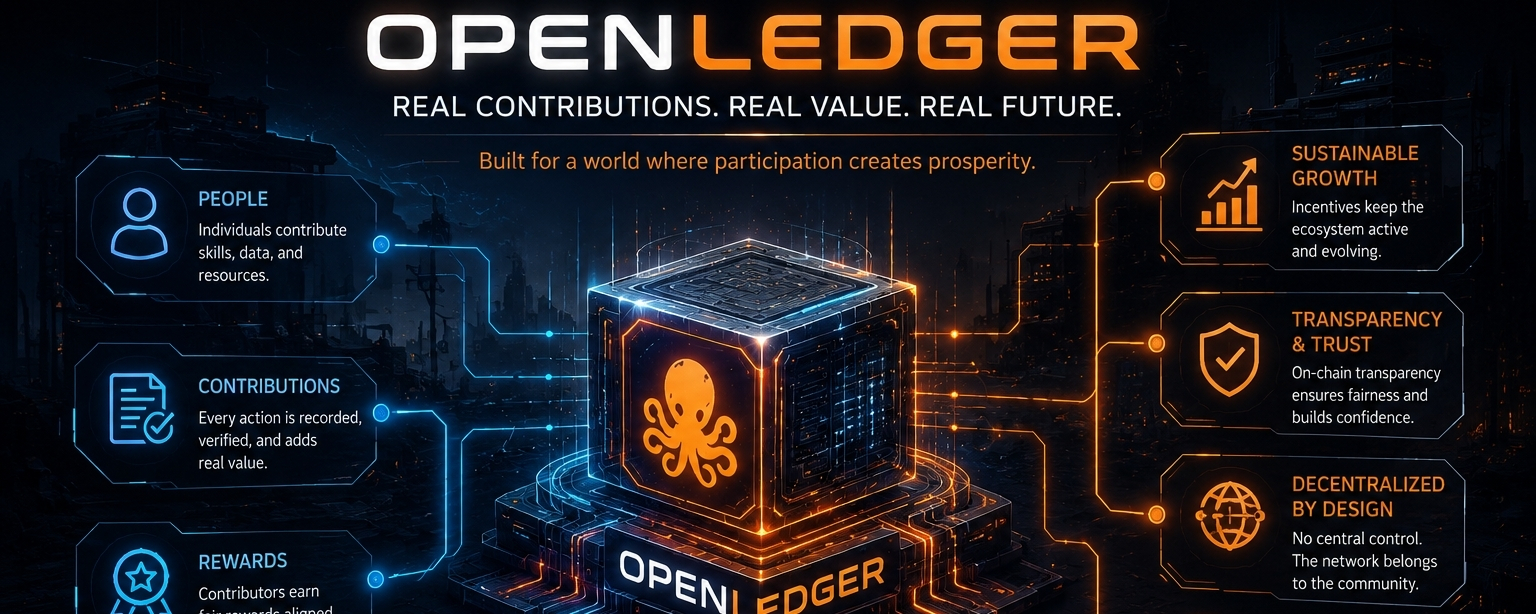
What caught my attention wasn't the technology itself. It was the emphasis on contribution and shared value creation. The platform seems built around the idea that ecosystems become stronger when participants are rewarded for adding value rather than simply existing within the network.
That distinction matters.
History shows that communities survive when incentives remain aligned. Whether it's a city, a marketplace, or a digital network, people continue investing their time and effort when they believe their contributions matter.
Without that connection, growth can become temporary.
With it, an ecosystem has a chance to evolve naturally.
This is why OpenLedger made me think less about artificial intelligence and more about sustainability. Technology can attract attention, but long-term success usually depends on something deeper: creating an environment where people genuinely want to stay, participate, and build.
The most successful ecosystems of the future may not be the ones with the loudest marketing or the biggest headlines.
They may be the ones that continuously give people a reason to contribute.
Because when incentives disappear, even the strongest-looking systems can fade away.
And when participation is rewarded, communities often become far more resilient than anyone expects.