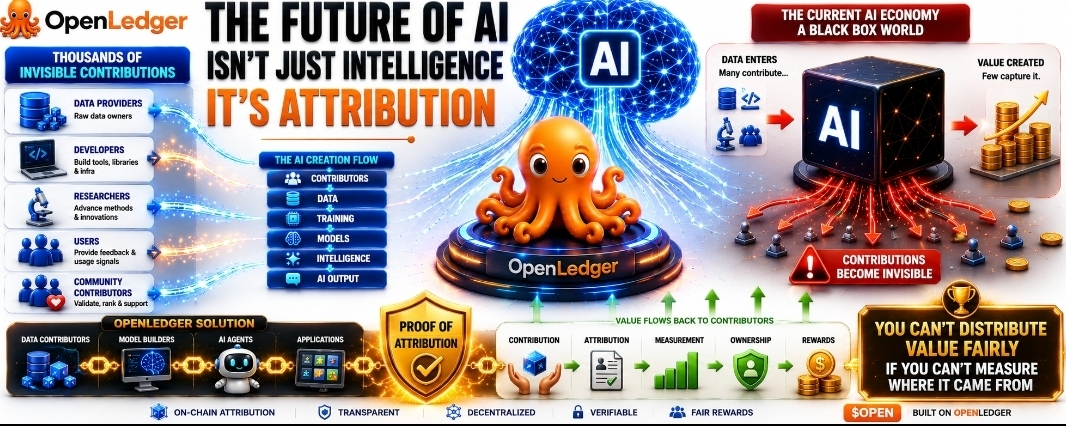
Most discussions around AI focus on one thing: making models smarter. Every new release is compared by speed, reasoning ability, accuracy, or benchmark performance. While those improvements matter, I think a more difficult question sits beneath the surface.
What actually made the model intelligent in the first place?
When an AI system produces a useful answer, the result is easy to see. What is much harder to see are the countless contributions behind that result. Data providers, developers, researchers, users, and feedback loops all play a role in shaping the final outcome. Yet most of those contributions remain invisible once the model is deployed.
That is one reason @OpenLedger stands out to me.
The project appears to focus on traceability rather than treating intelligence as a black box. Instead of only asking how AI can become more capable, it raises another question: how can contribution be measured and recognized across the entire process?
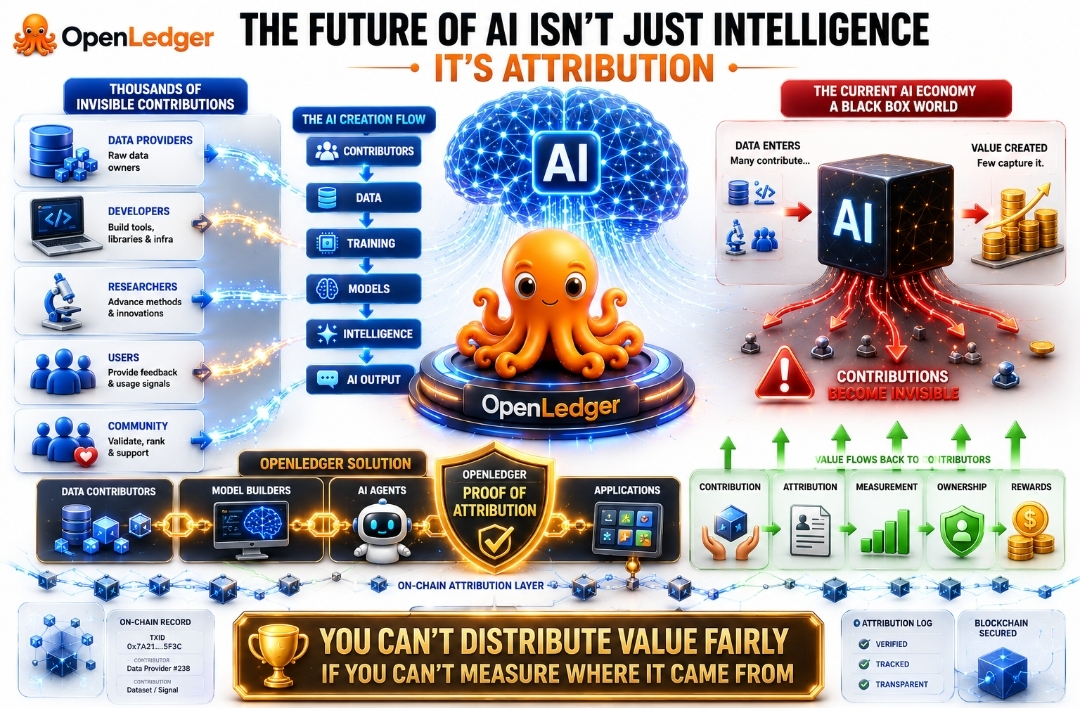
This is important because attribution determines value distribution. It becomes very challenging to create equitable economic systems if no one can pinpoint the source of value. The people and resources helping build intelligence risk being disconnected from the benefits that intelligence generates.
As AI ecosystems continue to grow, I think ownership and attribution will become increasingly important topics. Intelligence alone may not define the next stage of development.
The bigger challenge could be creating systems capable of tracking the data, participation, and coordination that make intelligence possible.
That is the direction OpenLedger seems to be exploring.