
Bitcoin ( $BTC ) Fundamental Analysis: The Future of Digital Money
Bitcoin remains the world’s largest and most recognized cryptocurrency, built on the foundation of decentralization, scarcity, and security. Since its launch, BTC has evolved from an experimental digital currency into a globally recognized asset class, often compared with gold due to its limited supply and long-term value proposition.
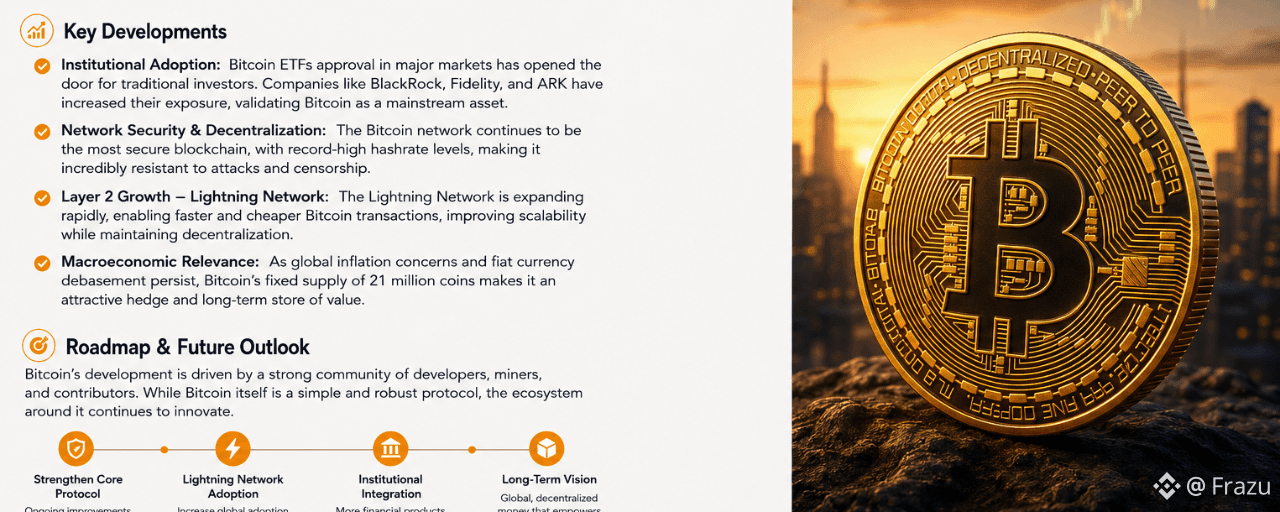
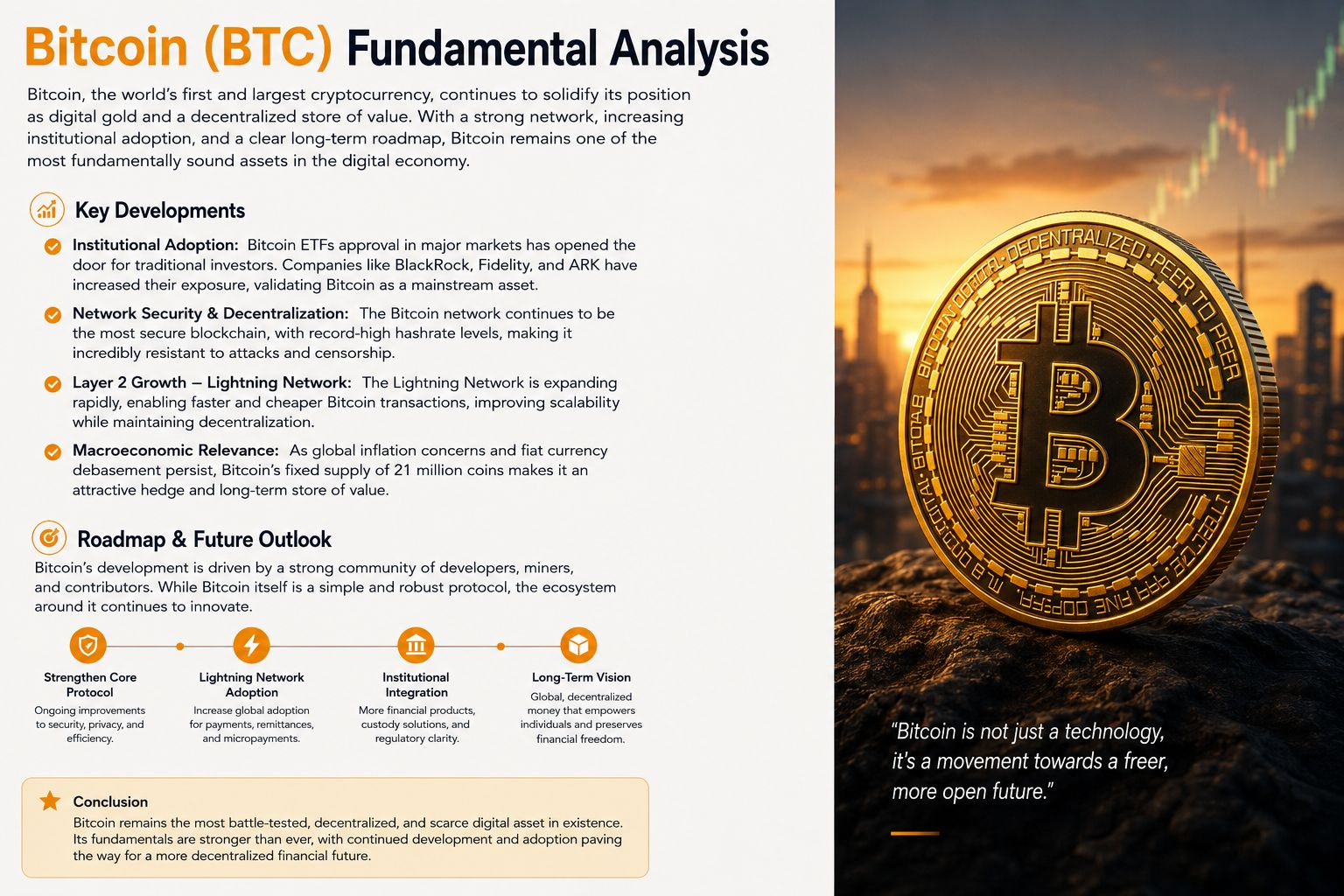
One of Bitcoin’s strongest fundamentals is its fixed supply of 21 million coins. Unlike traditional currencies that can be increased through monetary policies, Bitcoin’s scarcity creates a unique economic model. This limited supply, combined with growing demand, is one of the key reasons investors view BTC as a potential store of value.
The Bitcoin network continues to maintain one of the strongest security infrastructures in the blockchain industry. Through its Proof-of-Work mechanism, thousands of miners worldwide contribute computing power to protect the network, making it highly decentralized and resistant to manipulation.
A major development for Bitcoin has been the growth of institutional adoption. The introduction of Bitcoin investment products, increasing interest from financial institutions, and growing corporate acceptance have helped BTC move further into mainstream finance. This shift has improved Bitcoin’s credibility among traditional investors.
Another important area of development is Bitcoin’s scalability. Solutions such as the Lightning Network are being developed to enable faster and cheaper transactions while keeping Bitcoin’s core principles of security and decentralization intact. These improvements support Bitcoin’s potential use beyond just a store of value.
Looking ahead, Bitcoin’s roadmap is focused on strengthening its ecosystem through better infrastructure, improved transaction efficiency, increased adoption, and continued network security. The developer community continues to work on upgrades and innovations that enhance Bitcoin’s reliability without compromising its decentralized nature.
However, Bitcoin also faces challenges, including regulatory uncertainty, market volatility, energy consumption debates, and competition from other blockchain technologies. Investors should consider both the opportunities and risks before making decisions.
Overall, Bitcoin’s fundamentals remain strong due to its scarcity, security, global recognition, and expanding adoption. While short-term price movements can be unpredictable, BTC continues to represent one of the most significant innovations in the digital financial landscape.
#Bitcoin #BTC #CryptoMarket #Blockchain #DigitalAssets