
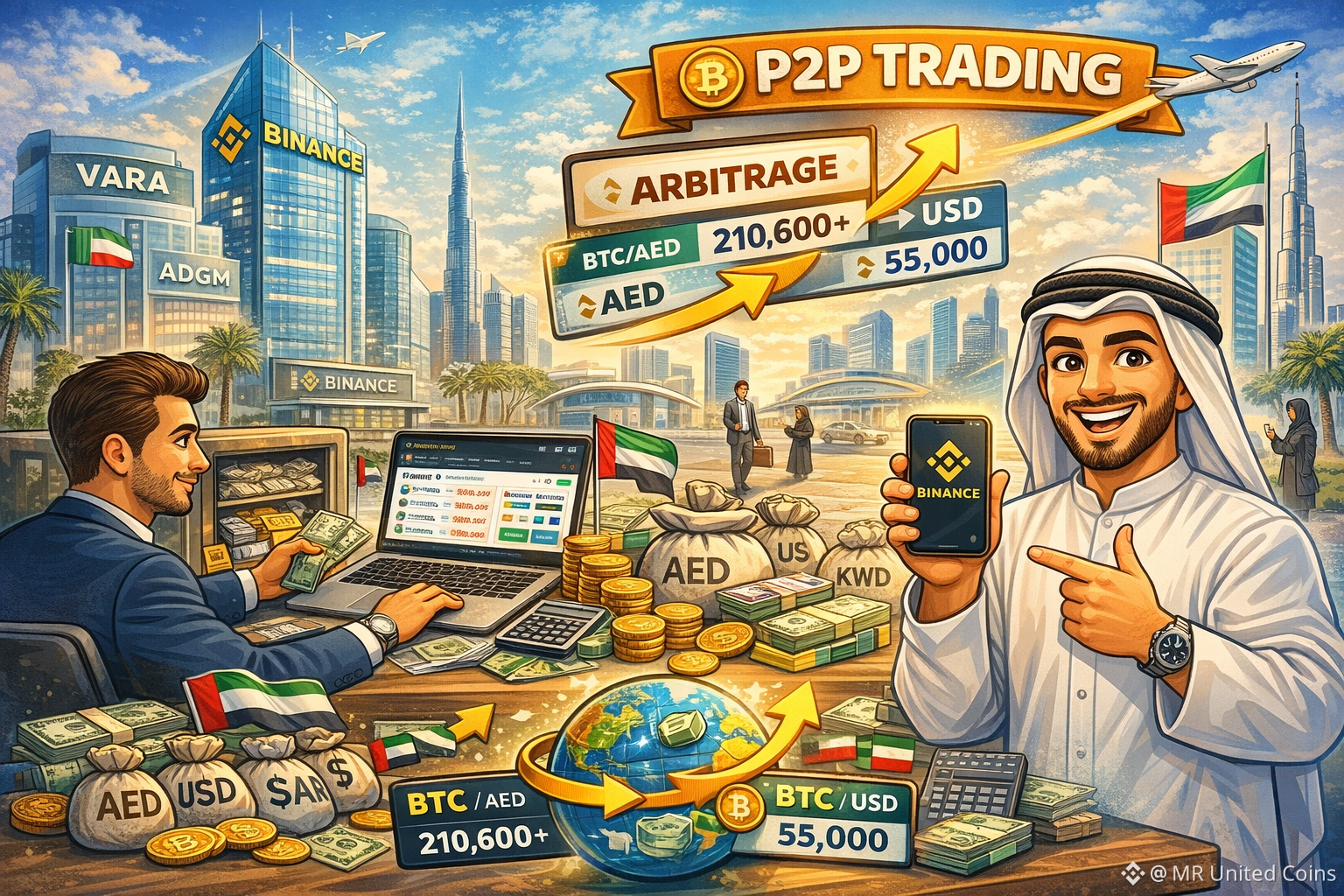
1. The UAE Crypto Environment — A Growing Hub
The United Arab Emirates has positioned itself as one of the most forward‑looking regions in the world for digital assets and blockchain innovation. Regulatory authorities such as the Virtual Assets Regulatory Authority (VARA) in Dubai and the Financial Services Regulatory Authority (FSRA) in Abu Dhabi Global Market (ADGM) have created clear legal frameworks for licenced crypto activity, investor protection, and compliance.
This progressive landscape aims to balance innovation with financial stability, attracting major crypto players and fostering local adoption.
2. Binance MENA & P2P Trading in the UAE
Binance, one of the largest global crypto exchanges, operates in the Middle East under regulatory licences that allow it to serve UAE users with tailored services. These include fiat trading, local payment methods, and in some cases P2P access — though availability and user experience can vary depending on compliance updates and platform changes.
Binance P2P — Key Features
Zero or low trading fees on peer‑to‑peer transactions when buying or selling cryptocurrencies using local currencies like AED.
Escrow protection helps ensure secure trades between users.
Local payment support expands options for AED bank transfers. Previously Binance P2P supported many local banks in the MENA region, including UAE banks, though individual user experiences vary.
However, community reports note some regional compliance restrictions at times — unspecific “P2P not available in your country” messages for certain users — likely related to regulatory or platform‑specific adjustments.
3. Regulatory and Legal Considerations in the UAE
Crypto trading is legal in the UAE when conducted through regulated and licenced platforms. However:
Licensing matters: If crypto activities are business‑oriented rather than personal investment, relevant licences (from ADGM, DIFC, or VARA) are required to avoid regulatory issues.
Banks are cautious: Some banks may restrict accounts used for high‑volume P2P crypto transactions, especially without transparent regulatory backup, potentially leading to account freezes or closures if proper compliance isn’t established.
No personal income tax: The UAE currently does not tax individual crypto capital gains, which is a major advantage for investors.
Strong KYC/AML compliance, transparency, and engagement with regulators are essential for both individuals and firms involved in P2P or arbitrage trading.
4. P2P Arbitrage — What It Is
Arbitrage refers to profiting from price differences of the same asset across different markets or platforms. In the P2P context, it may involve buying crypto at one price on a platform and selling at a higher price elsewhere.
This strategy is attractive but requires:
Fast execution
Low transfer and withdrawal fees
Access to multiple venues
Effective risk management tools
Delays, liquidity constraints, and market fluctuations can significantly impact profits.
5. Opportunities & Practical Realities
High Liquidity & Global Network
The UAE’s crypto community and Binance’s global reach mean there is significant liquidity and trader participation. This is beneficial for arbitrage and active P2P markets.
Price Differences
Short‑term price differences between national platforms, regions, or fiat pairs create arbitrage opportunities, but these gaps can close quickly as markets adjust.
Risks
Transfer delays: Slow bank or blockchain transfers can nullify price advantages.
Fees & slippage: Fees reduce arbitrage margins.
Competition: Many traders monitor the same inefficiencies, making opportunities fleeting.
6. Strategic Possibilities
For traders and businesses in the UAE, several strategic options exist:
A. Individual P2P Participation
Individuals can use Binance P2P for personal crypto trading and liquidity access. Staying within reasonable volume limits and providing clear transaction records limits bank or regulatory concerns.
B. Registered Business & Service Provider
For structured P2P or arbitrage operations, creating a legal entity and obtaining licences through VARA or ADGM increases legitimacy and reduces banking risks. Professional compliance support is recommended to avoid account closures and legal issues.
C. Leveraging Multiple Platforms
Diversifying across centralised exchanges, P2P platforms, and liquidity sources can enhance arbitrage possibilities.
Conclusion
The UAE — and particularly the Binance MENA ecosystem — presents real opportunities for P2P trading and arbitrage due to:
A friendly tax environment
Regulatory clarity for licenced platforms
Strong local demand and payment infrastructure
Yet success requires caution:
Compliance with all legal and regulatory requirements
Transparent banking relationships
Fast execution and risk management for arbitrage
Approached well, P2P and arbitrage trading in the UAE can be profitable and scalable, especially when combined with a business strategy that matches regulatory expectations.
