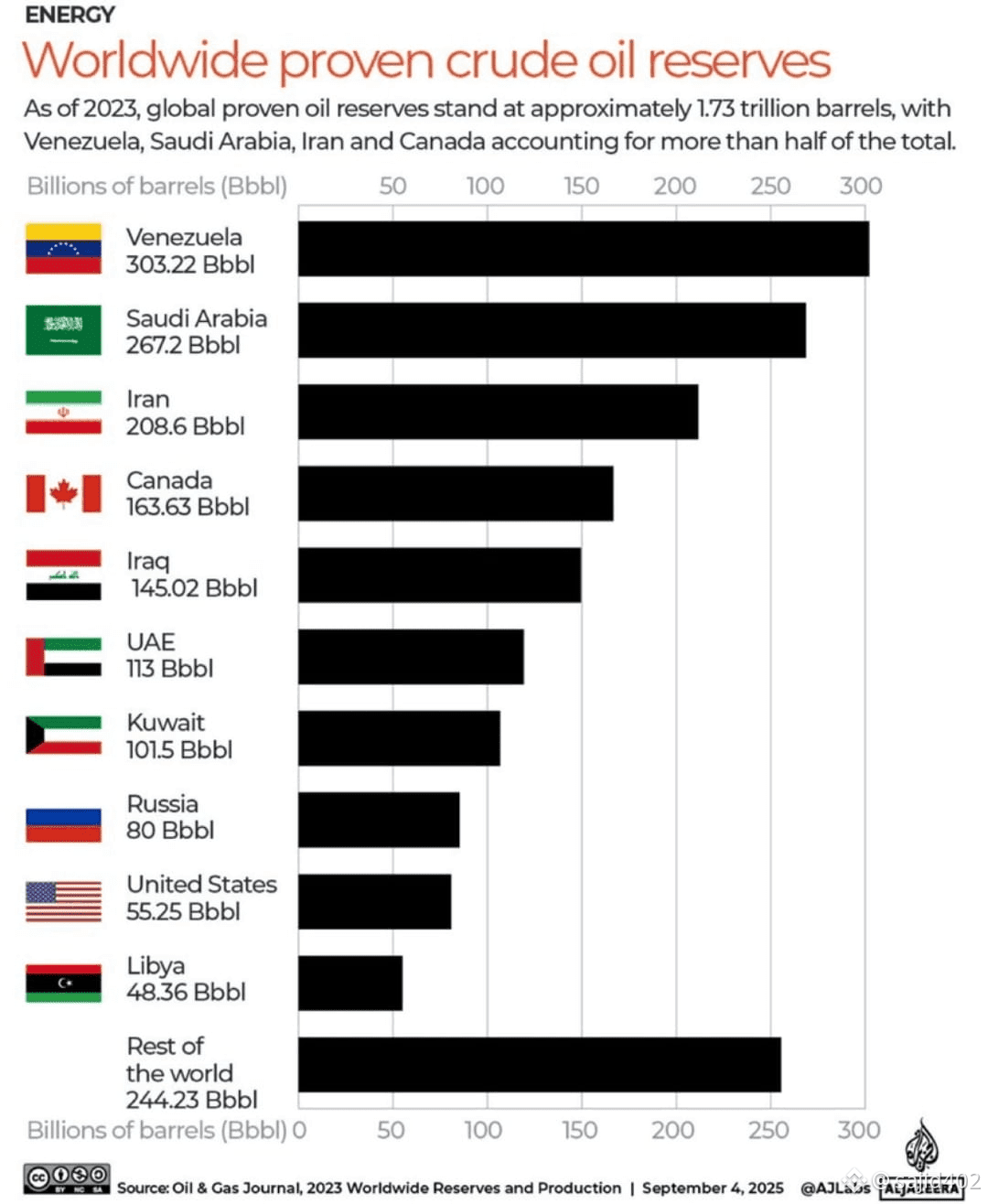
Venezuela possesses the largest proven oil reserves in the world, estimated at nearly 303 billion barrels. Yet despite this vast resource base, the country’s crude oil exports were valued at only $4.05 billion in 2023 — a striking imbalance that highlights severe underutilization.
This paradox is largely driven by economic sanctions, deteriorating infrastructure, and long-term policy inefficiencies, which have limited Venezuela’s ability to convert reserves into meaningful export revenue.
🌍 Why Global Markets Should Care
Energy markets sit at the core of global inflation and liquidity dynamics. Any change in Venezuela’s oil production or export capacity could:
Influence global oil supply
Shift inflation expectations
Impact risk sentiment across financial markets
🔗 The Crypto Connection
Historically, energy shocks and geopolitical pressure often spill into liquidity cycles — a key driver for crypto assets like $BTC $ETH and $BNB .
When inflation risks rise or macro uncertainty increases, crypto can react as:
A hedge narrative
A liquidity-sensitive asset class
A speculative risk-on rotation
🧠 Key Takeaway
Crypto does not move in isolation. Energy data, geopolitics, and macro liquidity trends quietly shape market direction long before price reacts.
Traders who track macro signals gain an edge over those watching charts alone.