
For decades, the stood alone as the global outlier—anchoring markets with ultra-low interest rates while the rest of the world tightened and eased in cycles. That era is now ending.
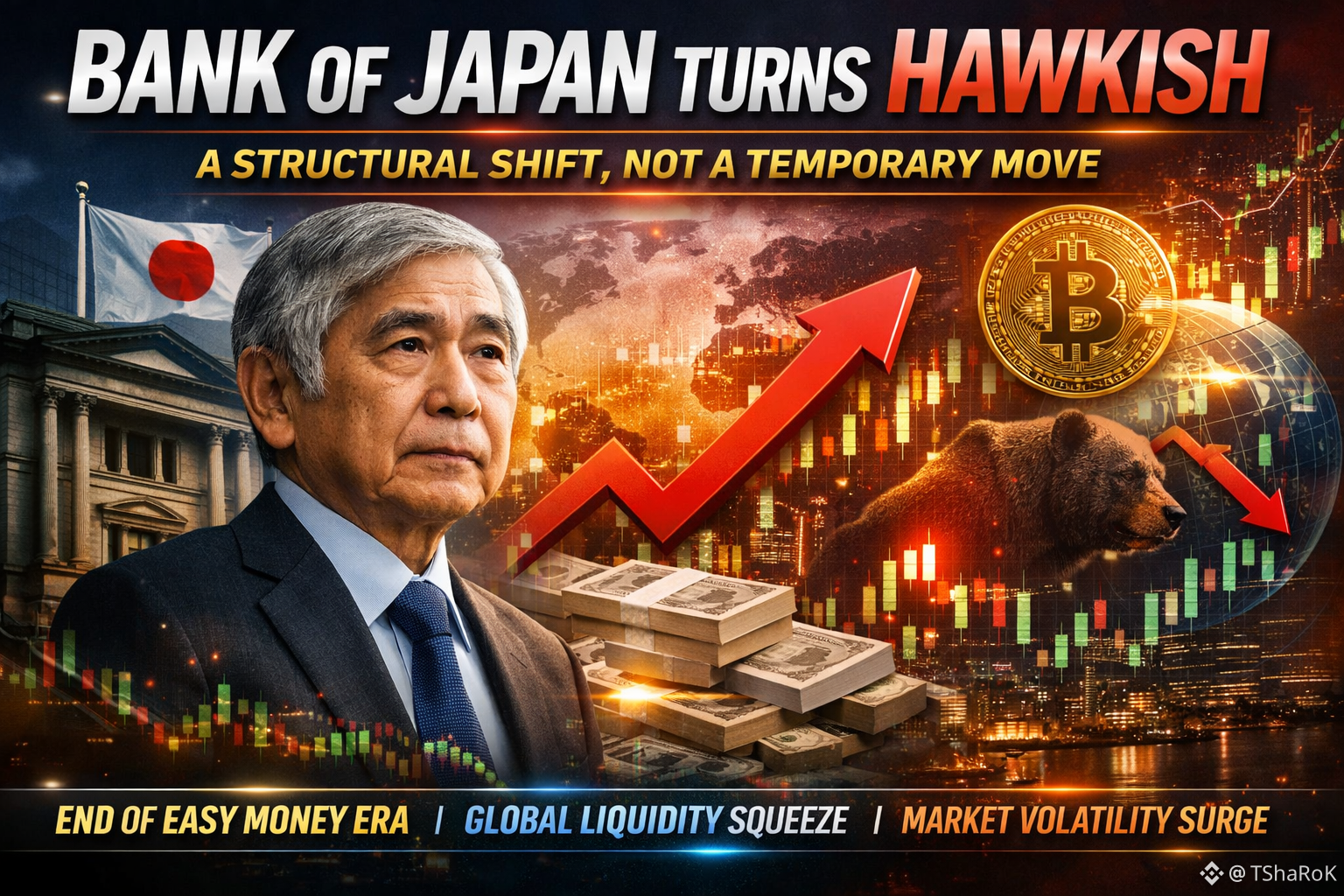
Governor Ueda Kazuo has made it clear: Japan’s rate hikes are not symbolic, not temporary, and not a policy experiment. They are part of a long-term structural normalization driven by persistent inflation and improving wage dynamics.
🔍 Why this shift matters
Japan is not reacting to a short-term inflation spike.
Instead:
Inflation is proving sticky, not transitory
Wage growth is finally gaining traction, changing domestic demand dynamics
Policy normalization is deliberate, gradual, and data-dependent
This signals a fundamental change in how Japan participates in the global financial system.
🌍 The global ripple effect
For years, Japan supplied the world with cheap capital.
That liquidity:
Funded yen carry trades
Supported global equities
Helped inflate risk assets, including crypto
As rates rise, that capital becomes more expensive—and in some cases, returns home. The result?
👉 Tighter global liquidity
👉 Higher volatility across stocks, bonds, and digital assets
👉 Repricing of risk
📉 Why markets should pay attention now
Many investors still view the BoJ through an outdated lens.
But this is no longer the “emergency easing” Japan. A hawkish BoJ:
Alters global capital flows
Pressures leveraged trades
Challenges markets built on easy money assumptions
⚠️ The real takeaway
This isn’t a headline-driven move—it’s a regime change. Japan is stepping into a more conventional central-bank role, and markets must adjust.
As 2026 unfolds, the question isn’t if this shift matters—
It’s who is positioned for a world where Japan is no longer the free-money engine.
#BankOfJapan #Macro #GlobalLiquidity #InterestRates #Yen #MarketVolatility #CryptoMacro #BinanceSquare #TShaRokUpdates

