
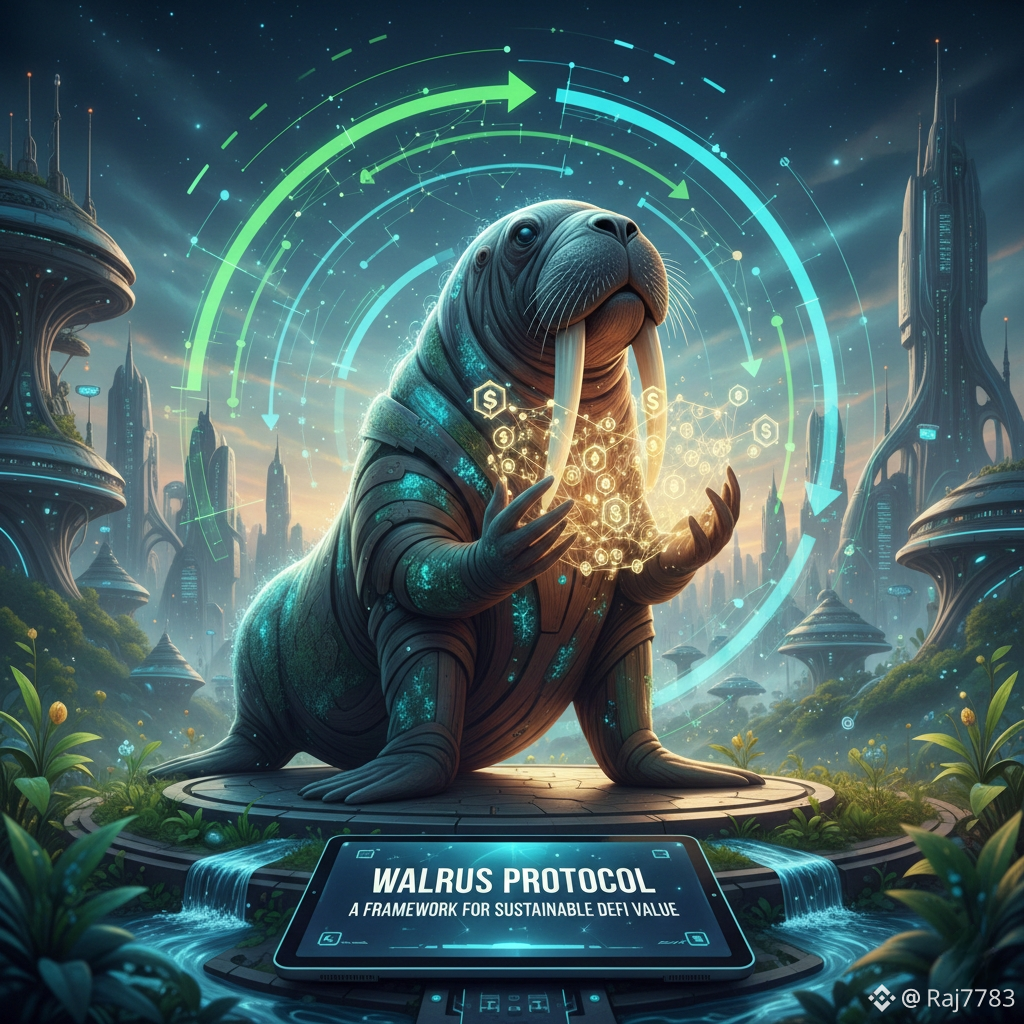
The DeFi ecosystem has long been dominated by short-term yield strategies driven by aggressive token emissions. While this approach can attract rapid attention, it often results in instability and eroded long-term value. A more resilient model is emerging one that emphasizes sustainability, transparency, and real economic activity. This is where Walrus Protocol positions itself.
Walrus Protocol is designed as a value-focused DeFi ecosystem rather than a conventional yield aggregator. Its architecture prioritizes revenue derived from protocol activity and fee generation instead of inflationary incentives. Within this framework, the WAL token serves as a governance and value-alignment mechanism, integrating stakeholders directly into the protocol’s long-term vision.
At the core of Walrus is an actively managed treasury and strategy vault that deploys assets across diversified mechanisms, including strategic integrations and structured DeFi primitives. This diversification aims to reduce dependency on single yield sources and improve resilience across market cycles. Generated revenue is systematically allocated in a way that aligns protocol performance with participant incentives.
Transparency plays a central role. Walrus emphasizes on-chain visibility into treasury operations and revenue flows, enabling participants to assess protocol activity with clarity. This approach supports informed decision-making and fosters a trust-driven community rather than speculative participation.
Walrus Protocol reflects a broader evolution within DeFi—shifting focus from short-lived yield narratives toward durable, value-oriented systems. As the sector matures, models built on sustainable economics and transparency are increasingly defining the next phase of decentralized finance.

