
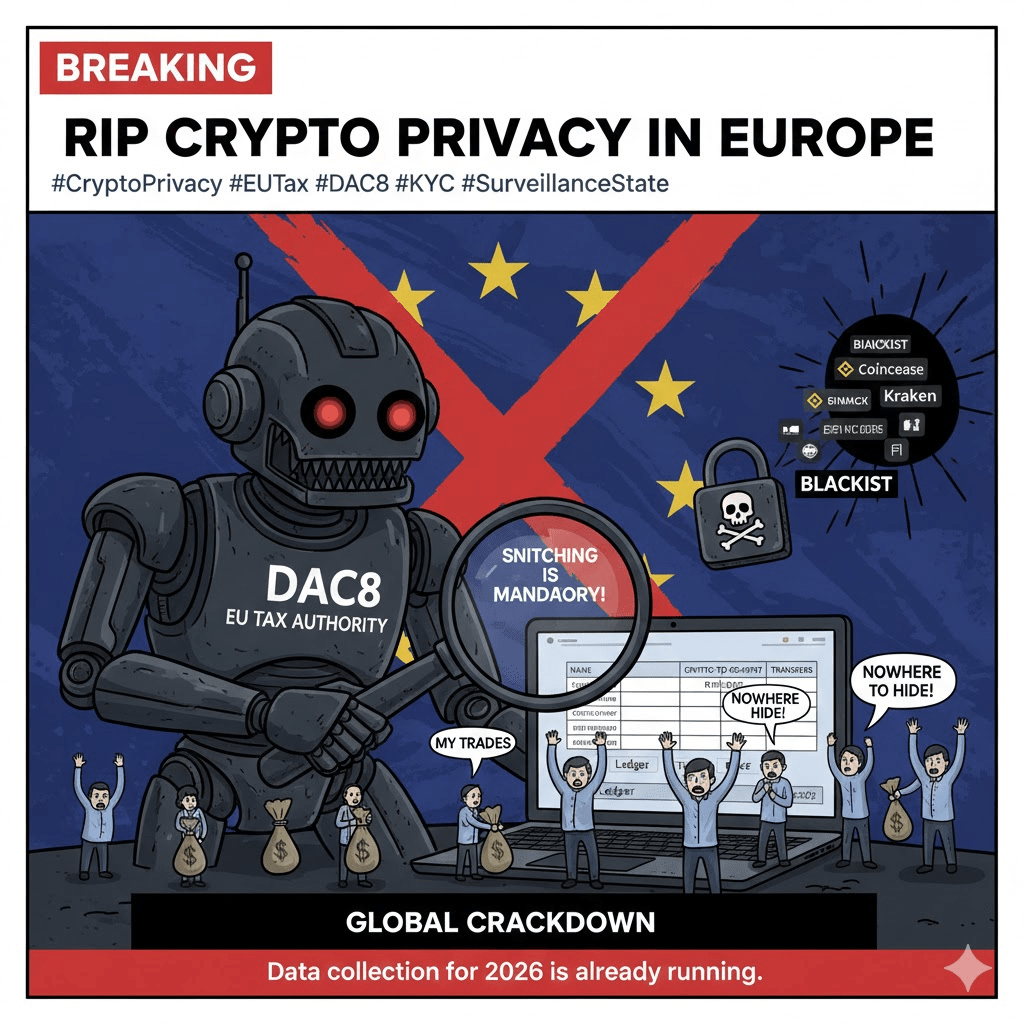
A partir del 1 de enero, DAC8 está oficialmente en vigor en toda la UE, y cambia fundamentalmente la forma en que se supervisa la actividad cripto.
Si vives en un estado miembro de la UE, la visibilidad reguladora acaba de aumentar considerablemente.
Esto es lo que está sucediendo 👇
🔍 1) Informe obligatorio
Los proveedores de servicios cripto (intercambios, corredores, plataformas) ahora deben informar:
• Su identidad
• Número de identificación fiscal
• Historial de transacciones
Todo esto se envía directamente a las autoridades fiscales.
🔄 2) Cobertura más amplia de transacciones
La informe ahora incluye:
• Cripto ↔ Fiat
• Cripto ↔ Cripto
• Transferencias que involucran plataformas custodias
Esto amplía significativamente lo que los reguladores pueden ver en comparación con antes.
🪪 3) KYC Es Irrenunciable
Si no se proporciona la información fiscal requerida, las plataformas podrían verse obligadas a restringir o suspender cuentas según las normas de cumplimiento de la UE.
🌍 4) Alcance Global
Los intercambios no pertenecientes a la UE que sirven a residentes de la UE deben cumplir con las normas — o arriesgarse a ser excluidos del mercado europeo.
📊 Lo que esto significa realmente
Las autoridades fiscales de la UE están construyendo un sistema centralizado de informes para activos digitales.
La recopilación de datos para los años fiscales de 2026 ya está en curso.
Esto no se trata de prohibir las criptomonedas.
Se trata de transparencia total y cumplimiento efectivo.
⚠️ Conclusión final:
Las criptomonedas en Europa pasan de la declaración voluntaria a un monitoreo institucional.
La privacidad ahora depende de la estructura, la conciencia y el cumplimiento, no de la ignorancia.
Si no estás pensando en cómo afecta la regulación a tu estrategia de cripto —
ya estás rezagado.
📉🇪🇺



SEGUIR • ME GUSTA • COMPARTIR