
When people explain Plasma, they usually start with diagrams.
Parent chain here.
Child chain there.
Merkle roots, exits, commitments.
That’s useful — but it misses the most important part.
Plasma is not really about chains.
It’s about incentives and escape routes.
And the more I study Plasma, the more I realize something interesting:
Plasma wasn’t trying to make blockchains faster.
It was trying to make blockchains safe when you stop trusting them.
That sounds strange, but it’s actually the core idea.
The Real Problem Plasma Was Solving
In early blockchains, scaling meant one dangerous thing:
You had to trust someone else.
A faster chain. A sidechain operator. A centralized sequencer.
The moment you move activity off the main chain, you introduce a new risk:
What if the operator cheats?
What if they freeze withdrawals?
What if they disappear?
Plasma’s answer was radical at the time:
> “You should never be trapped in a chain you don’t trust.”
That’s why Plasma’s most important feature isn’t throughput.
It’s the exit mechanism.
Exits: The Safety Value Nobody Talks About Enough
In Plasma, you don’t just send assets into a child chain and hope for the best.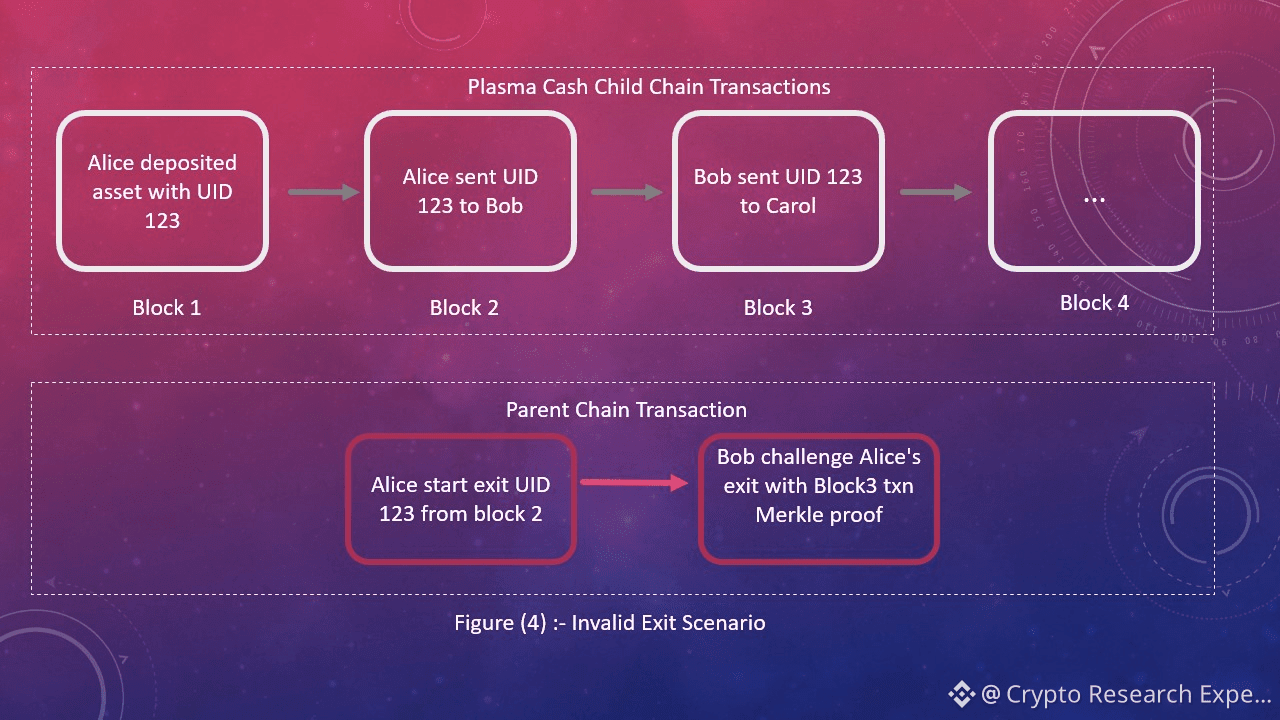
You always keep one right:
The right to leave.
No matter what happens inside the child chain — downtime, censorship, fraud — users can submit proofs back to the parent chain and reclaim their funds.
This is incredibly powerful.
It means:
• You don’t need to trust the operator
• You don’t need to trust validators
• You only need to trust the parent chain
Security stays anchored to the base layer.
And here’s the clever part:
The operator knows users can exit at any time.
So cheating becomes economically irrational.
If they steal, everyone leaves.
If everyone leaves, the chain dies.
Plasma doesn’t rely on honesty.
It relies on fear of losing the system.
That’s elegant.
Operator Incentives: Why Plasma Chains Behave (Usually)
Another thing Plasma designers understood early:
Technology alone doesn’t secure systems.
Incentives do.
Running a Plasma child chain is a business.
Operators earn:
• Fees from transactions
• Application revenue
• Possibly staking rewards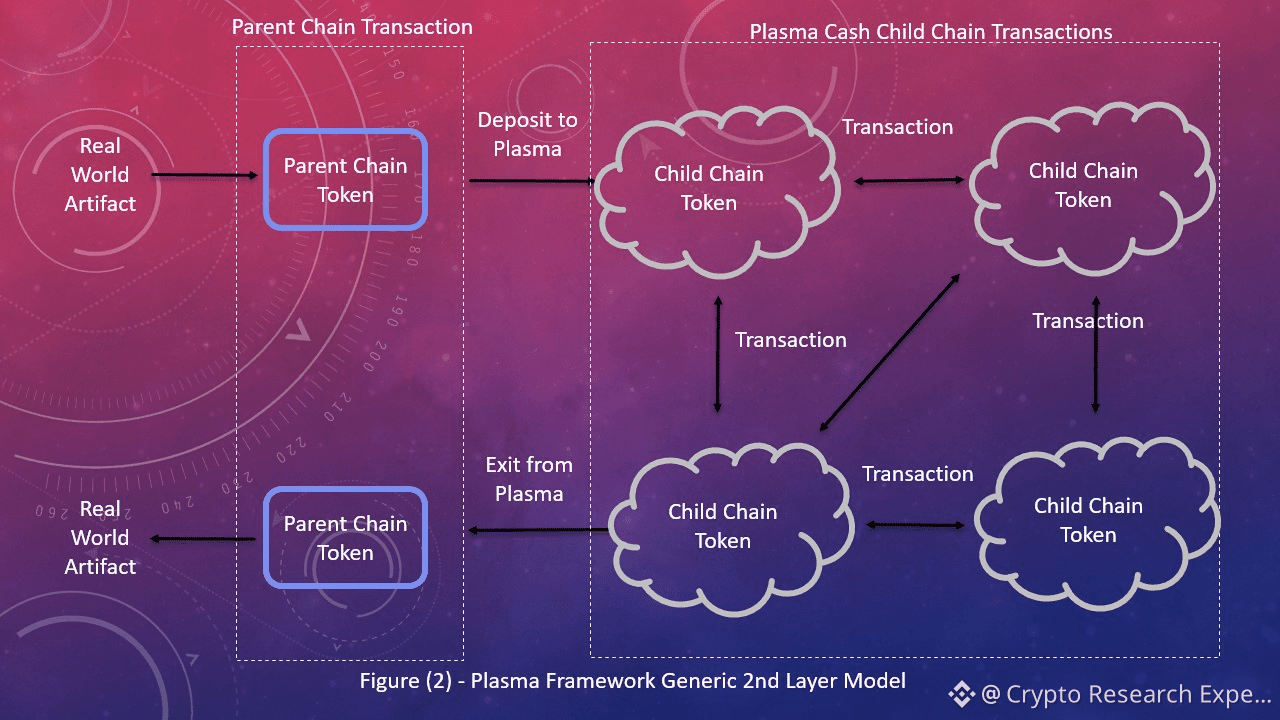
But they also risk:
• Losing users
• Losing credibility
• Triggering mass exits
• Destroying their own ecosystem
This creates a very different dynamic from normal sidechains.
In many scaling systems, if the operator misbehaves, users are stuck.
In Plasma, misbehavior is self-destructive.
The operator becomes the first victim.
That’s a rare design in crypto — systems that punish bad actors by collapsing their own revenue model.
Data Availability: The Silent Weak Point Plasma Faced
Now let’s talk about the hardest part.
Not fraud.
Not exits.
Data availability.
For users to exit safely, they must have access to transaction data.
If an operator withholds data, users may not be able to prove their balances.
This was Plasma’s biggest challenge.
Designers tried many solutions:
• Forcing operators to publish data
• Allowing multiple validators to mirror data
• Encouraging users to monitor chains constantly
But this introduced friction.
Users had to watch chains.
Developers had to build complex monitoring tools.
And suddenly, the “simple scaling solution” became operationally heavy.
This is one of the reasons Plasma slowly gave way to rollups.
But the idea itself never died.
What Plasma Taught the Industry (Even If It Isn’t Trendy Today)
Here’s something I find fascinating.
Even though Plasma isn’t the dominant scaling solution anymore…
Almost every modern design borrowed from it.
Rollups inherited:
• The idea of anchoring security to L1
• The importance of exit rights
• The idea of challenge periods
• The philosophy of trust minimization
Plasma introduced the concept that:
Execution can move off-chain.
But ownership must always remain on-chain.
That principle now defines the entire Layer 2 ecosystem.
Plasma as a Philosophical Blueprint
In a way, Plasma was less about scaling and more about governance.
It asked a deep question:
Who should users trust?
Not operators.
Not validators.
Not companies.
Only the base chain.
Everything else should be optional.
Replaceable.
Escapable.
That mindset is what allowed blockchain systems to scale without giving up sovereignty.
Why Plasma Still Matters in Today’s World
Even now, Plasma’s ideas matter more than people realize.
Think about:
• App-specific chains
• Game chains
• Payment sidechains
• Enterprise blockchains
All of them face the same question:
What happens when the operator misbehaves?
Plasma gave the first serious answer
Not “we promise to be honest”.
But:
> “You don’t need to trust us. You can always leave."
That is real decentralization.
My Perspective
I don’t think Plasma will dominate headlines again.
Rollups are simpler. UX is better. Tooling is mature.
But Plasma deserves credit for something very important:
It taught crypto that scaling without escape is not scaling — it’s custody.
And that lesson still protects users today, even if they don’t know its name.
Sometimes the most important technologies aren’t the ones that win.
They’re the ones that teach the rest how not to fail. #plasma @Plasma $XPL