

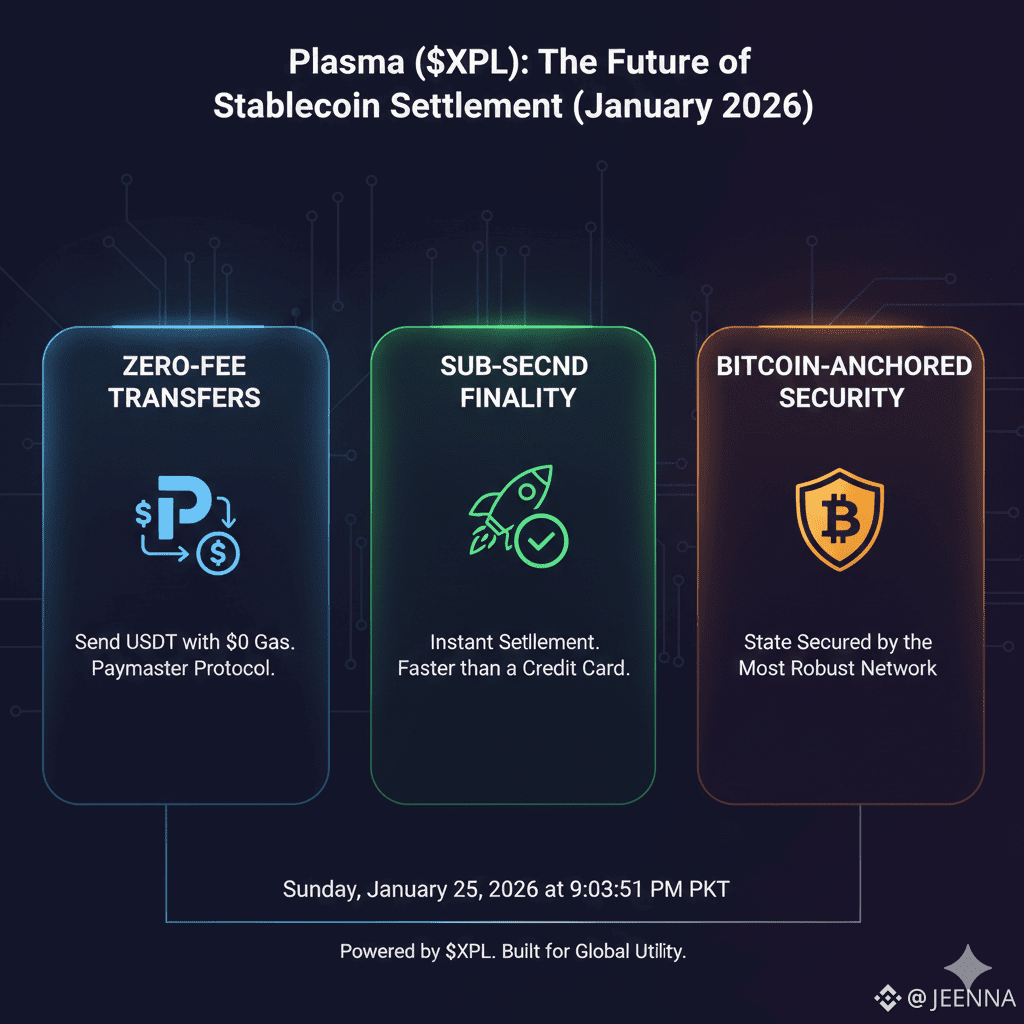
As of late January 2026, the Plasma ecosystem has pivoted from a high-growth startup phase to a robust, utility-first financial rail that prioritizes stablecoin accessibility above all else. The network’s most significant differentiator remains its native "Paymaster" system, which effectively eliminates the "gas fee" hurdle that has long plagued crypto adoption. By allowing users to transfer USDT with zero fees at the protocol level, Plasma is directly challenging legacy systems like Tron and Western Union, offering sub-second finality that makes digital dollars feel as instantaneous and frictionless as a text message.
The real-world momentum is currently centered on the Plasma One neobank, which has expanded its footprint across over 150 countries this month. The latest updates highlight the success of the Plasma One card, which offers users 4% $XPL cashback on everyday purchases and over 10% yield on stablecoin deposits. This bridge between on-chain liquidity and off-chain spending is particularly resonant in emerging markets, where localized peer-to-peer on-ramps and multi-language support have turned a complex blockchain project into a relatable everyday financial tool.
On the technical front, the January 23rd integration with NEAR Intents has fundamentally changed how XPL interacts with the broader Web3 world. This partnership enables chain-abstracted liquidity, allowing users to swap $XPL and native USDT0 across more than 25 different blockchains with a single click. By removing the need for manual bridging or complex wrapped assets, Plasma is positioning itself as the "connective tissue" of a unified stablecoin economy, ensuring that liquidity can flow wherever it is most needed without technical friction.
The $XPL token itself has seen a shift in sentiment following the January 25th unlock event. While large supply releases often trigger market anxiety, the current ecosystem growth—including the launch of Pendle Finance's liquid staking tools on the network—has encouraged holders to move from passive speculation to active participation. With the activation of full staking delegation in Q1 2026, $XPL is maturing into a security-and-yield asset, where holders earn a share of network rewards by securing the very rails that power global remittances.
Looking ahead toward the rest of 2026, the roadmap is defined by a move toward ZK-Plasma and deeper Bitcoin integration. By anchoring its security to the Bitcoin network while maintaining full EVM compatibility, Plasma offers a rare blend of "Gold Standard" settlement security and modern developer flexibility. Whether it’s through the upcoming AI-driven trading assistants or the expansion of institutional-grade private B2B settlement tools, the project is proving that the future of finance isn't just about decentralization—it's about making money move better for everyone.