
When I first started paying attention to security tokens, I assumed privacy and regulation would always clash. One side wanted openness. The other demanded confidentiality. For a long time, it felt like every blockchain chose one extreme and ignored the consequences. But as tokenized finance matured, that assumption stopped holding up. Real markets do not work in absolutes. And that realization is exactly where Dusk begins to make sense.
Dusk is not trying to replace traditional finance with something unfamiliar. What I see instead is an attempt to upgrade it. The rules stay. The obligations stay. What changes is the way trust is produced. Rather than relying on constant exposure, Dusk leans on cryptographic proof. Transactions stay private, but legitimacy can still be demonstrated when required. That difference may sound small, but it completely reshapes how institutions can interact with blockchain systems.
In traditional finance, confidentiality is not suspicious. It is expected. Companies do not publish internal trades. Funds do not reveal positions in real time. Regulators do not demand public transparency from everyone at once. They require the ability to verify when necessary. Dusk is designed around that exact logic.
A blockchain built for verification rather than exposure
What stands out to me about Dusk is that it does not treat privacy as invisibility. It treats privacy as controlled knowledge. Transactions are confidential by default, but the system supports lawful verification without forcing unrelated data into the open.
This is important because many early privacy chains struggled with the same issue. They could hide activity, but they could not prove compliance. Over time, that limitation restricted listings, partnerships, and institutional involvement. Liquidity stayed thin not because the technology failed, but because the ecosystem could not grow safely.
Dusk approaches the problem from the opposite direction. It assumes regulation exists and designs around it instead of against it. That choice shapes everything from consensus to smart contracts.
A different way to think about consensus fairness
One of the most interesting components in Dusk is its consensus mechanism, known as Proof of Blind Bid.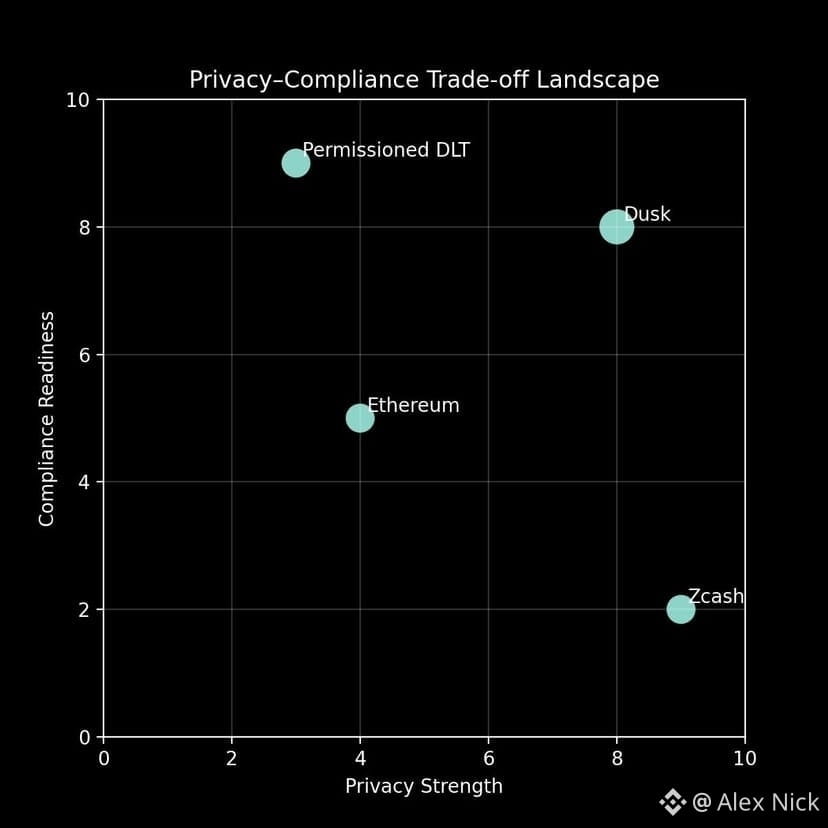
In most proof of stake systems, influence grows predictably with capital. The more stake you control, the more power you gain. Over time, this tends to concentrate validation among large operators. That outcome is not just a decentralization issue. It also creates governance risk in markets that are supposed to be neutral.
Dusk modifies this dynamic by introducing encrypted bidding. Validators submit bids that are hidden from one another. Block production is determined through a combination of stake, randomness, and blind bidding. Because bids are concealed, wealth alone does not guarantee dominance.
From my perspective, this matters less as a philosophical statement and more as a structural safeguard. Regulated financial systems care deeply about fairness. If a settlement layer is perceived as favoring a small group of powerful actors, trust erodes quickly. Blind bidding reduces predictability in control without sacrificing security.
Privacy through cryptographic proof rather than secrecy
At the core of Dusk sits zero knowledge technology. Instead of publishing transaction details, the network verifies correctness through proofs. The system can confirm that balances add up, rules are followed, and assets are valid without revealing amounts or identities.
What makes this powerful is selective disclosure. When required, authorized parties such as auditors or regulators can access specific information without opening the entire ledger. I see this as a major psychological shift. Rather than asking everyone to be transparent all the time, Dusk allows transparency only when it is justified.
This mirrors how financial oversight works in practice. Regulators do not monitor every action live. They investigate when thresholds are crossed or reports are due. Dusk aligns naturally with that workflow.
Token standards designed for real legal obligations
Another key pillar is the Confidential Security Contract standard, often referred to as XSC.
Security tokens are not simple digital assets. They carry rights, restrictions, and responsibilities. Transfer rules, investor eligibility, jurisdictional limits, and recovery mechanisms are part of the instrument itself.
Dusk allows these rules to exist directly inside the token logic. Identity checks, whitelisting, and transfer conditions can be enforced on chain without exposing personal data publicly. This removes a major weakness seen in many tokenization attempts where compliance is handled off chain through manual processes.
When I think about long term adoption, this part matters a lot. Institutions do not want parallel systems. They want the legal reality and the technical reality to match. Embedding compliance into contracts reduces ambiguity and lowers operational risk.
Accountability without centralized trust
One of the quieter strengths of Dusk is how it handles audits.
Instead of making all activity public, the network relies on cryptographic commitments. These commitments can be revealed selectively using view keys. Asset holders remain in control of who sees what, while regulators still retain the ability to verify compliance.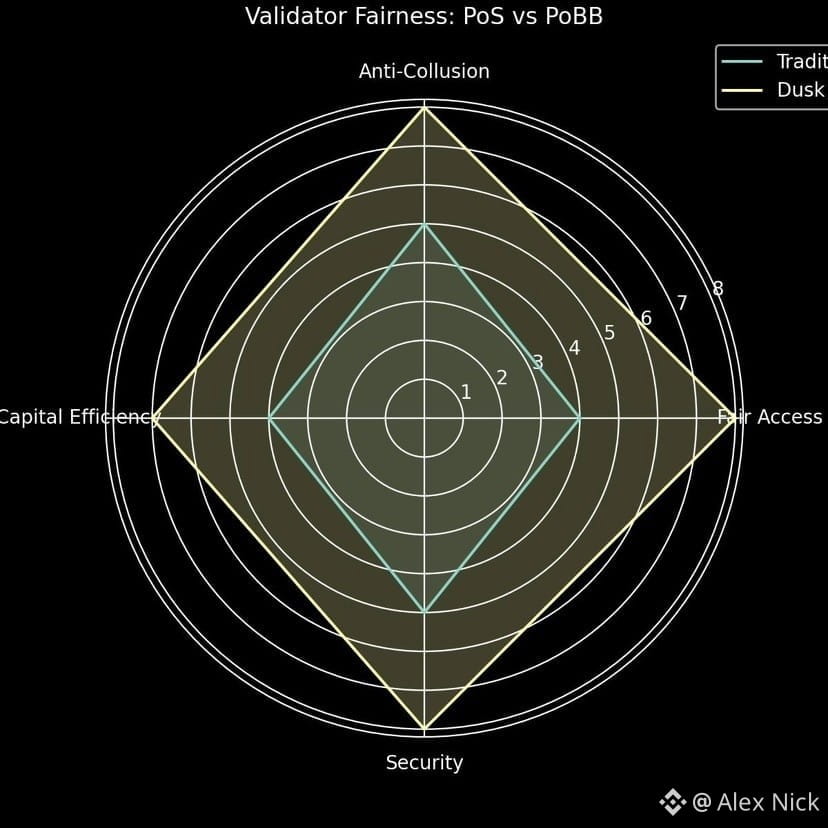
This approach avoids a common tradeoff. Full transparency exposes too much. Full secrecy blocks oversight. Dusk positions itself in the middle, where accountability exists without surveillance.
For institutions, this is not optional. Data protection laws like GDPR actively restrict unnecessary exposure. A blockchain that ignores this reality cannot operate at scale in regulated regions.
Building slowly on purpose
One thing I notice repeatedly when following Dusk is its pace. Development appears measured rather than aggressive. Features are introduced cautiously. Stability is prioritized over rapid experimentation.
In speculative markets, this can look unexciting. But when I think about who the target users are issuers, exchanges, custodians, and regulators that pace actually makes sense. Financial infrastructure is not allowed to break often. Predictable upgrades matter more than novelty.
Testnets, incentive programs, and pilot deployments have already been used by organizations exploring tokenized shares and bonds. These are not marketing exercises. They are proof points that the tooling works in environments where mistakes carry consequences.
Why regulated markets need privacy
Security tokens represent real ownership. That ownership carries strategic, legal, and competitive implications.
Privacy protects internal decision making. It prevents front running. It helps comply with data protection rules. It preserves market integrity. Without it, on chain markets become distorted by information leakage.
At the same time, regulators need auditability. They need to confirm that transfers follow rules. They need traceability when disputes arise.
Dusk is built on the idea that these needs are not contradictory. They simply require better tools.
Positioning inside an evolving regulatory landscape
Frameworks like MiCA and regulatory sandboxes across Europe are accelerating tokenization. As these programs mature, infrastructure that supports both confidentiality and compliance becomes essential.
Dusk’s strategy is not to retrofit legality later. It aligns legal requirements and technical design from the start. That alignment is what allows participation in regulated experiments without constant redesign.
I find this approach realistic. Laws evolve. Markets adapt. Systems that assume zero regulation eventually collide with reality. Systems that expect regulation can grow alongside it.
Looking ahead
If on chain capital markets continue to develop, settlement layers will matter more than user facing apps. The invisible layers that ensure correctness, fairness, and confidentiality will decide where serious assets live.
Dusk is positioning itself as that quiet layer. Not a privacy coin chasing obscurity. Not a transparent ledger exposing everything. But a regulated privacy network built for environments where both discretion and accountability are mandatory.
I keep coming back to one idea while watching this space. The future of finance is not fully public or fully hidden. It is conditional. Information exists, but access is intentional.
Dusk is building for that world.
