
When I think about where blockchains are actually heading, I keep coming back to one uncomfortable idea. The next phase of adoption probably will not come from people clicking buttons all day. It will come from software acting on our behalf. Automated systems. AI agents. Background processes that move value without asking for permission every time.
That is where Vanar starts to make sense to me.
Most chains still behave like markets. Fees jump. Transaction order changes based on who pays more. Timing becomes unpredictable. That environment works fine for speculation, but it breaks down the moment automation enters the picture. Machines do not tolerate uncertainty. An autonomous system cannot guess whether a transaction will cost fractions of a cent or several dollars. It cannot safely rebalance funds, stream payments, or execute logic at scale if the cost model changes minute by minute.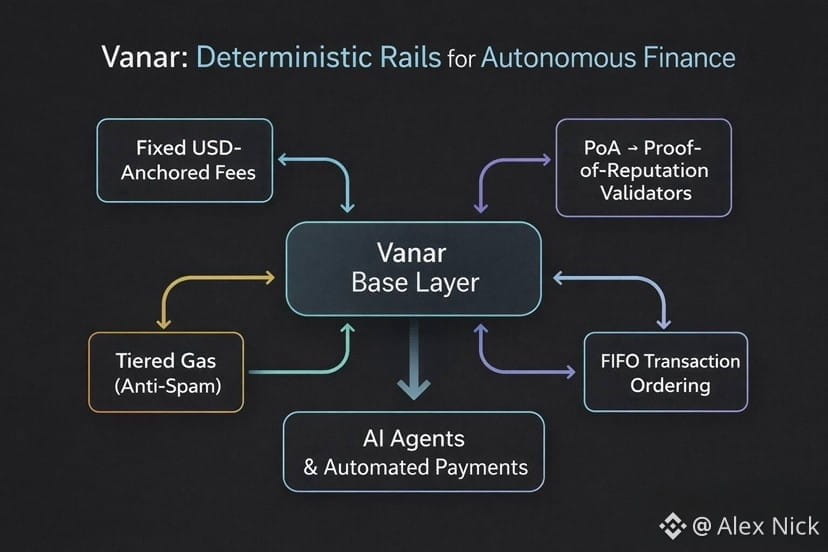
Vanar seems to be built around that realization.
Instead of treating blockspace like an auction, Vanar pushes toward determinism. The network uses a fixed fee structure designed to keep transaction costs stable in real world terms rather than floating with token price volatility. I see this as one of the most underrated design choices in crypto. Businesses and automated systems need cost predictability more than raw cheapness. Knowing what something will cost tomorrow is often more important than paying slightly less today.
From what I have studied, Vanar recalibrates fees at the protocol level using price references so users experience consistent costs even when the token price moves. That changes how the chain behaves psychologically. It stops feeling like a casino and starts feeling like infrastructure.
Of course low fees alone create problems. When transactions are extremely cheap, spam becomes inevitable. Vanar handles this by separating usage tiers. Simple actions stay inexpensive, while heavier operations consume more resources and move into higher cost brackets. That balance keeps everyday activity smooth while making large scale abuse economically irrational. It feels less ideological and more practical.
Transaction ordering is another detail that matters far more for machines than for humans. On most chains, ordering is influenced by bidding behavior. Whoever pays more goes first. For automated systems, that introduces chaos. Vanar uses a first come first served approach. That may sound boring, but boring is exactly what automation needs. If an agent sends a transaction at a known time, it can reasonably expect execution without competing in a fee war it cannot emotionally interpret.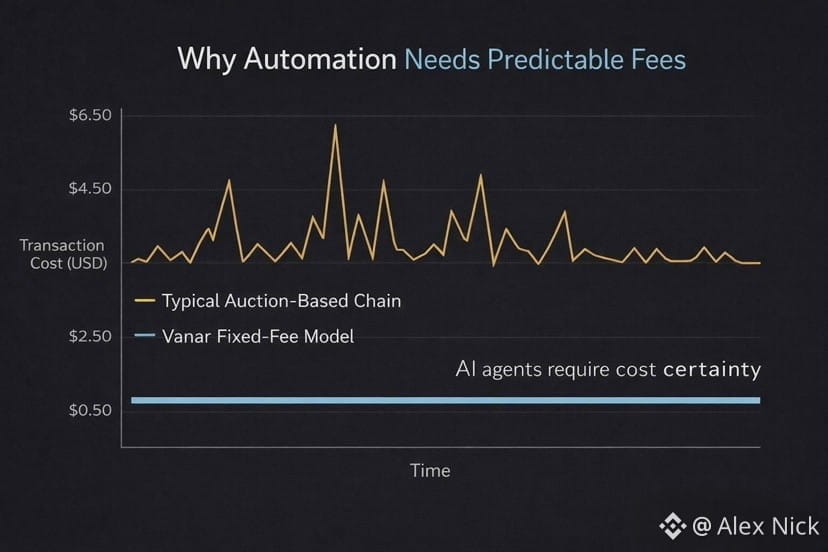
When I step back, I realize Vanar is not trying to be exciting. It is trying to be dependable.
The same thinking appears in its security model. The network begins with a proof of authority approach to ensure stability and responsiveness. Over time, it transitions toward proof of reputation. Validators earn influence based on behavior, performance, and consistency rather than pure capital weight. That comes with trade offs. It sacrifices early decentralization purity in favor of operational reliability. For consumer ideology this might sound uncomfortable. For enterprise and automation use cases, it is often necessary.
What really ties the vision together is how Vanar treats intelligence.
Instead of adding AI features on top of applications, Vanar treats intelligence as part of the infrastructure itself. Through its Neutron system, information can be compressed into small, verifiable representations that still carry meaning. This allows systems to reason about data rather than merely store it. Context becomes machine readable.
That matters because real payments are never just numbers. They come with invoices, contracts, receipts, compliance context, and identity constraints. Most blockchains ignore this layer entirely. Vanar seems to argue that if this context can be compacted and verified, automated systems can actually understand what they are paying for and why.
I find that idea compelling. When machines start handling finance, they need more than balances. They need memory. They need traceable meaning. They need to understand relationships between actions.
This is where AI agents start to reshape the role of blockchains. Instead of humans signing transactions manually, agents will negotiate, settle, and manage flows continuously. But those agents cannot function in chaotic environments. They need rails that behave the same way every time. Predictable fees. Predictable ordering. Verifiable data. Stable execution.
Vanar appears to be betting on that future.
It also explains why the project emphasizes integration with real payment systems. Distribution matters. Infrastructure without access stays theoretical. By aligning with stablecoin rails and existing financial channels, Vanar seems to prioritize usefulness over ideology. At that point, it is less about replacing finance and more about extending it safely.
Token design reflects the same mindset. Issuance is oriented toward validators and development rather than large insider allocations. There are no dominant team holdings shaping early dynamics. Rewards decline gradually over time, encouraging early participation without creating unsustainable inflation. The structure favors long term security instead of short term excitement.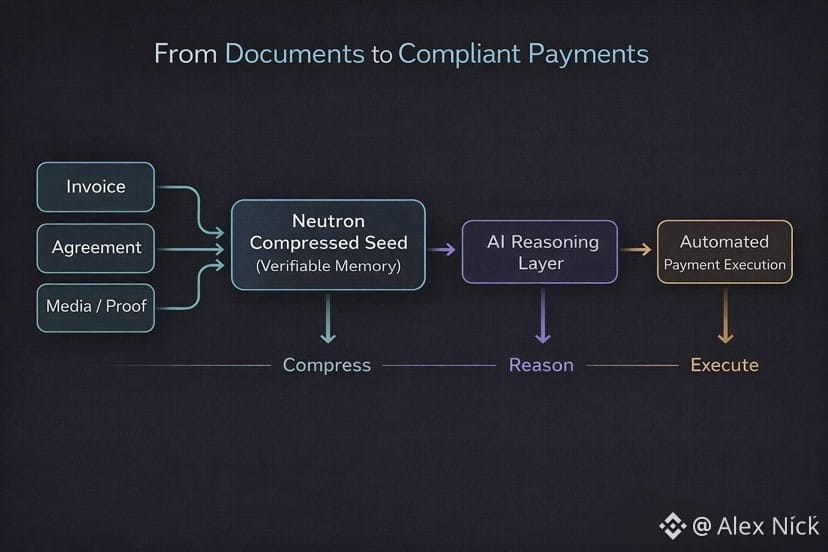
What stands out to me most is what Vanar is not trying to do. It is not chasing narrative cycles. It is not built to dominate attention. It is trying to become something that runs quietly in the background.
That path is slower. It does not produce explosive moments. But infrastructure rarely does.
The real risk is execution. Predictable systems must remain predictable under real load. Reputation based validation must resist capture. Intelligent memory must be useful outside of demonstrations. These challenges are real and cannot be solved with vision alone.
But if Vanar succeeds, it could end up as one of those rare chains chosen not because it excites people, but because it works.
In a future where value moves automatically, agents negotiate continuously, and compliance and sustainability are non negotiable, the winning systems will not be the loudest ones. They will be the ones nobody thinks about anymore.
Vanar seems to be building toward that outcome. And sometimes, the quietest designs are the ones that last the longest.
