
For years public blockchains have chased visible numbers. Faster blocks. Higher transaction counts. More daily activity. But every time I talk to someone who actually works inside financial institutions I notice something different. They are not impressed by speed charts or gas metrics. What they care about is control. They care about responsibility. And they care deeply about not exposing sensitive market behavior to the entire internet.
That disconnect explains why regulated finance has stayed cautious around blockchain adoption. In real markets transparency is not automatically a virtue. When every transaction is public it becomes a vulnerability. Positions are exposed. Strategies can be reverse engineered. Counterparty behavior becomes trackable. That kind of environment works for retail speculation but it breaks down fast when large institutions are involved.
This is exactly the problem Dusk Network is trying to solve.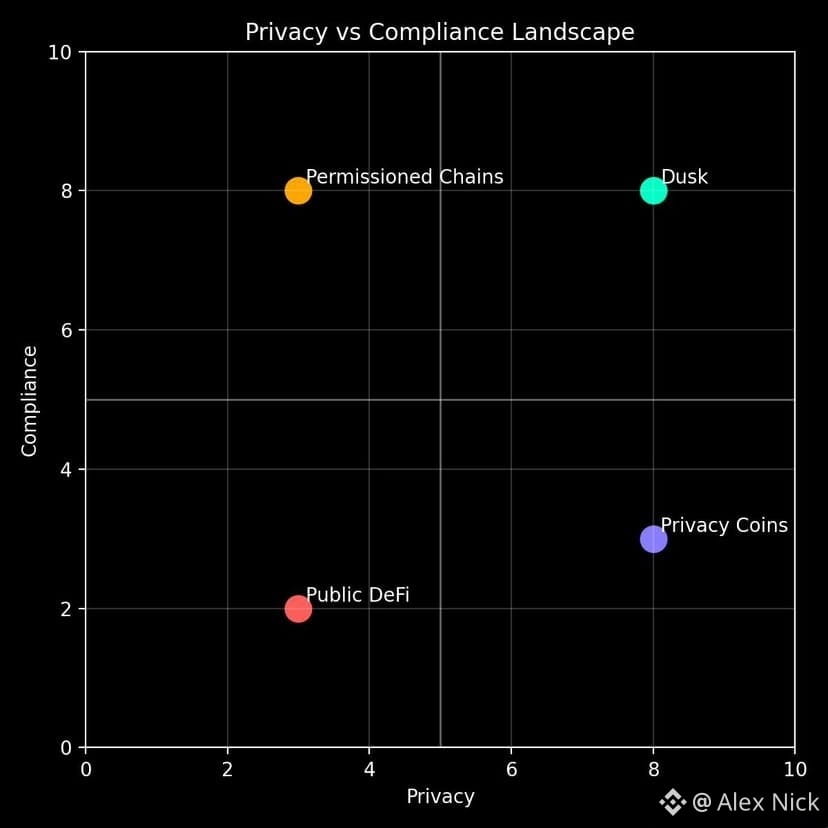
Dusk is built as a privacy first Layer one designed specifically for regulated financial activity. The idea is not to hide markets from the law. It is to protect markets from unnecessary exposure while still allowing full verification when required. Transactions on Dusk remain confidential by default but they can be proven to regulators and auditors through cryptographic evidence. That distinction is subtle but extremely important.
I find this approach refreshing because it aligns more closely with how finance already works. Banks do not publish internal transfers. Funds do not broadcast allocation shifts. Corporations do not reveal treasury movements in real time. Yet all of these entities remain compliant because oversight exists through structured reporting and audits not through radical transparency.
Dusk treats blockchain the same way.
Instead of assuming that everything must be public forever the network uses zero knowledge cryptography to allow privacy with accountability. Transactions can hide amounts and participants from the public while still proving that rules were followed. This model is often described as auditable privacy and it mirrors traditional finance much more accurately than open ledgers do.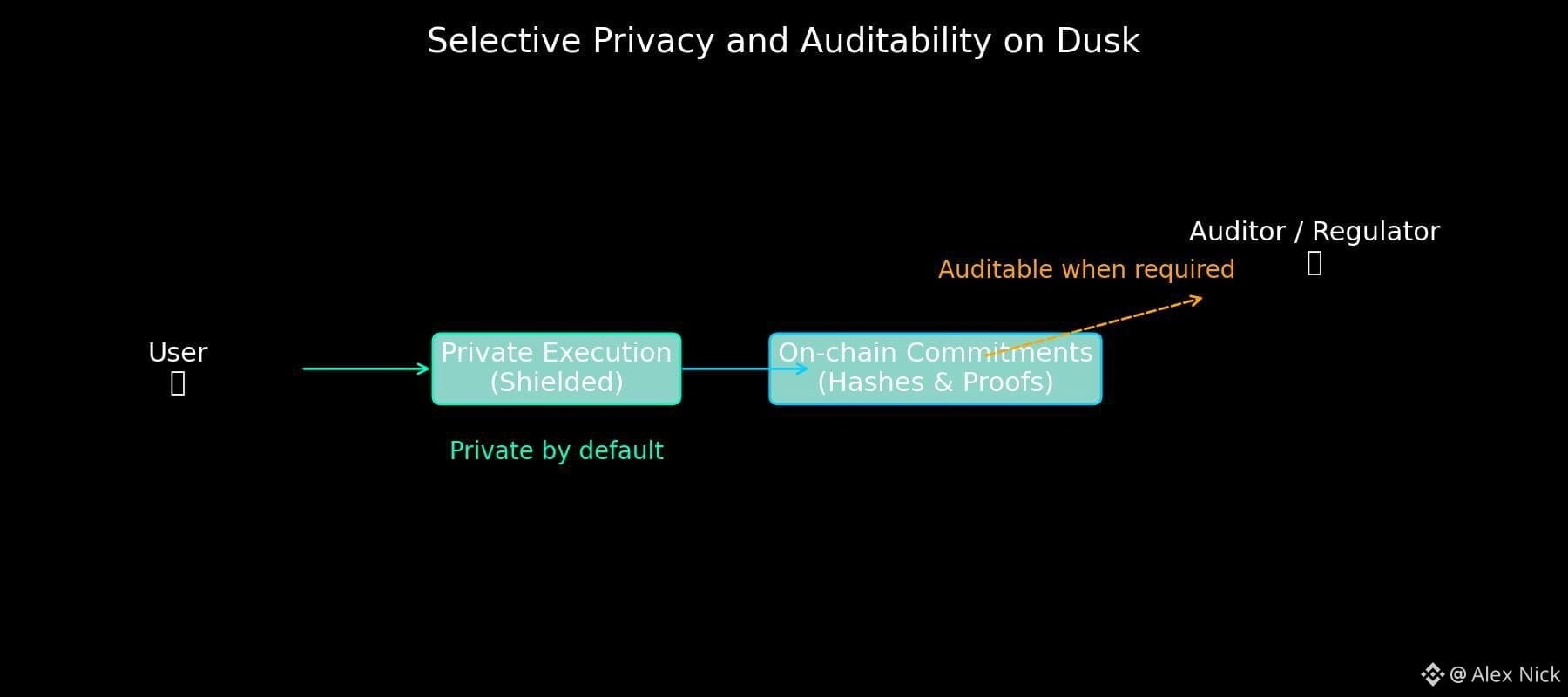
What really stands out to me is that Dusk was not designed in isolation from law. The architecture reflects real regulatory frameworks such as MiCA MiFID II and GDPR. These regulations are not theoretical they define how data must be handled how identities must be protected and how reporting must occur. A blockchain that ignores these realities cannot realistically host regulated assets without creating legal risk.
Public chains that expose metadata by default struggle here. Even if identities are pseudonymous the transaction trails themselves can violate privacy obligations under data protection laws. Dusk addresses this by designing privacy and compliance together rather than trying to bolt one onto the other later.
This becomes especially important when talking about real world assets.
Dusk is not optimized for memes or retail yield games. It is built for tokenized securities bonds debt instruments and structured financial products. These assets come with strict requirements around who can hold them how they can be transferred and under what conditions reporting must occur.
The Confidential Security Contract standard allows issuers to encode these rules directly into the token itself. Identity verification transfer restrictions eligibility checks and reporting logic can all exist at the protocol level. That means compliance is not enforced manually after the fact but built into the asset from the start.
To me this is one of the clearest signals that Dusk is targeting institutions rather than narratives.
The ecosystem has started reflecting this direction more clearly over the past year. The move into full production mainnet has brought live Layer one settlement confidential smart contracts and DuskEVM which allows developers to deploy familiar tooling while choosing when privacy is required. That flexibility matters because not every action needs to be private but some absolutely must be.
A good example is the launch of regulated security token platforms using Dusk infrastructure including partnerships with licensed European entities. These are not marketing announcements. These are systems that must satisfy regulators before they go live. Institutions do not experiment casually. If they are testing settlement and issuance flows it means the architecture has passed initial credibility checks.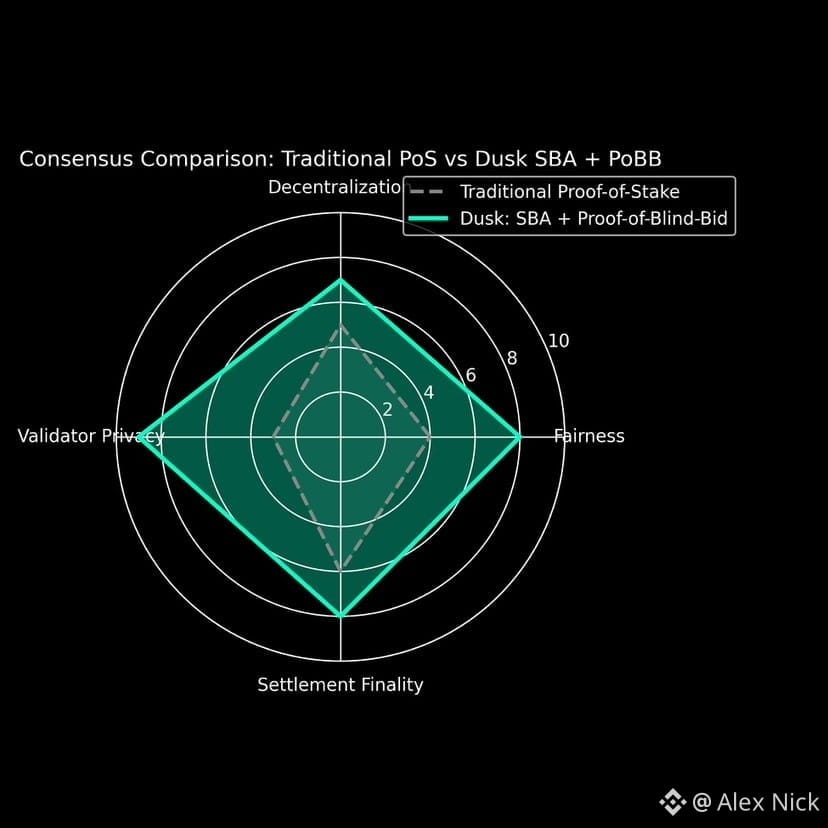
Consensus design also plays a role here.
Dusk uses a privacy aware proof of stake model combined with blind bidding mechanisms that reduce concentration of power. Validator identities and bidding behavior remain concealed while still maintaining fairness and security. This reduces the risk of dominant actors exerting control and it aligns with regulatory expectations around decentralization and resilience.
From an institutional perspective that matters because regulators do not want financial infrastructure controlled by a few invisible whales. Governance must be defensible and participation must be distributed in a measurable way.
What I keep coming back to is how Dusk reframes the entire privacy debate.
Privacy does not mean secrecy. It means proportional visibility. Regulators do not need to see everything all the time. They need the ability to verify when required. Dusk provides that capability without exposing unrelated activity. This matches how audits already work in traditional finance.
At the same time institutions need confidentiality to operate competitively. Strategies positions and internal flows cannot be public without causing harm. Dusk protects that information while still maintaining lawful oversight.
This balance is where most privacy chains fail. Some chase total anonymity and get isolated. Others chase full transparency and scare institutions away. Dusk sits in the middle and that is intentional.
Of course none of this guarantees adoption.
Regulated markets move slowly. Legal review takes time. Integration with custody reporting and internal systems is complex. These are not engineering problems alone. They are coordination problems involving lawyers auditors compliance teams and regulators across jurisdictions.
Dusk cannot force that process to accelerate.
What it can do is offer infrastructure that does not violate the rules before adoption even begins. And that is where its real strength lies. It does not promise revolution. It offers compatibility with reality.
If tokenized securities and regulated on chain markets become mainstream over the next decade the winning platforms will not be the loudest ones. They will be the ones that institutions can justify using without rewriting their entire governance structure.
Dusk is clearly betting on that future.
It is not building for visibility as a goal. It is building for trust that can be defended legally operationally and technically. Privacy exists where confidentiality is required. Transparency appears where accountability demands it.
That may not excite short term speculation but it is exactly how financial infrastructure survives long term.
And if blockchain truly becomes part of global capital markets the systems that understand restraint not exposure may end up forming the quiet foundation beneath everything else.
