
Most people only think about storage when it fails. I noticed it the first time an NFT image refused to load even though the token still existed. Later I saw it again when a game update shipped and half the assets took minutes to appear. On chain everything looked fine. Transactions cleared. Ownership was proven. But the experience felt broken. That moment makes something very clear. Users do not judge blockchains by ideology. They judge them by whether things actually show up when needed.
This is the uncomfortable side of Web3 that rarely trends on social media. Ownership means very little if the data behind it disappears or loads inconsistently. You can have perfect settlement and still lose trust instantly if content cannot be retrieved. Reliability is priced emotionally and instantly not over time.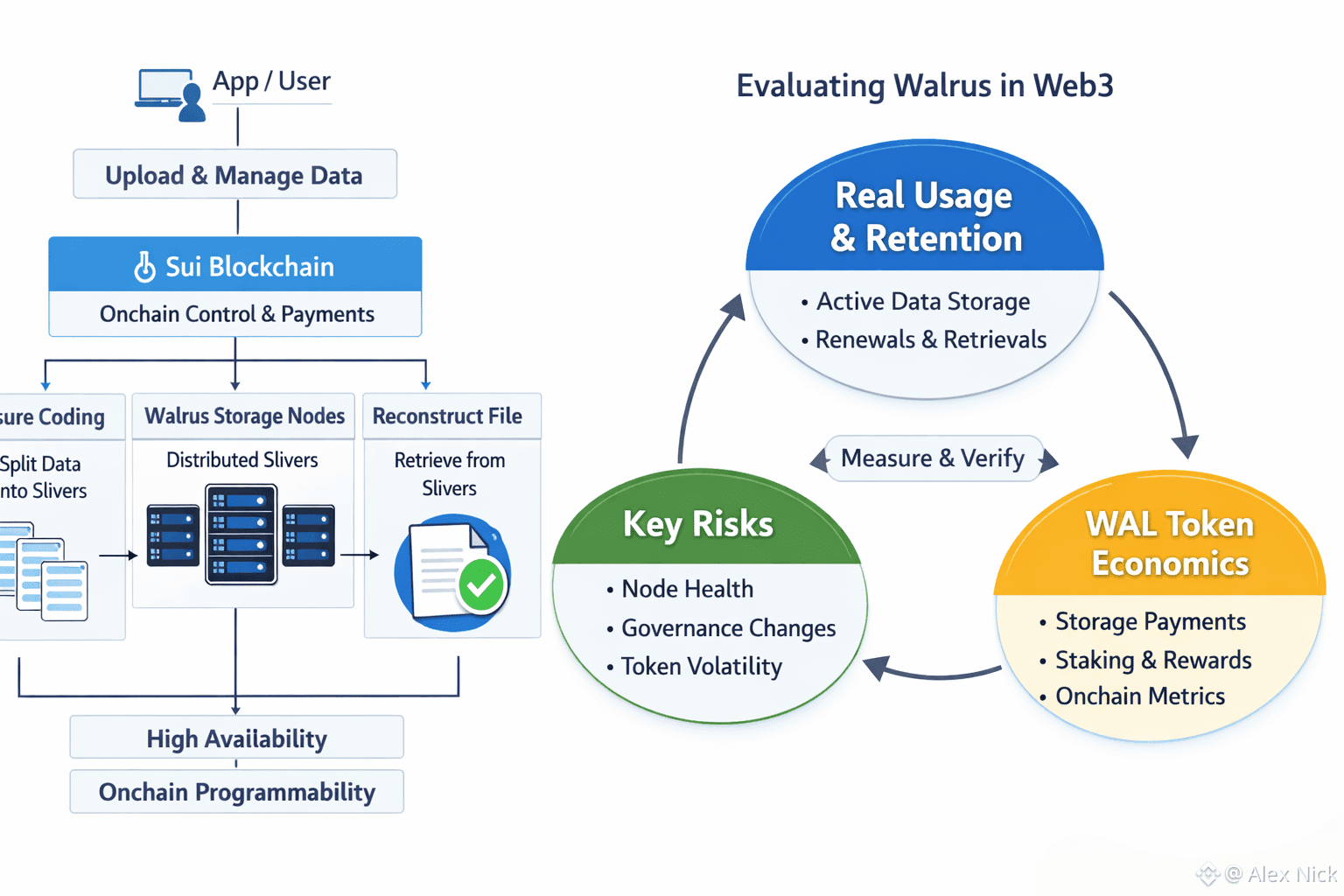
That is the gap Walrus is trying to close.
Why Storage Remains One of Web3’s Weakest Links
Blockchains were never meant to store heavy data. They excel at small state changes like balances and permissions. They struggle when asked to handle videos images datasets or long archives. Because of that most applications store large files elsewhere and leave only a reference on chain.
That reference is cheap but fragile.
If a server goes down changes policy or simply stops being maintained the on chain record becomes meaningless. The blockchain still says something exists but nobody can actually access it. From a user perspective that feels indistinguishable from failure.
Walrus was designed specifically to reduce this trust gap for large unstructured data. Instead of pretending chains can store everything directly it builds a separate storage network that works alongside them. The goal is not maximal decentralization for its own sake but predictable availability that applications can rely on.
What Walrus Actually Is at a High Level
At its core Walrus is a decentralized blob storage network with an on chain coordination layer. Storage nodes handle the actual data. The Sui blockchain manages coordination payments and verification logic.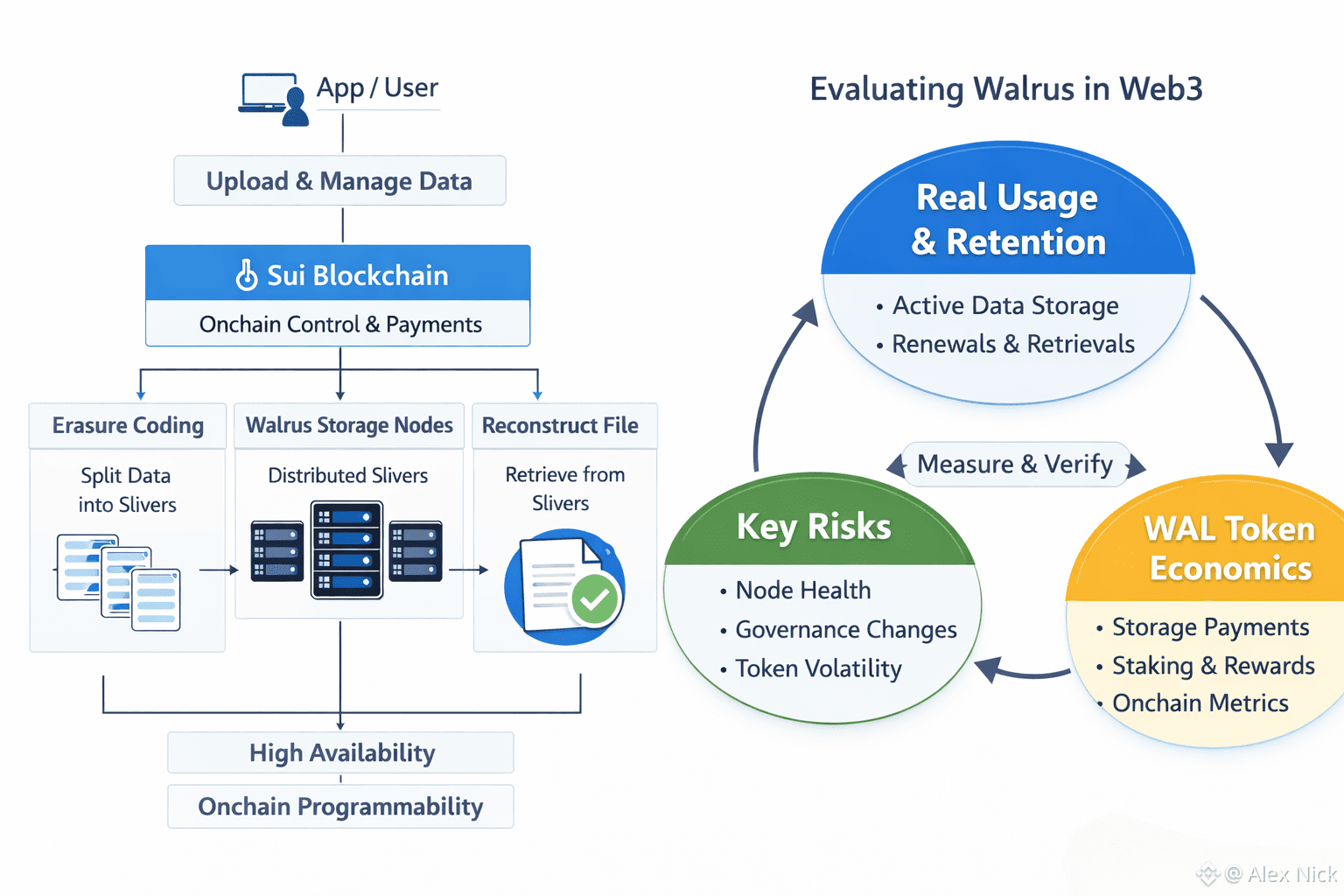
This separation matters more than it first appears. $SUI does not try to store the data itself. It acts as the control plane where storage commitments live. Applications can see when data was stored how long it will remain available and whether it meets availability requirements.
From my perspective this turns storage from a background assumption into something programmable. Instead of uploading and hoping an app can reason about storage directly. It can check availability renew storage or react if something is about to expire.
That changes how developers think about data entirely.
How Walrus Avoids Full Replication
One of the biggest challenges in decentralized storage is cost. Full replication means storing the same file many times across many machines. That improves redundancy but quickly becomes inefficient.
Walrus takes a different approach using erasure coding.
A file is broken into smaller fragments often called slivers and distributed across multiple storage nodes. The original data can be reconstructed even if many of those pieces go missing. According to the technical design the system can tolerate large portions of slivers disappearing while still recovering the full file.
The result is resilience without extreme overhead.
Instead of storing ten complete copies Walrus keeps redundancy closer to four or five times the raw data size. That balance matters because cost determines whether storage becomes habitual or experimental. If storing data is too expensive developers will test it once and leave.
This architecture allows the blockchain to remain focused on coordination while the storage network handles scale.
Where the Token Fits In
Walrus uses the WAL token because incentives are unavoidable in decentralized infrastructure. Nodes need to be paid to store data reliably over time. Users need predictable pricing. Governance needs a way to adjust parameters as conditions change.
WAL is used to pay for storage commitments and those payments are distributed gradually rather than instantly. The design aims to keep storage pricing relatively stable in fiat terms instead of wildly fluctuating with market volatility. WAL is also staked to support network security and participates in governance decisions that affect incentives and penalties.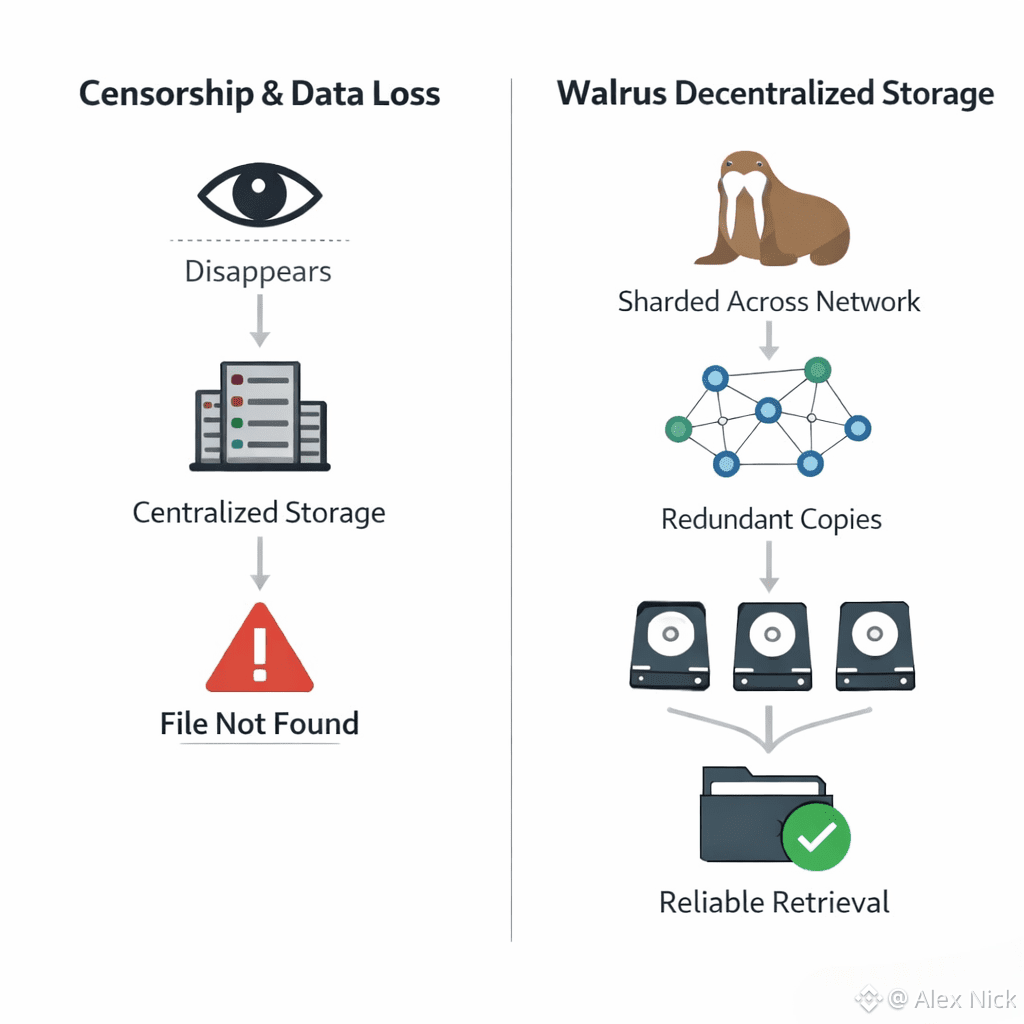
As of late January 2026 WAL trades around the ten cent range with daily volume in the low tens of millions and circulating supply around one point six billion tokens. Those numbers do not define success but they do tell you this is not an illiquid experiment. It is early infrastructure that the market is still trying to price.
Why Retention Matters More Than Uploads
Storage has a different kind of adoption curve than DeFi or trading protocols. The product is time.
Uploading data once means nothing. What matters is whether the data is still there months later when no one is paying attention. Retrieval reliability is the real test.
Walrus addresses this by making storage time explicit. Users reserve storage for defined durations and those commitments exist on chain. Applications can monitor retention instead of trusting off chain promises.
If this system works well retention becomes mechanical. Costs are predictable availability is verifiable and renewals are routine. If it fails the failure is brutal. Missing content destroys trust immediately and permanently.
That is why storage networks do not fade gradually. They collapse quietly.
Risks That Should Be Taken Seriously
There are real risks here.
If incentives are mispriced node operators may leave and availability degrades. If governance parameters shift too often predictability suffers. If aggregator or retrieval layers become centralized performance risk concentrates in unexpected places.
There is also ecosystem dependency. Walrus integrates deeply with Sui for coordination and programmability. That can accelerate adoption but also ties its growth to where developers choose to build.
And of course there is market risk. WAL can trade independently of usage for long periods. Narratives can lead fundamentals both upward and downward. Anyone trading it should assume volatility unrelated to actual storage demand.
How I Would Evaluate Walrus Practically
I would not start with announcements or price action.
I would look at behavior.
Are applications storing real volumes not just test files. Are storage renewals happening. Are retrievals fast and consistent. Is WAL being used for actual storage payments rather than sitting idle on exchanges.
The developer preview began in 2024 and mainnet launched in March 2025. That timeline matters because storage trust is earned through time not through launches.
The simplest test is also the most honest one. Store something. Retrieve it later. Measure cost over months. That is where storage narratives either become real or dissolve.
If Web3 is ever going to feel permanent it needs memory that does not disappear. Walrus is one of the more serious attempts to give decentralized systems that memory in a way that applications can actually reason about.

