

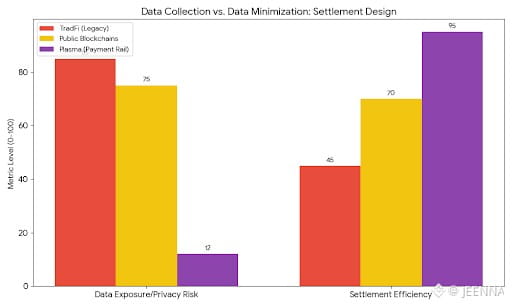
At its foundation, Plasma is not trying to be a generalized Layer-1 competing for developer mindshare or speculative attention. It is designed around a narrower, more pragmatic thesis: stablecoins have already found product-market fit, but the infrastructure they rely on is still inefficient, unpredictable, and costly at scale. Plasma’s architecture reflects this belief. By making stablecoins — particularly USDT — first-class citizens of the network, Plasma removes the need for users to interact with volatile native gas tokens just to move value. Zero-fee USDT transfers and flexible gas payment mechanisms are not marketing hooks; they are structural design choices aimed at reducing friction in everyday settlement.
This design philosophy places Plasma closer to payment rails than to traditional smart-contract platforms. Finality, throughput, and cost predictability take precedence over composability theatrics. The network’s paymaster model allows transaction fees to be abstracted away entirely or settled in stable assets, which mirrors how users already expect financial infrastructure to behave. In practical terms, this makes Plasma easier to integrate into wallets, merchant tools, and cross-border payment flows without forcing end users to understand blockchain mechanics. The chain is optimized for moving money efficiently, not for maximizing token velocity.
Since mainnet launch, Plasma’s early phase has been marked by a sharp contrast between infrastructure readiness and market behavior. Initial liquidity inflows were significant, driven largely by incentives and early DeFi participation, briefly positioning Plasma among the largest networks by TVL. As those incentives normalized, capital rotated out just as quickly, exposing a familiar tension in crypto: liquidity does not equal usage. The drawdown in token price and TVL was less a verdict on the technology and more a stress test of the project’s long-term thesis. Stablecoin rails are not validated by speculative deposits, but by sustained transaction volume and real economic activity.
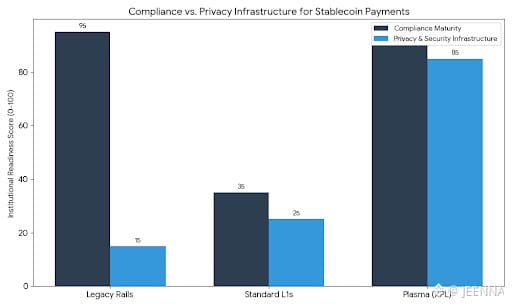
Against that backdrop, Plasma’s recent updates and integrations matter precisely because they focus on utility rather than optics. Wallet integrations, custodial support, and cross-chain connectivity signal an attempt to meet users where they already operate, rather than forcing new behavioral assumptions. The emphasis on regulatory alignment and licensed payment infrastructure further reinforces Plasma’s positioning. Instead of framing compliance as a constraint, Plasma treats it as a prerequisite for scale — particularly in jurisdictions where stablecoins are already being used for remittances, treasury management, and cross-border settlement.
Looking forward, Plasma’s roadmap reflects a gradual expansion rather than a pivot. Enhancements to validator participation and staking aim to strengthen decentralization without compromising performance. Bitcoin-related integrations are designed to broaden liquidity sources while keeping the network’s core focus intact. None of these updates redefine Plasma’s mission; they reinforce it. The project is not chasing every emerging narrative, but iterating on a single use case with increasing depth.
The open question is adoption velocity. Payments infrastructure compounds slowly, then suddenly. It depends less on token speculation and more on partnerships, distribution, and reliability over time. Plasma’s success will be measured not by short-term market sentiment, but by whether stablecoin users choose it repeatedly for settlement because it is cheaper, faster, and simpler than alternatives. If that behavior materializes, the network’s early volatility will look less like failure and more like the cost of building infrastructure ahead of demand.
Plasma, in that sense, represents a different maturity curve for crypto projects. It is not trying to convince users to believe in a future that does not yet exist; it is trying to optimize for a financial behavior that already does. Whether that focus is rewarded will depend on execution, distribution, and patience — qualities that matter far more in payments than in speculation.