
In a market crowded with general-purpose blockchains, Plasma takes a very different path. It is not trying to be everything at once. Plasma is designed with a single, clear goal: to become global infrastructure for stablecoin settlement. From architecture to economics, every layer of the network is optimized for moving digital dollars quickly, cheaply, and reliably at scale.
Rather than competing with smart contract platforms focused on NFTs, gaming, or experimentation, Plasma positions itself as financial plumbing for the internet economy. Its design choices reflect real-world payment needs such as predictable costs, instant finality, compliance-friendly privacy, and institutional-grade security.
A Clear Mission Focused on Stablecoins
Plasma is a Layer-1 blockchain purpose-built for stablecoin payments and settlement, with a particular emphasis on USDT and other fiat-backed assets. The network prioritizes speed, cost efficiency, and reliability over broad feature experimentation.
The core objective is simple and practical. Enable individuals and institutions to send and settle stablecoins with near-instant finality, minimal fees, and a user experience that feels closer to modern payment apps than traditional crypto networks.
Plasma targets two primary user groups. Retail users in regions where stablecoins are already used for daily payments and savings. Institutions operating in payments, treasury management, remittances, on-chain finance, and settlement infrastructure.
Technology Designed for Real Money Movement
Plasma is fully compatible with the Ethereum Virtual Machine through the Reth execution client. This allows developers to deploy existing Ethereum applications with minimal changes while continuing to use familiar tooling such as MetaMask, Hardhat, and Foundry.
At the consensus layer, Plasma runs PlasmaBFT, a custom system derived from Fast HotStuff. This enables high throughput exceeding one thousand transactions per second while maintaining sub-second finality. Transactions confirm quickly and predictably, an essential requirement for payments and financial settlement.
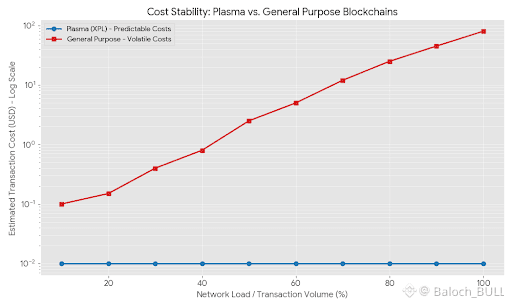
A defining feature of Plasma is its stablecoin-centric design. Basic stablecoin transfers can be gasless or fee-sponsored, meaning users do not need to hold the native token just to send USDT. Fees can also be paid in approved assets such as stablecoins or Bitcoin, reducing friction for mainstream users.
Privacy is implemented at the transaction level, allowing confidential transfers while still supporting compliance and auditability. This balance is particularly attractive for institutions that need discretion without sacrificing regulatory compatibility.
For security and neutrality, Plasma periodically anchors its state to Bitcoin. By leveraging Bitcoin as a settlement anchor, Plasma gains additional resistance to censorship and increases long-term trust assumptions.
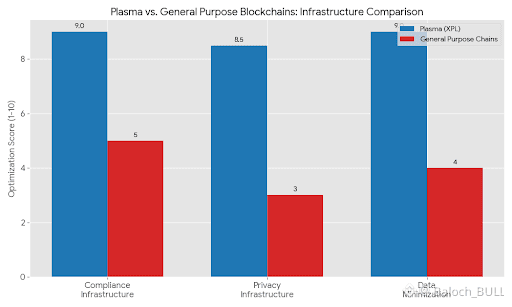
Cross-Chain Liquidity and Bitcoin Integration
Plasma is built to operate in a multi-chain environment. Through integration with NEAR Intents, the network enables cross-chain stablecoin swaps across more than twenty-five blockchains. Users can move liquidity without navigating complex bridges or fragmented interfaces.
A trust-minimized Bitcoin bridge known as pBTC is under development. Its goal is to bring native Bitcoin liquidity into the Plasma ecosystem, enabling BTC-backed DeFi, payments, and settlement without relying on centralized custodians.
The XPL Token and Network Economics
The native token of the network is XPL. It has a fixed maximum supply of ten billion tokens and plays a functional role rather than being positioned purely as a speculative asset.
XPL is used for validator staking, network security, governance participation, and payment sponsorship mechanisms. Validators receive a significant share of the token supply to ensure long-term incentives for securing the network and maintaining high uptime.
Additional allocations are directed toward ecosystem growth, developer incentives, and liquidity programs. Public sale distributions follow defined vesting schedules designed to reduce sudden supply shocks.
Since mainnet launch, Plasma has attracted substantial stablecoin liquidity. Total value locked in stablecoins has grown into the multi-billion-dollar range, placing Plasma among the most capitalized stablecoin-focused blockchains.
Ecosystem Growth and DeFi Adoption
Plasma’s mainnet beta launched in late September 2025 and immediately attracted attention from established DeFi protocols. Lending markets, yield strategies, and liquidity platforms deployed early, validating the network’s compatibility and performance.
Major DeFi integrations include Aave, Ethena, Fluid, Euler, and Pendle Finance, which introduced yield-bearing products tailored to stablecoin users. These integrations are not experimental pilots but production-grade deployments serving real liquidity.
Cross-chain activity has expanded through NEAR Intents, increasing access to external liquidity and reducing isolation from the broader crypto ecosystem.
On the infrastructure side, Plasma works with Chainlink Scale to provide reliable oracle data, supporting lending, derivatives, and on-chain financial products.
XPL is available on several major centralized exchanges including Binance, Bybit, OKX, and Bitazza, improving accessibility for global users.
Developer Experience and Tooling
From a developer perspective, Plasma feels familiar. Standard Ethereum tools work out of the box, reducing onboarding friction. Documentation and developer resources focus heavily on payments, settlement logic, and stablecoin-native design patterns rather than generic smart contract examples.
This focus helps attract teams building wallets, payment processors, treasury tools, and financial applications that need predictable performance and low transaction costs.
Recent Progress and Roadmap Direction
In early 2026, Plasma continued expanding its ecosystem through incentive programs, cross-chain integrations, and new DeFi launches. The focus remains consistent with the original mission: stablecoins first, infrastructure before experimentation.
Upcoming milestones include the launch of the pBTC bridge, further expansion of cross-chain liquidity, and the rollout of native financial products designed specifically for payment flows and institutional use cases.
Why Plasma Stands Out
Plasma’s differentiation is not based on novelty but on restraint. It deliberately avoids trying to be a universal blockchain. Instead, it optimizes every layer for stablecoin settlement, predictable costs, fast finality, and institutional usability.
While many networks adapt stablecoins as just another asset, Plasma treats them as the foundation of the entire system. This makes it particularly well-suited for real-world money movement rather than speculative activity alone.

