
Plasma represents a growing shift in blockchain design philosophy. Instead of chasing NFTs, gaming, or generalized DeFi, it is built around a narrower but arguably more impactful goal: enabling stablecoins to function as real digital money at scale. This focus sets Plasma apart, but it also exposes the project to a different kind of scrutiny.
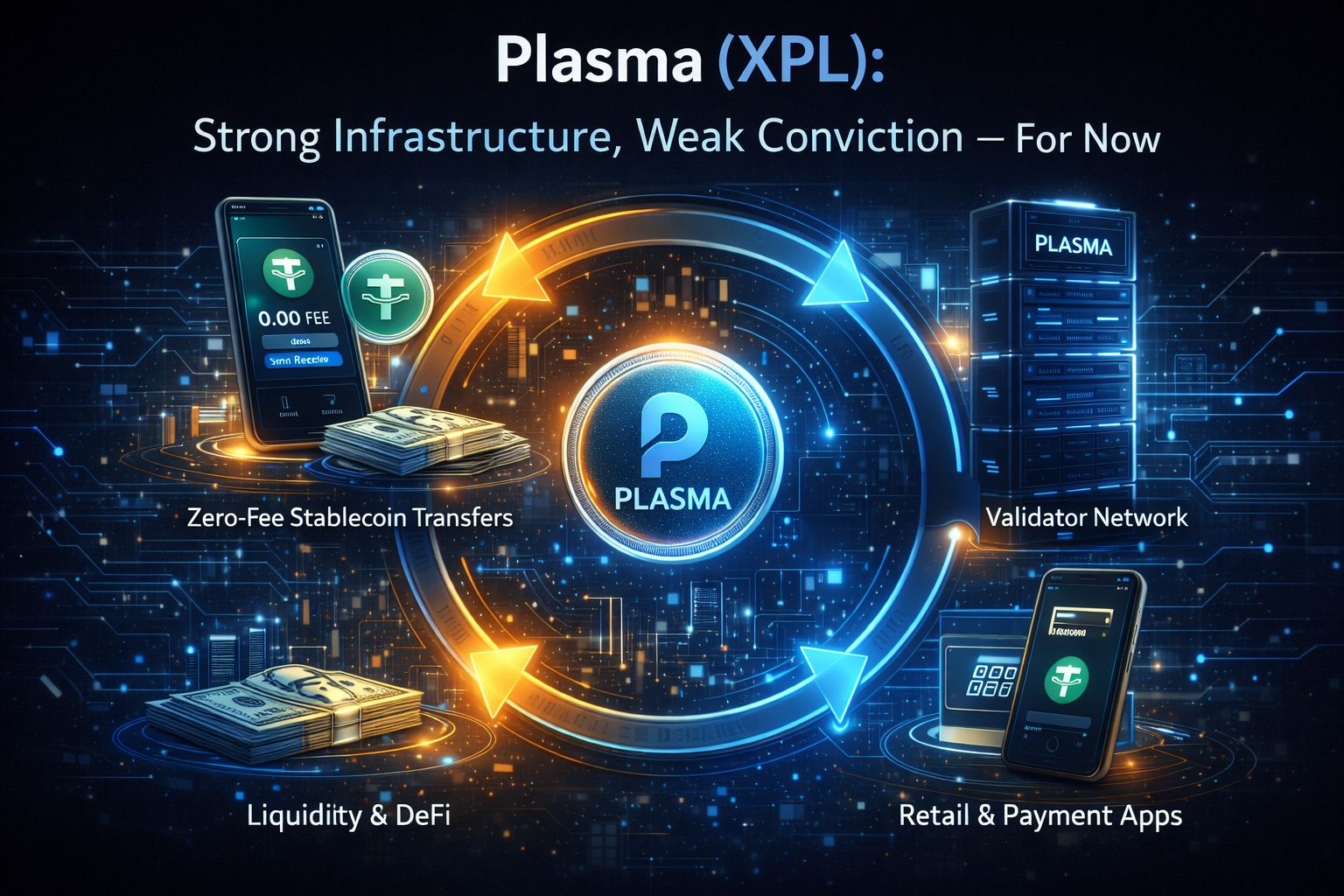
From a technical standpoint, Plasma’s infrastructure is purpose-built. Fast finality, low-cost execution, and EVM compatibility form the backbone of the network. Stablecoins are treated not as just another asset class, but as the primary reason the chain exists. The design reflects a belief that future blockchain adoption will be driven by payments, remittances, and credit systems rather than speculative trading alone.
Early infrastructure milestones were impressive. Plasma’s mainnet launch drew substantial stablecoin liquidity and quickly positioned the chain among networks handling meaningful capital. Integrations with cross-chain systems expanded access, while partnerships with credit and PayFi protocols suggested a broader financial vision beyond simple transfers.
However, infrastructure strength has not translated into market confidence. XPL’s price performance tells a story of unmet expectations. After early enthusiasm, the token suffered a deep drawdown, shaking investor trust. This wasn’t caused by technical failure, but by a gap between promised impact and observable usage. Liquidity can be incentivized, but real transaction demand must be earned.
Another challenge lies in user accessibility. While wallet and platform support has improved, gaps remain. Payment-focused blockchains depend heavily on seamless user experience, and any friction—whether in wallet compatibility or onboarding—slows adoption. Plasma’s infrastructure may be ready, but the surrounding ecosystem is still catching up.
Plasma’s position today is best described as unfinished rather than failed. The vision aligns with macro trends favoring stablecoins as global settlement tools. The technology appears capable of supporting that future. What remains uncertain is timing. Markets are impatient, but infrastructure adoption moves slowly.
If Plasma can convert its technical advantages into daily usage—by merchants, applications, or financial institutions—the narrative around XPL could change dramatically. Until then, Plasma remains a high-quality infrastructure project searching for proof that the world actually needs it right now.$XPL @Plasma #Plasma