
Fogo Most performance talk in crypto gets trapped in averages, like the network is a clean lab experiment. Real markets do not behave that way. They come in bursts, they punish delays, and they expose the uncomfortable truth that the slowest part of the system is what everyone ends up feeling. Fogo starts from that reality. It treats tail latency, the rare but brutal slow confirmations, as the real enemy, because those are the moments when liquidations slip, auctions drift, and order books stop behaving like order books.
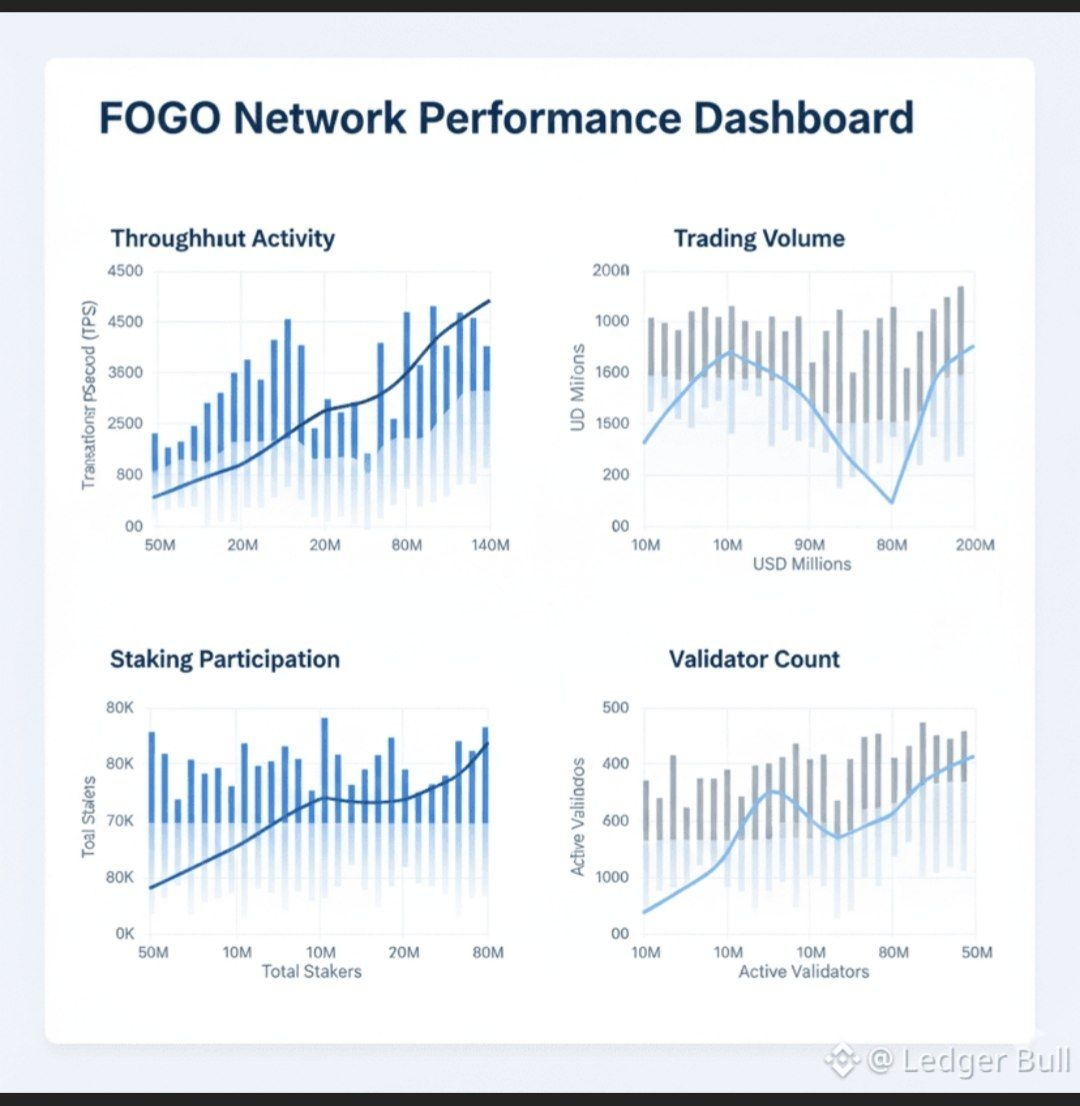
The easiest way to understand Fogo is to separate execution from settlement.
Execution is the part developers touch, the programs, the accounts, the transaction formats, the tooling. Settlement is the part traders care about, how quickly the network agrees on what just happened and how consistently it can repeat that under pressure.
Fogo keeps the Solana Virtual Machine because it is already built for parallel execution and because compatibility is a practical advantage:
existing Solana style programs and infrastructure do not have to be reinvented. The difference is that Fogo is not trying to win by changing the runtime.
It is trying to win by changing how the network reaches agreement fast, predictably, and without being dragged down by geography and stragglers.
That is where the zone concept comes in. Instead of requiring a globally scattered set of validators to coordinate in real time for every epoch, Fogo organizes validators into zones and activates one zone for consensus during an epoch.
The idea is almost blunt in its simplicity: if the validators that matter right now are physically close, the messages that decide finality do not have to cross oceans.
You are no longer paying the latency tax of the farthest links on the planet every time the chain needs to lock in a block.
Fogo leans into the trade rather than hiding it. It is saying locality is not a weakness to apologize for, it is a tool to control settlement time.
Of course, putting validators in the same region does not automatically fix everything. You can still lose predictability if a handful of validators are slow, poorly tuned, or running weaker stacks.
In quorum driven systems, the weakest participants shape the pace. Fogo takes a hard line on this by pushing toward standardization and performance enforcement, because the entire thesis collapses if the network becomes a mix of inconsistent implementations and under provisioned machines.
This is why Firedancer matters in the story. It is not just about raw speed. The deeper point is reducing variance by running a pipeline designed to stay stable under load, splitting work into specialized components, passing data efficiently, and avoiding the internal bottlenecks that create jitter. If you want confirmation times that feel steady, you need both a short network path and a validator architecture that does not wobble when traffic spikes.
Once you accept zones and enforcement as core design choices, governance stops being a side topic. Someone has to decide where the active zone is, how rotation happens, how far ahead moves are planned, and who is allowed into the validating set in the first place. Fogo’s approach is to put these levers into explicit onchain mechanisms rather than leaving them as informal coordination.
That helps with transparency, but it also makes the stakes clearer. If zone selection or validator admission becomes dominated by a small circle, the system can drift from disciplined performance management into gatekeeping.
The chain will only keep credibility if these processes remain visible, contestable, and hard to capture.
Fogo also spends time solving a less glamorous but equally real bottleneck: the user interaction loop.
High frequency workflows break when every small action demands a fresh wallet signature. Sessions are meant to soften that friction by letting a user grant a scoped, time limited permission once, then allowing a session key to operate within those limits until it expires.
When it is designed well, this shifts the experience from constant manual approvals to bounded delegation. It is not about making things flashy.
It is about making a fast chain usable for the kind of repeated actions that trading actually requires.
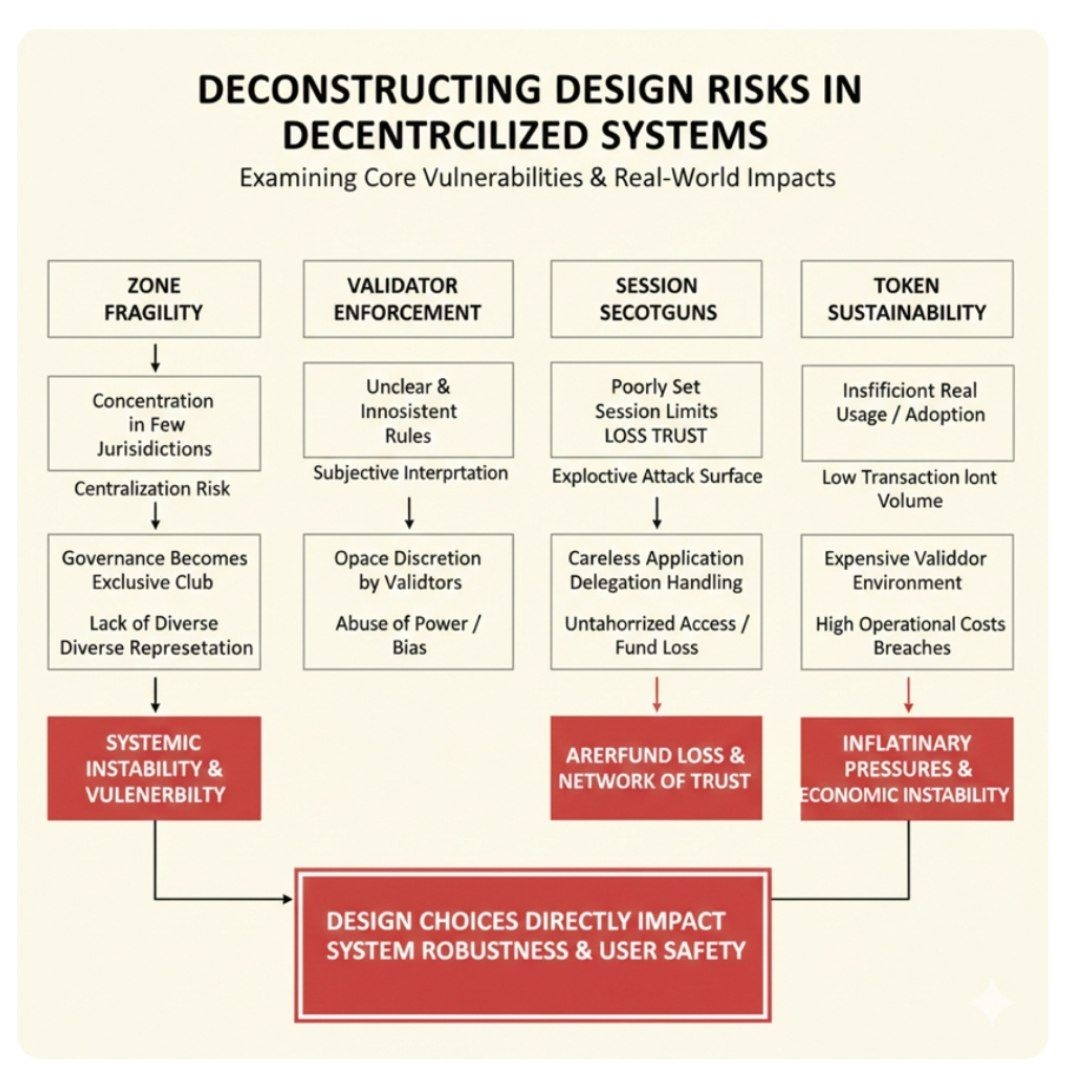
So the clean way to track Fogo is to ignore the headline speed claims and watch the harder signals. Does the network keep confirmation timing tight under stress, not just in calm conditions.
Does zone governance stay transparent and resistant to capture. Does the validator set grow without sacrificing predictability.
Do real applications choose it because they can engineer around its settlement behavior with confidence.
If those answers hold up, Fogo is not just another SVM chain. It is a chain trying to turn latency into a design contract rather than a hope.