Let me get straight to it I’ve spent a lot of time dissecting trading platforms, and Fogo genuinely caught my attention. I don’t buy into hype or flashy marketing. What matters to me is how a system performs when markets get rough, whether incentives line up with good behavior, and if the actual infrastructure can hold up under pressure. So when I first heard Fogo’s zero compromis tagline, I wanted to know if it’s just a slogan or if there’s substance behind it.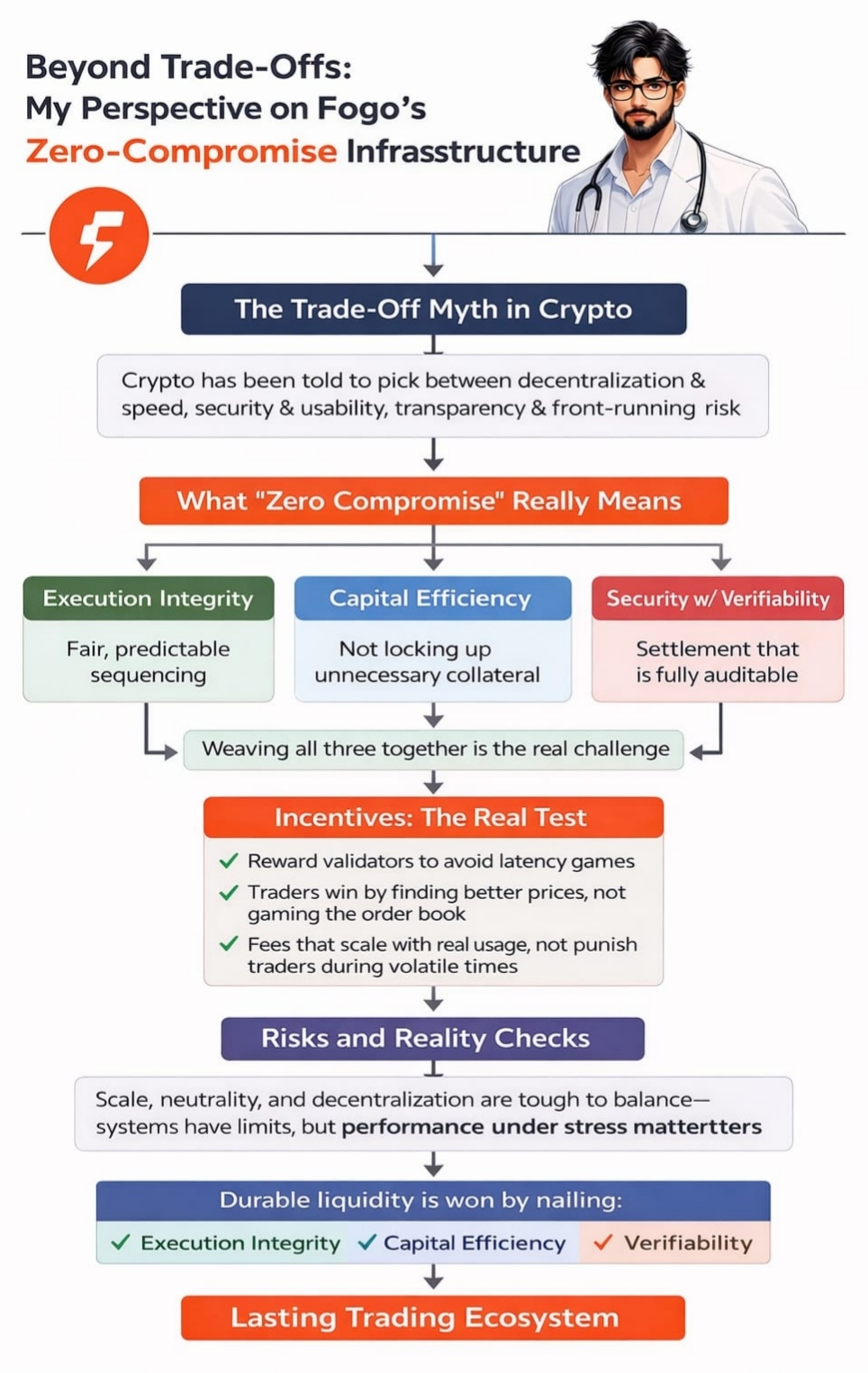
The Trade-Off Myth in Crypto
Crypto folks have always been told they have to pick their poison: decentralization or speed, security or usability, transparency or front-running risk. Everyone acts like these are laws of nature. But are they really?
Honestly, most of these “trade-offs” come from legacy architecture choices made back when blockchains weren’t built for the kind of fast, high stakes trading we see now. As markets get more sophisticated, the tech stack has to evolve too.
What “Zero Compromise” Really Means
Let’s be clear zero compromise doesn’t mean chasing perfection. It means squeezing as much performance, security, and efficiency out of the system as possible, all at once, without letting one pillar collapse for the sake of another. Fogo seems to anchor itself on three main things: execution integrity (fair, predictable sequencing), capital efficiency (not forcing users to lock up unnecessary collateral), and security with real verifiability (settlement that can actually be audited).
The challenge isn’t picking which to prioritize it’s weaving all three together. That balance matters more now than ever, especially as institutional players show up and expect real infrastructure, not just experimental tech.
Why This Matters
Markets are changing fast. Algorithmic traders and funds now drive much of the volume, and regulators are paying closer attention. There’s less room for platforms that are opaque or built on shaky foundations. Meanwhile, on-chain derivatives are ballooning, so one infrastructure hiccup can ripple out and cause real damage.
You can’t get by with “good enough.” A single lag during extreme volatility? That can set off liquidations and chaos across the board. When the infrastructure fails, everyone feels it.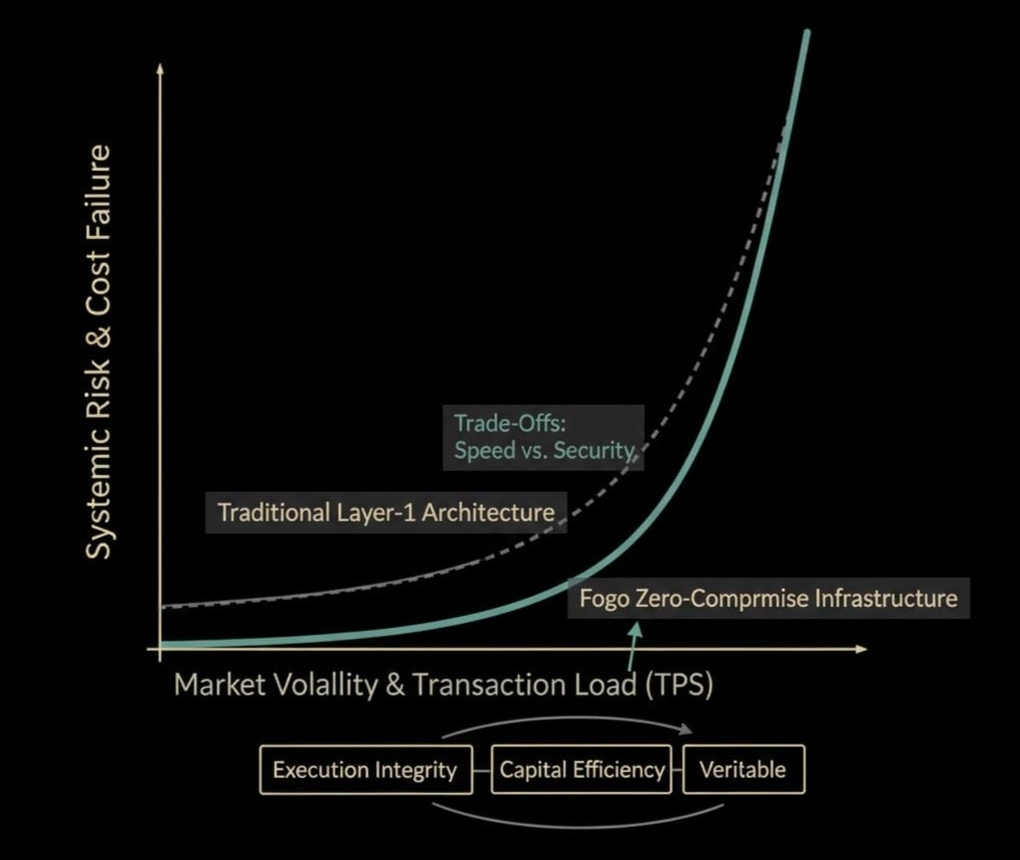
Incentives: The Real Test
The whole “zero compromise” idea only works if incentives keep everyone honest. Validators need rewards that make latency games pointless. Traders should win by finding better prices, not by gaming the order book. Fees should scale with real usage, not punish people for trading during volatile times.
When you line up incentives the right way, bad behavior drops off. To me, this is what separates a platform that just talks about values from one that actually lives them.
Risks and Reality Checks
Aiming for zero compromise sets a high bar. If the system stumbles during a crisis, trust disappears fast. Balancing scale, neutrality, and decentralization is tough no getting around it. Every system has limits, but what matters is whether the design is open, and if performance holds up under stress.
You can’t just trust the whitepaper. You have to watch the platform in action see how it handles the real world.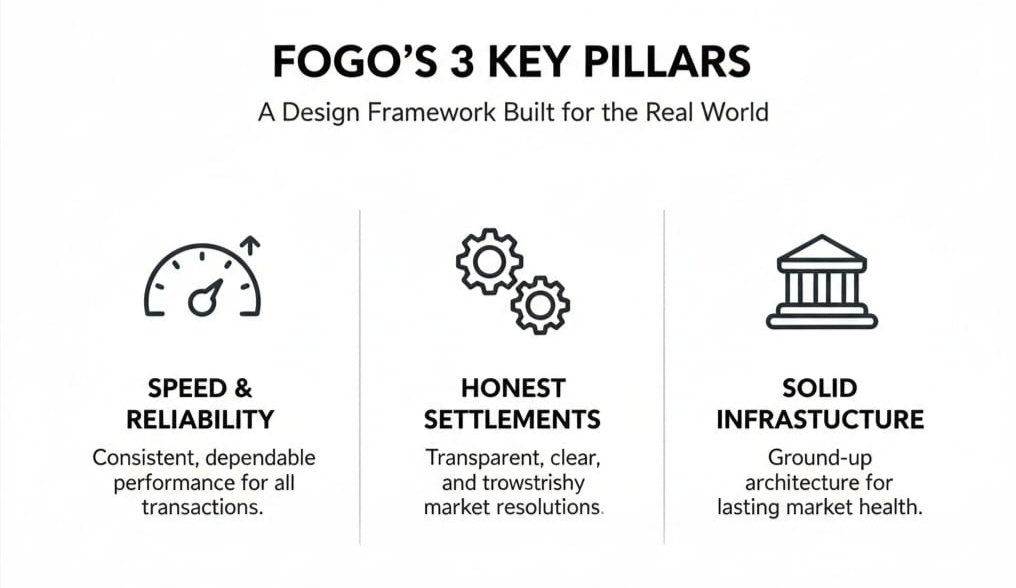
Wrapping Up
After years studying trading infrastructure, I think Fogo gets it right by treating infrastructure as a risk management tool. It doesn’t split performance, security, and efficiency into separate boxes. It treats them as pieces of the same puzzle.
If you’re serious about assessing these platforms, dig into the data. Look at fee-to-volume ratios. Check how validators are distributed. Watch latency when the market goes wild. That’s how you tell if zero compromise is built in, or just marketing fluff.
Bottom line: In crypto, infrastructure risk is trading risk. Platforms that nail execution integrity, capital efficiency, and verifiability win durable liquidity. That’s what makes a trading ecosystem last.