
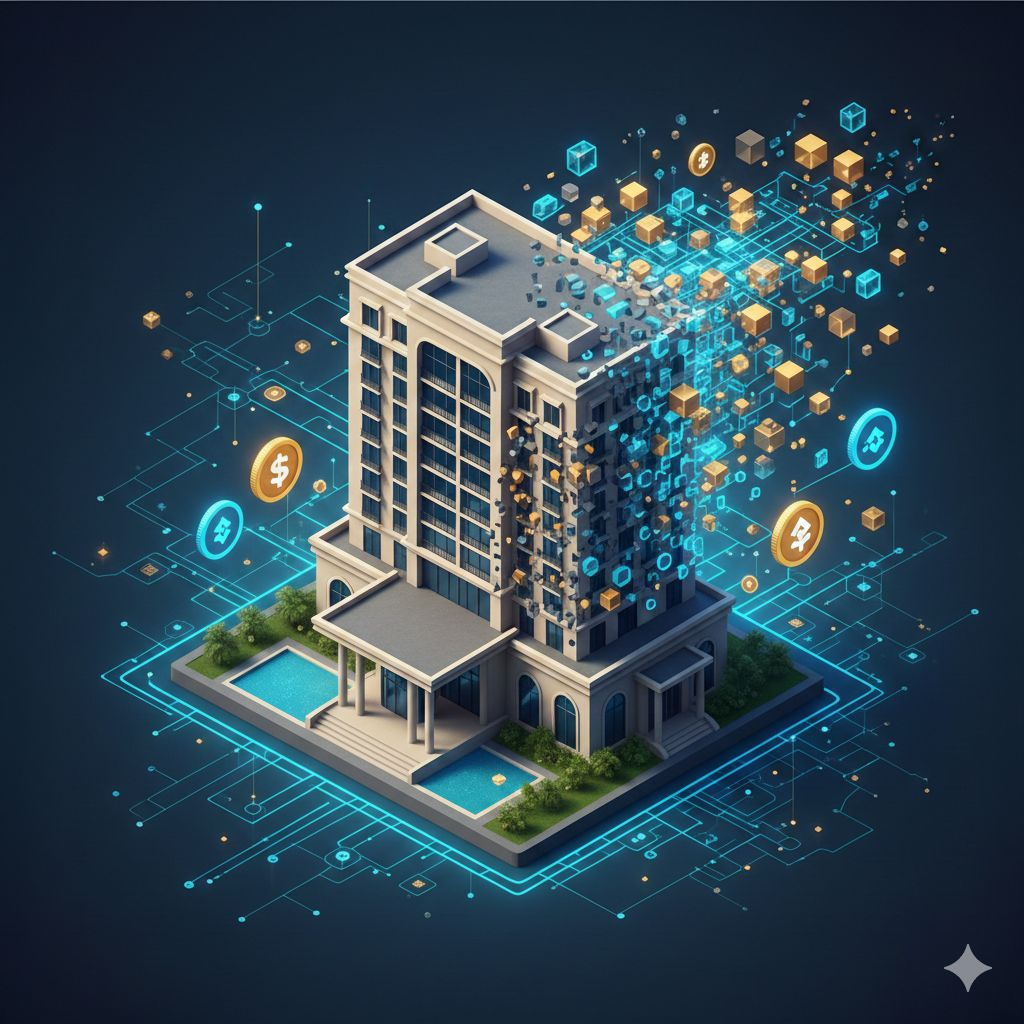
Selama beberapa dekade, real estat telah menjadi salah satu alat pembangun kekayaan yang paling kuat di dunia. Namun, itu selalu tetap di luar jangkauan banyak orang karena:
Persyaratan modal yang tinggi
Dokumen yang kompleks
Transaksi yang lambat
Likuiditas yang terbatas
Real estat tertokenisasi muncul sebagai respons terhadap masalah ini. Bukan dengan mengubah apa itu properti, tetapi dengan mentransformasi bagaimana kepemilikan disusun dan dipindahkan.
Apa Arti Sebenarnya dari Real Estat Tertokenisasi
Real estat tertokenisasi mengubah hak kepemilikan atau hak pendapatan yang terkait dengan suatu properti menjadi token digital di blockchain. Setiap token mewakili bagian fraksional dari aset yang mendasarinya atau klaim atas pendapatannya.
Alih-alih satu individu memiliki bangunan secara langsung, kepemilikan dibagi menjadi ratusan atau ribuan unit digital yang didistribusikan di antara investor.
Catatan: Tokenisasi tidak menghapus sistem hukum. Ini biasanya bekerja melalui struktur hukum seperti Kendaraan Tujuan Khusus (SPV) yang memegang properti. Token-token tersebut mewakili saham dalam entitas tersebut.
Bagaimana Tokenisasi Sebenarnya Bekerja
Contoh dunia nyata membantu di sini. World Liberty Financial baru-baru ini mengumumkan bahwa mereka men-tokenisasi kepentingan pendapatan pinjaman dari sebuah hotel dan resor di Maladewa.
Pinjaman konstruksi digunakan untuk membangun hotel.
Pinjaman itu menghasilkan pembayaran bunga.
Pembayaran bunga di masa depan ini diubah menjadi token dan dijual kepada investor.
Jika kamu membeli token, kamu berhak atas sebagian dari pembayaran bunga. Kamu tidak 'memiliki' hotel; kamu memiliki utangnya. Ini seringkali berarti kurangnya keuntungan, tetapi juga risiko yang lebih rendah.
Siapa yang Masuk?
Ini belum untuk semua orang. Saat ini, banyak dari penawaran ini terbatas pada investor terakreditasi (mereka yang memiliki kekayaan tinggi atau tingkat pendapatan tertentu). Token-token ini sering ditawarkan melalui platform yang sesuai seperti Securitize.
Jadi tidak, kamu tidak bisa membeli ke dalam kesepakatan institusi spesifik ini dengan 'uang saku' hanya saja—tetapi infrastruktur sedang dibangun untuk massa.
Mengapa Ini Penting dalam Jangka Panjang
Kisah sebenarnya adalah apa yang ini sinyalkan tentang regulasi dan selera institusional. Regulator sedang menguji apakah token yang didukung aset dapat membuka likuiditas tanpa mengurangi pengaman kepatuhan.
Aset Dunia Nyata yang Ditokenisasi (RWA) diproyeksikan mencapai $16 miliar pada tahun 2033. Meskipun itu kecil dibandingkan dengan pasar real estat global, itu adalah awal yang besar untuk ekosistem kripto.
Bagian-bagian 'membosankan'—jalur kepatuhan dan verifikasi investor—akhirnya selesai. Seseorang harus menjadi yang pertama.
Apa pendapatmu? Apakah kamu lebih suka memiliki sebagian kecil dari hotel mewah atau seluruh apartemen di daerah yang lebih murah? Mari kita diskusikan di kolom komentar!
#Write2Earn #Tokenization #RealWorldAssets #CryptoEducation #RWA