
The Origin Story: Why Fogo Exists at All
Every blockchain begins with a problem it wants to solve. For Fogo, that problem wasn’t simply slow transactions or high gas fees. It was something deeper — the gap between how fast modern financial markets move and how slow decentralized systems often feel when real money is on the line.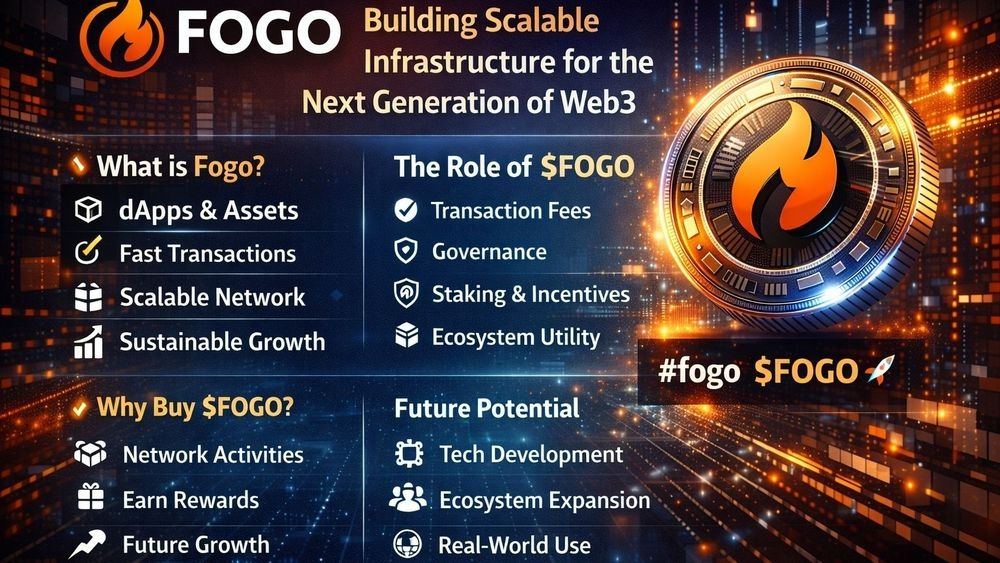
The early vision behind Fogo came from traders and engineers who believed that crypto infrastructure had reached an awkward stage. On one side, centralized exchanges delivered speed and execution quality. On the other, decentralized networks offered openness but struggled when markets became chaotic. The idea wasn’t to replace decentralization but to rethink how it could evolve if performance became the first priority instead of a secondary feature.
Instead of building from scratch, the team leaned into an open-source philosophy: take the Solana Virtual Machine and push it to its limits. They weren’t trying to reinvent everything. They were trying to remove friction — latency, inconsistent execution, and infrastructure bottlenecks that traders quietly complain about but rarely talk about publicly. I’m sure many builders felt the same frustration: being right about a trade but losing because the network reacted too slowly.
From the beginning, Fogo positioned itself as a purpose-built Layer 1 for real-time onchain finance. It wasn’t meant to be a general playground for every possible application. It was designed with a specific audience in mind — traders, liquidity providers, and institutions that think in milliseconds.
The Early Architecture: Choosing Speed Without Pretending There Are No Tradeoffs
One of the most defining decisions the team made was to run exclusively on the Firedancer validator client. Firedancer is known for rewriting core networking and execution logic to drastically improve throughput and reduce latency, which allowed Fogo to target extremely fast block times and near-instant confirmations.
But technology alone wasn’t the real story. The deeper idea was structural.
Traditional blockchains distribute validators across the world to maximize decentralization, yet that distribution introduces delays. Fogo approached this differently by introducing a curated validator model and multi-local consensus zones. Validators could be colocated near major trading infrastructure to reduce network round-trip time, and active zones rotate over time so that no single region dominates permanently.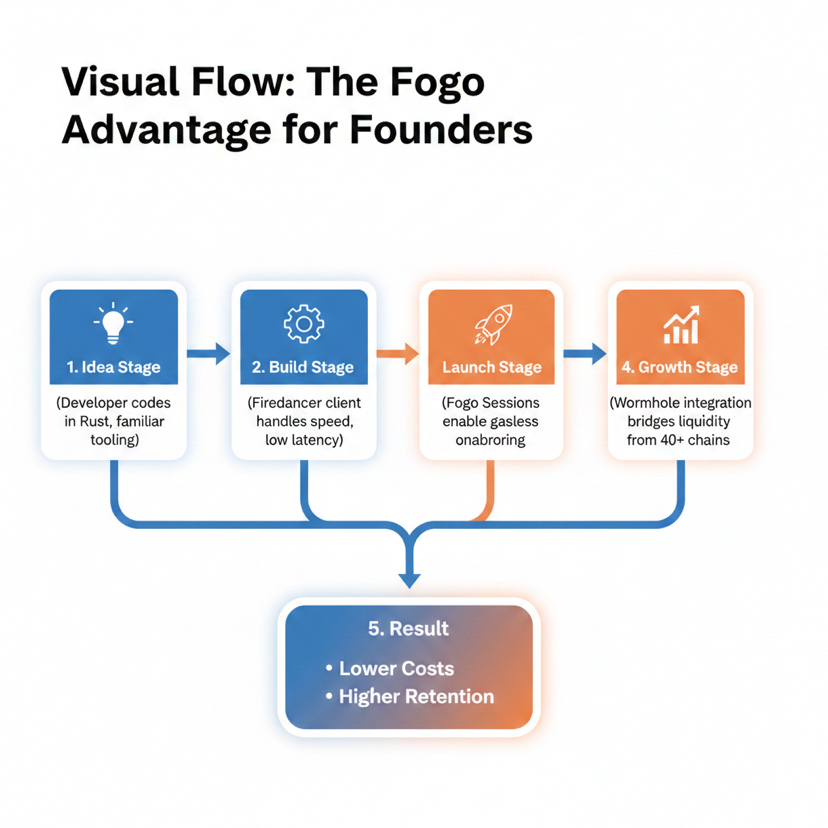
This design choice reveals the philosophy behind the chain. They’re not pretending to be the most decentralized network ever created. They’re trying to explore what happens if you optimize for execution quality first and manage decentralization risks carefully rather than ignoring them.
At the technical level, Fogo uses the same SVM environment as Solana, which means developers can migrate tools and applications without rewriting everything.
That compatibility matters because new ecosystems rarely grow in isolation. They grow when developers feel they already know how to build there.
From Testnet to Mainnet: A Controlled Evolution Rather Than a Sudden Launch
The journey from idea to a functioning chain didn’t happen overnight. Early testnets focused heavily on performance benchmarks and controlled participation. The network ran in a permissioned environment at first, allowing the team to measure latency, reliability, and execution under real trading-style workloads.
As testing expanded, Fogo demonstrated around 40-millisecond block times, sub-second confirmations, and extremely low fees — performance levels that traditional Layer 1s struggle to maintain consistently under stress.
By early 2026, the project moved into public mainnet deployment, introducing a high-speed SVM-based chain designed for real-time DeFi use cases.
This transition felt less like a launch event and more like the next stage of a long experiment: could an infrastructure designed around traders actually survive outside a controlled test environment?
We’re seeing early signals that the team understands the difference between laboratory performance and real market conditions. Metrics like block time or theoretical TPS look impressive on paper, but what matters more is consistency during volatility. If it becomes stable under heavy usage, the architecture could redefine expectations for execution speed across the industry.
How the Technology Works in Practical Terms
To understand Fogo’s design, it helps to imagine the blockchain not as a digital ledger but as a trading engine.
Transactions enter through an optimized networking layer that minimizes packet loss and processing overhead. The Firedancer client handles block production with high-performance data handling, allowing the network to process tens of thousands of transactions per second with minimal delay.
Multi-local consensus divides validators into geographic zones. Instead of every node participating equally at every moment, only one zone is active per epoch, reducing coordination overhead and latency.
The system rotates zones over time, which introduces an unusual rhythm to the network — almost like a follow-the-sun trading desk that moves with global liquidity.
Another practical piece of the stack is vertical integration. Native price feeds, built-in trading infrastructure, and tightly integrated liquidity providers aim to create a consistent execution environment rather than a fragmented ecosystem.
This design might sound restrictive compared to fully open chains, but the goal isn’t maximum flexibility. The goal is predictable performance.
The Current Ecosystem: What People Are Actually Building
Today, most of the activity on Fogo revolves around trading-focused applications. Perpetual futures platforms, spot trading tools, and liquidity engines dominate early development. The reason is simple: that’s where ultra-low latency matters most.
We’re seeing developers experiment with high-frequency strategies that would feel uncomfortable on slower chains. Institutional-style workflows — market making, arbitrage, and automated execution — are starting to appear because the infrastructure finally resembles something closer to traditional finance systems.
Another important factor is SVM compatibility. Existing Solana applications can migrate without rebuilding core logic, which reduces friction for builders exploring new performance environments.
It’s not about replacing existing ecosystems overnight. It’s about offering an alternative environment where execution feels more deterministic.
Adoption Signals and What Really Matters Right Now
When people evaluate a new blockchain, they often focus on TPS claims or token price movements. But those numbers rarely tell the full story.
For Fogo, the more meaningful signals are developer experimentation, liquidity depth, and whether professional traders actually stay after testing the network. The public testnet processed tens of millions of transactions, showing early engagement, but real adoption will depend on how the chain performs when markets become chaotic.
Another signal is institutional involvement. The leadership and advisory layers include figures with deep backgrounds in traditional finance infrastructure, which suggests the project is trying to bridge crypto and professional trading culture rather than compete purely in retail narratives.
We’re also seeing an emphasis on fair execution and MEV mitigation — ideas that matter more to serious traders than flashy marketing metrics.
Risks, Criticism, and the Real Challenges Ahead
Every design choice creates a new risk profile, and Fogo is no exception.
The curated validator set and colocation model improve speed but raise concerns about decentralization. Some critics argue that concentrating validators in specific regions could introduce censorship risks or reduce resilience compared to globally distributed networks.
There’s also the question of specialization. Because the chain focuses heavily on trading use cases, it may struggle to attract developers building games, NFTs, or social applications. That’s not necessarily a flaw, but it means ecosystem diversity could grow more slowly.
Another challenge is expectations. High-performance testnets often look flawless until real capital and adversarial behavior enter the system. If outages or congestion appear under stress, the narrative around ultra-low latency could shift quickly.
The team seems aware of these tradeoffs. Their approach suggests they’re not trying to hide the compromises — they’re trying to manage them intentionally.
The Long-Term Direction: Where Fogo Might Fit in the Future of Web3
Zooming out, Fogo represents a larger trend in blockchain design. Instead of building one universal chain for every use case, developers are starting to create specialized infrastructure optimized for specific industries.
If Ethereum became the backbone for decentralized applications and Solana focused on high throughput, Fogo seems to be exploring something slightly different — a chain that treats trading infrastructure as a first-class citizen rather than an afterthought.
I’m noticing that this shift mirrors what happened in traditional finance. Markets eventually moved toward specialized exchanges and execution venues because general systems couldn’t handle extreme speed requirements. If it becomes successful, Fogo might signal a similar evolution in Web3, where different chains serve different layers of the digital economy.
Still, the future isn’t guaranteed. Performance alone doesn’t build an ecosystem. Community trust, developer retention, and real liquidity will determine whether the chain becomes a long-term infrastructure layer or just another experiment in high-speed execution.
A Final Reflection
When you step back and look at Fogo’s journey, it doesn’t feel like a typical crypto project chasing hype cycles. It feels more like an ongoing engineering experiment — an attempt to answer a difficult question: how fast can a decentralized system really be before it stops feeling decentralized?
We’re seeing a network that deliberately leans toward performance, even if that means navigating uncomfortable debates about tradeoffs. They’re trying to build something closer to a real-time financial engine than a traditional blockchain, and that ambition carries both promise and risk.
The deeper question might not be whether Fogo becomes the fastest chain. The real question is whether the industry is ready to accept a future where different blockchains specialize in different roles — and whether traders, builders, and institutions are willing to trust a system designed around speed as much as openness.
Because if this model works, it may quietly reshape what the next generation of blockchain infrastructure looks like — not slower, not louder, but engineered for the exact moment when milliseconds start to matter more than ideology.
