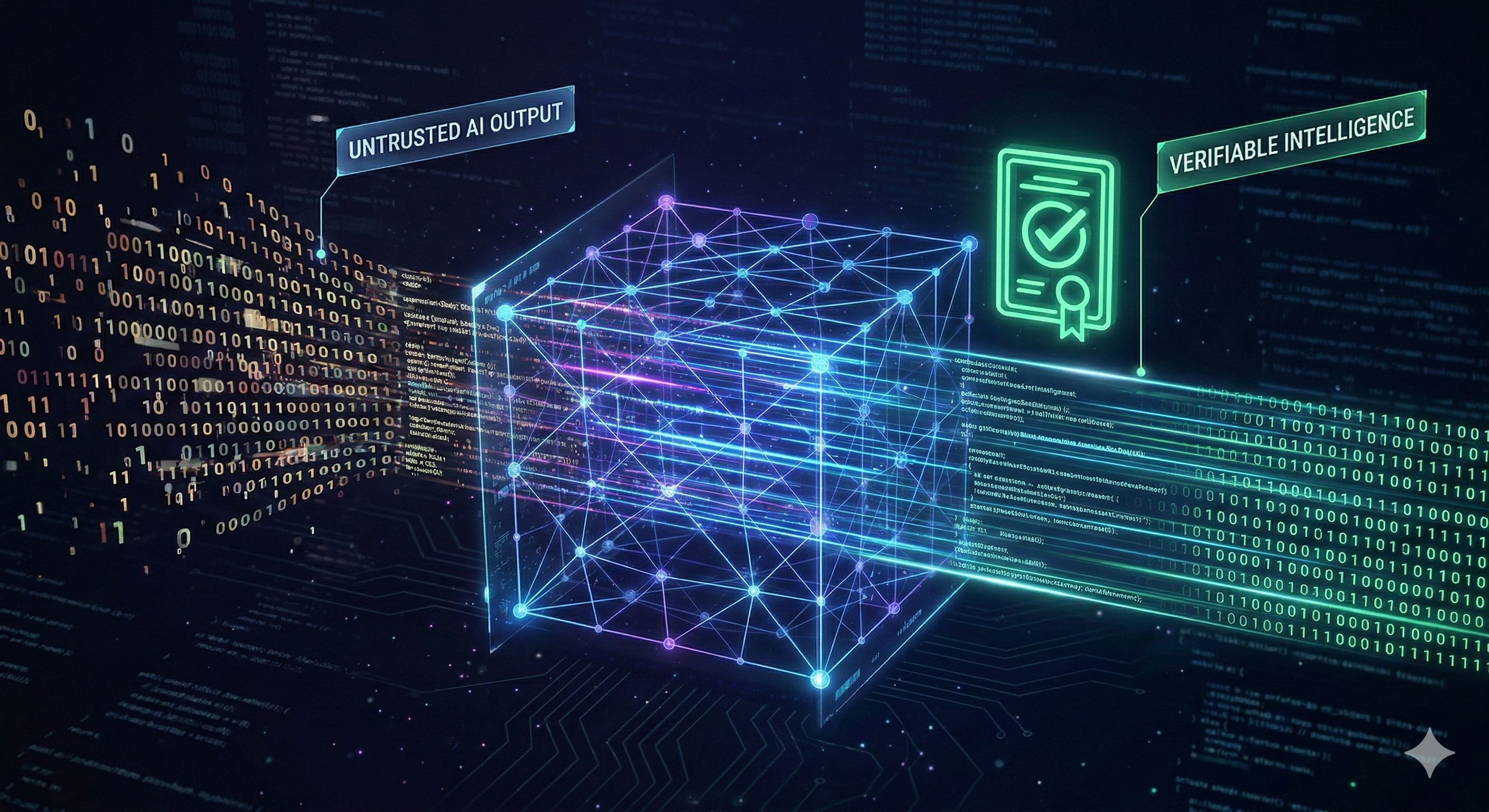
The persistent barrier to AI’s full potential in high-stakes sectors is a simple, fundamental question: Can we trust its output? @mira_network has answered with a groundbreaking decentralized infrastructure protocol designed to verify artificial intelligence.
The Problem: The AI Reliability Gap
The explosive rise of Large Language Models (LLMs) has revolutionized content generation, but it has highlighted a critical flaw—AI hallucinations. These models frequently "make things up," presenting fabricated or biased information as concrete fact. In sectors like finance, law, and healthcare, this lack of verifiability makes full AI autonomy dangerous and requires expensive human oversight on every output. The industry faces a fundamental choice: precision versus hallucination. Current centralized models cannot solve this trade-off alone.
Mira Network: Decentralized Verification and Collective Intelligence
Mira Network’s solution is to sit as an middleware layer between AI systems and end-users, acting as the indispensable Trust Layer for AI. Its core innovation is a decentralized verification pipeline that utilizes the "collective intelligence" of a diverse network of independent AI models.
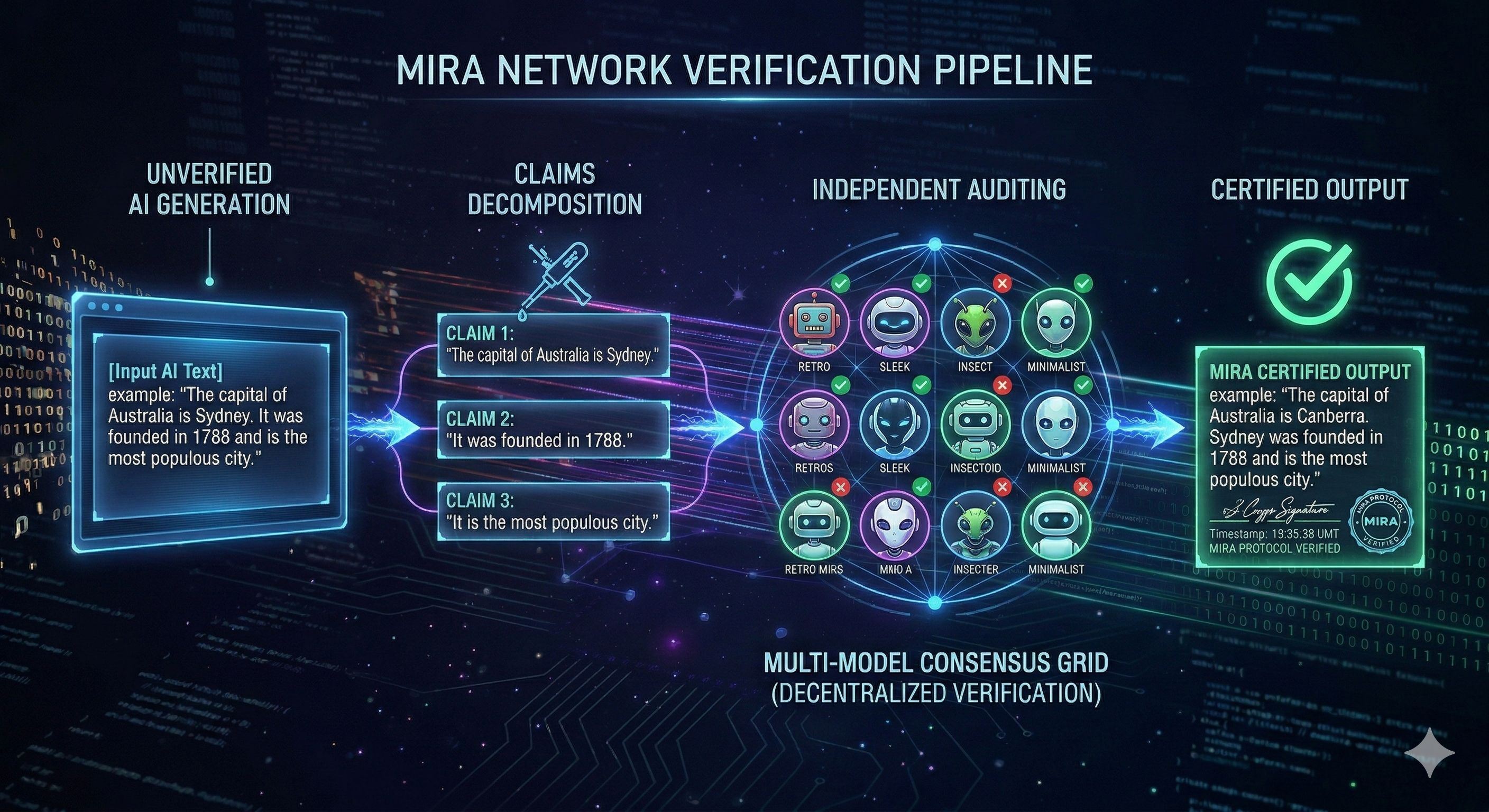
When candidate AI-generated content enters the Mira Network, it undergoes a sophisticated, semantic decomposition process (conceptualized in Image 2). complex statements are broken down into individual, verifiable factual assertions, or 'claims.'
These atomic claims are then randomly distributed to verifier nodes across the network. By ensuring that no single operator has access to the complete document, Mira inherently protects customer privacy. The nodes independently audit their assigned claims using their specialized verifier logic or models.
The final, certified result is reached through a novel consensus mechanism. Multiple instances of different models vote on the validity of each claim, significantly reducing bias and errors. research indicates that this multi-model approach can improve AI output accuracy from a baseline of ~70% to over 96%. This high precision approaches the level where AI can operate autonomously in critical, high-consequence environments.
The Role of the $MIRA Token
At the heart of this new economic engine is the native token MiRA, fueling the cryptoeconomic incentive model that ensures network integrity.
Staking and Security: Verifier nodes must stake $MIRA tokens to participate in the consensus process. This economic bond aligns the operators' interests with the network’s truthfulness. Malicious actors, or those submitting lazy inferences, are detected through statistical checks and face automatic token slashing penalties.
Network Fees: Developers and enterprises pay to access Mira’s suite of verification APIs and its "Mira Flows" marketplace, which offers pre-built, customizable AI workflows.
Governance: holders can participate in protocol governance, voting on upgrades and ecosystem development.
Looking Ahead
As #Mira continues to evolve, its ultimate goal is not just decentralized verification but the eventual creation of a "synthetic foundation model"—an AI system capable of generating inherently error-free, verifiable outputs at the point of generation. By integrating blockchain’s transparency with AI’s processing power, @mira_network is building the necessary infrastructure for a world of truly autonomous, trustable intelligence.
#Binance #Mira #MarketRebound #AI