
Fabric Protocol is built around a big idea: robots and AI agents are moving out of screens and into the real world, and they need a secure system to work safely, earn money, and coordinate with each other. Today, most AI lives in apps and websites. But very soon, intelligent machines will drive cars, deliver packages, manage warehouses, assist in hospitals, and even maintain infrastructure. When machines start acting in the physical world, mistakes are no longer just digital errors — they can cause real damage. Fabric Protocol is trying to build the trust layer that makes this new robotic economy possible.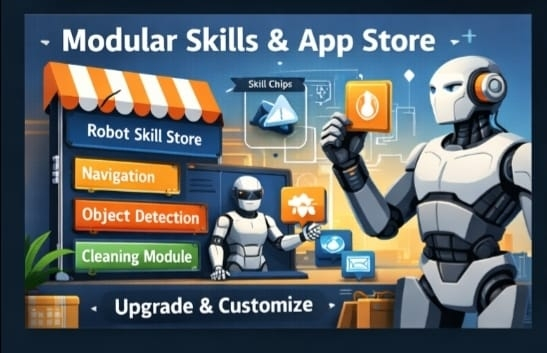
To understand why this matters, it helps to look at how technology evolved in the past. The internet connected computers so they could share information. Smartphones created app stores that let developers build tools for millions of users. Blockchains introduced systems where strangers could transact without trusting each other personally. Robotics, however, is still fragmented. Every robotics company builds its own system. Robots often cannot easily communicate with robots from other companies. There is no shared “internet for robots” that handles identity, payments, accountability, and coordination. Fabric Protocol wants to become that shared layer.
At its core, Fabric is designed to help robots and AI agents prove who they are, accept tasks, complete work, get paid, and be held accountable if something goes wrong. In the digital world, identity is simple — a wallet address can sign a message. In the physical world, identity is much more complex. A robot’s identity includes its hardware, its location, its capabilities, and the operator responsible for it. Fabric introduces a system where robots can have on-chain identities and wallets, allowing them to transact and operate autonomously while still being accountable.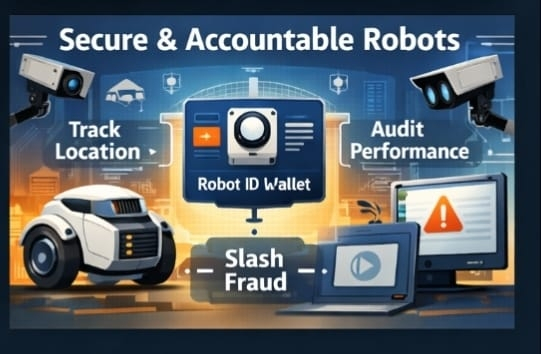
One of the key ideas in Fabric is the use of economic bonds. If a robot operator wants to provide services through the network, they must stake ROBO tokens as a performance bond. This bond acts like a security deposit. If the robot performs well, the bond remains intact and can be withdrawn. If the robot behaves dishonestly, fails repeatedly, or breaks the rules, part of the bond can be “slashed,” meaning taken away as a penalty. This creates a financial incentive for good behavior. Instead of trusting the operator blindly, the system relies on economic pressure to reduce fraud.
Verifying work in the physical world is one of the hardest challenges. On a blockchain, it is easy to verify whether a transaction is valid. In the real world, it is much harder to prove that a robot truly cleaned a warehouse correctly or delivered a package safely. Fabric addresses this with a challenge-based verification model. Not every task is checked at all times. Instead, the system allows disputes. If someone believes a task was done poorly or fraudulently, they can challenge it. Validators review evidence, and if fraud is proven, penalties are applied. This does not eliminate risk completely, but it makes cheating costly over time.
Another important concept is reputation. In Fabric, reputation is connected to capital. Token holders can delegate their ROBO to operators, increasing the size of the operator’s bond. If the operator performs well, everyone benefits. If the operator is penalized, delegators share the risk. This creates a system where reputation is not just about reviews or ratings — it is backed by financial commitment.
Fabric also introduces the idea of “skill chips.” Instead of building one massive robot brain, the system envisions modular skills that can be added or removed like apps. A robot might install a navigation skill, a cleaning skill, or a warehouse sorting skill. Developers can create these skill modules and contribute them to the ecosystem. This modular approach allows faster innovation and easier upgrades. It also makes it simpler to audit and control what a robot can do.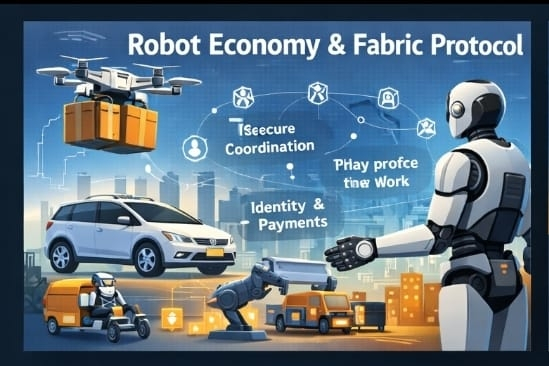
The token at the center of this ecosystem is $ROBO. The total supply is fixed at 10 billion tokens. The allocation includes portions for investors, the team, the foundation reserve, ecosystem growth, community rewards, liquidity, and a small public sale. A large percentage is reserved for ecosystem and community incentives, especially through something called “Proof of Robotic Work.” This suggests that the network plans to reward real, verified robotic activity rather than simply encouraging speculation.
$ROBO has several functions. It is used to pay network fees, stake performance bonds, participate in governance, and support delegation. In theory, if many robots operate through Fabric, demand for $ROBO should increase because operators need it to post bonds and access services. However, this depends entirely on real-world adoption. Without real robotic activity, token demand would rely mainly on speculation.
Fabric’s roadmap outlines gradual development. The early phase focuses on robot identity, task settlement, and structured data collection. Later phases expand contribution-based rewards tied to verified execution and data submission. The roadmap also includes support for multi-robot workflows, where several machines coordinate on complex tasks. In the long term, Fabric aims to build its own dedicated Layer 1 blockchain optimized for machine coordination.
The vision goes beyond simple task payments. Fabric imagines markets where humans provide compute power to robots, supply electricity for charging, or share specialized AI skills. Robots could purchase services automatically and settle payments on-chain. If this system works at scale, it could create a global robot service marketplace where machines interact economically with both humans and other machines.
However, the project faces significant risks. The biggest challenge is verifying real-world work reliably. Measuring performance in physical environments is complicated. There is also the risk of system abuse, false challenges, or collusion among validators. Security is another concern. If a robot’s identity is compromised, attackers could misuse its permissions. Governance is also delicate. Too much central control reduces decentralization, but too much openness too early could create safety problems.
Market risk is also important. Early token prices are often volatile and influenced more by exchange listings and speculation than by actual usage. For Fabric to succeed long term, token value must connect to real robotic throughput and demand for network services. Without real adoption, the economic model may struggle.
There is also competition. Large robotics companies may prefer closed ecosystems where they control identity, payments, and updates. Enterprise security providers are developing their own systems for managing AI agents. Fabric’s advantage lies in being open and composable, but openness must prove more efficient and secure than centralized alternatives.
If Fabric succeeds, it could become foundational infrastructure for the robot economy. Robots could register identities, accept jobs, prove work, and get paid through a shared protocol. Developers could build skills and earn rewards. Validators could monitor and maintain fairness. Governance could evolve through token-based participation. Over time, a machine-native blockchain could emerge, optimized specifically for robotic workloads.
If it fails, robotics will still grow — but coordination may remain controlled by large corporations. The difference lies in whether trust and economic power are centralized or distributed.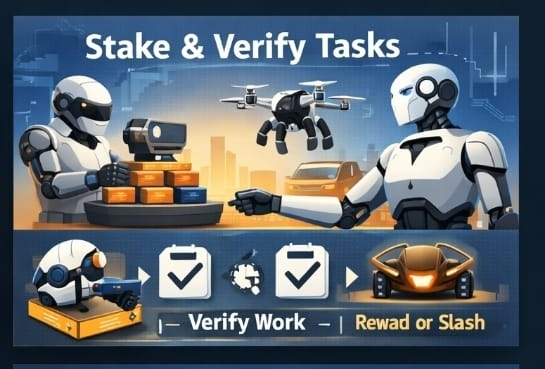
Fabric Protocol represents a bold attempt to solve a real problem: how to make autonomous machines trustworthy, accountable, and economically integrated in the physical world. It combines blockchain incentives with robotics infrastructure, aiming to turn robot work into something measurable, auditable, and financially secured. The idea is powerful, but its success depends not on promises, but on real deployment, real verification, and real adoption in the years ahead.
#ROBO @Fabric Foundation $ROBO
