

Most blockchain conversations orbit around speed, gas fees, token price, and total value locked. These metrics matter, but they are surface indicators. Beneath them lies a deeper structural question: how efficiently does an ecosystem coordinate its participants? Fabric Foundation is built around addressing that question, focusing on the infrastructure layer that determines whether decentralized systems scale coherently or fragment under their own complexity.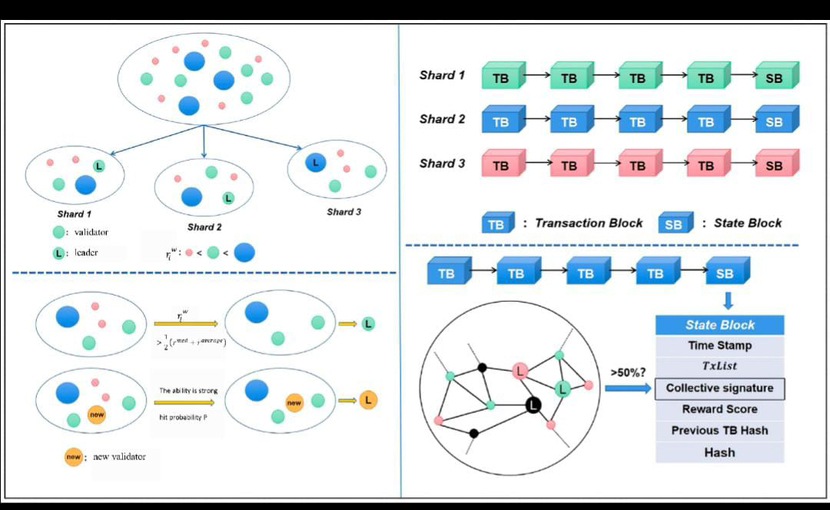
As Web3 has expanded, so has fragmentation. Liquidity is dispersed across multiple networks, developer environments differ in tooling and standards, governance frameworks lack uniformity, and interoperability often requires additional abstraction layers. While innovation has accelerated, coordination costs have increased. This creates inefficiencies that compound over time. Developers must rebuild similar components across chains. Users navigate inconsistent interfaces. Capital becomes siloed. Fabric Foundation approaches this structural friction as a solvable design problem.
From a systems engineering perspective, coordination is not an abstract concept; it is measurable in reduced integration time, lower operational risk, and improved capital efficiency. Standardized infrastructure decreases entropy within distributed systems. When development frameworks, integration layers, and governance primitives follow consistent logic, ecosystem participants can operate with greater predictability. Fabric’s emphasis on infrastructure standardization seeks to reduce duplication and create shared baselines that multiple networks and builders can rely upon.
Developer enablement sits at the center of this approach. In blockchain ecosystems, developers are not just contributors; they are multipliers of network value. The easier it is to build, deploy, and scale applications, the faster ecosystem effects compound. Fabric Foundation appears to focus on lowering entry barriers and integration friction, enabling developers to concentrate on innovation rather than compatibility challenges. Over time, this can accelerate application diversity without requiring unsustainable token incentives.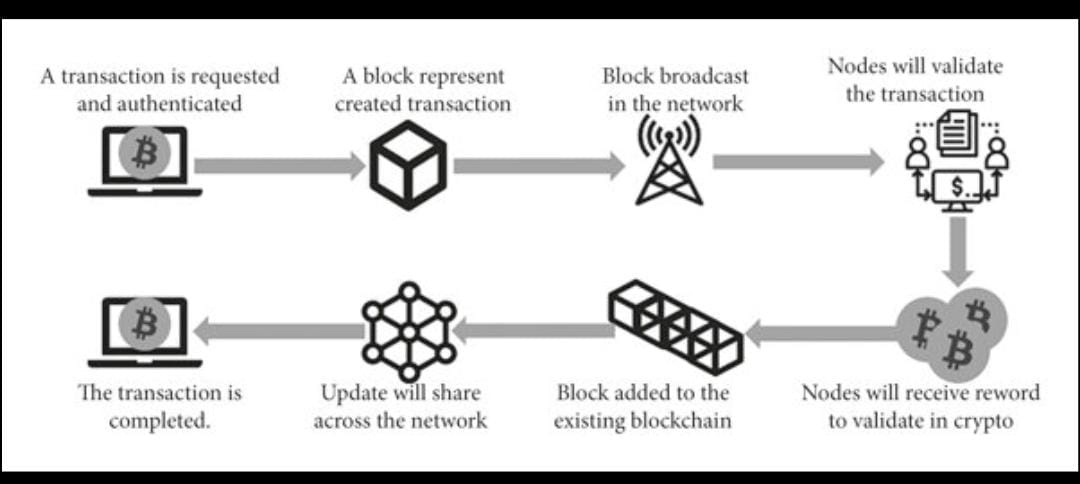
Sustainability also distinguishes infrastructure-focused foundations from narrative-driven projects. Many ecosystems experience rapid initial growth fueled by emissions and marketing cycles, followed by stagnation when incentives taper. A coordination-oriented model prioritizes structural resilience. By aligning governance transparency, roadmap clarity, and ecosystem support mechanisms, Fabric positions itself toward long-term network stability rather than short-term expansion metrics.
Institutional capital entering Web3 increasingly evaluates operational maturity over speculative velocity. Compliance considerations, technical reliability, and governance clarity are critical variables. Fragmented ecosystems create ambiguity and risk, particularly for participants managing regulated or large-scale capital. Foundations that reduce systemic complexity and improve standardization become strategically relevant in such an environment. Fabric Foundation’s focus on ecosystem coherence aligns with these emerging evaluation criteria.
Another important dimension is interoperability. As modular blockchain architectures evolve, no single network operates in isolation. Applications interact across chains, data flows between ecosystems, and users expect seamless experiences. Coordination infrastructure becomes essential for managing these cross-network interactions. Fabric’s orientation toward ecosystem stitching rather than isolated competition suggests a recognition that long-term growth depends on interconnected scalability rather than siloed performance benchmarks.
Ultimately, Fabric Foundation’s thesis is grounded in structural logic. Blockchain scalability is not solely a function of throughput or transaction cost; it is a function of how efficiently participants coordinate across technical, economic, and governance layers. Reducing fragmentation enhances capital efficiency, strengthens developer productivity, and increases systemic resilience.
In a market often dominated by short-term narratives, infrastructure can appear less visible. Yet infrastructure is what compounds quietly. Projects that prioritize coordination efficiency may not generate immediate speculative attention, but they create conditions under which ecosystems can mature sustainably. Fabric Foundation positions itself within that strategic layer — not as the loudest signal in the market, but as part of the framework that enables decentralized networks to operate with greater structural integrity over time.