
The first time I noticed the problem, it did not look like a problem at all.
A robotics developer had deployed a warehouse sorting robot connected to a distributed control system. The machine performed perfectly in testing. Sensors fed data into its navigation model, the model produced actions, and the robot executed them with impressive precision. But when the same system was connected to a broader network of machines, something subtle changed. The robot still worked, but no one could clearly verify why it made specific decisions.
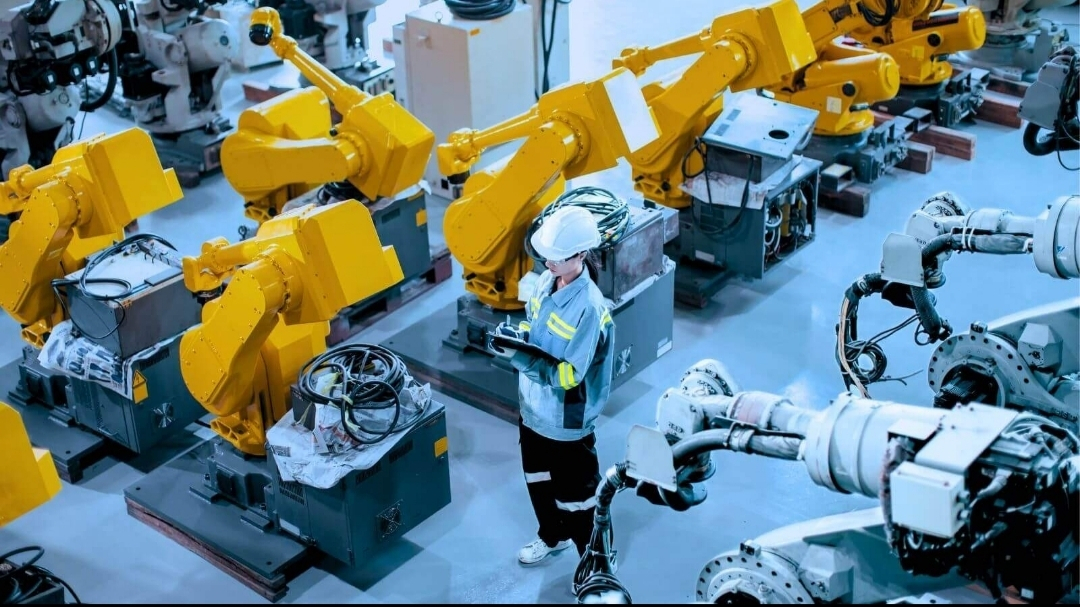
The logs showed outputs, but the reasoning process inside the AI model remained opaque. The robot could move a crate from one shelf to another, but if something went wrong a collision, a misplacement, a safety failure there was no shared system that could prove whether the decision was correct, faulty, or manipulated.
That moment revealed a quiet infrastructure problem that most robotics discussions ignore. Modern machines are becoming autonomous, yet the systems coordinating them are not designed for verification.
This is the pressure point Fabric Protocol attempts to address.
The challenge sits between two competing forces. On one side, robots and AI systems require rapid decision making. Latency must remain low or the machines become unusable. On the other side, autonomous machines operating in real environments require accountability. If a machine interacts with humans or physical systems, its decisions must be provable, traceable, and auditable.

Speed and verification rarely coexist comfortably.
Most robotics systems resolve this tension by sacrificing verification. Decisions are executed locally and logged afterward. If something breaks, engineers analyze the logs and attempt to reconstruct what happened.
Fabric Protocol approaches the problem from a different angle. Instead of treating verification as an afterthought, the system treats it as a foundational infrastructure layer.
From an architectural perspective, Fabric is not merely a blockchain applied to robotics. It behaves more like a coordination layer designed specifically for machine intelligence.
The protocol organizes three critical components that autonomous machines depend on: data, computation, and governance. These components are coordinated through a public ledger, but the ledger itself is only one part of the system. Around it exists a modular network where robots, AI agents, and developers interact through verifiable computing processes.

What makes this architecture interesting is the way it treats machines as native participants in the network. Robots are not simply devices connected to a backend server. They function as agents capable of submitting tasks, executing computation, and verifying results through cryptographic proofs.
Inside the system, tasks generated by robots or AI agents are routed into execution layers where computation occurs. Validators or verifying nodes confirm that the computation followed defined rules. Instead of trusting that a machine’s output is correct, the system requires proof that the output was produced according to verifiable instructions.
This design changes the trust model of robotics systems. The reliability of a machine is no longer dependent solely on the integrity of its internal software. Instead, the network itself becomes a verification environment where decisions can be audited.
But this architecture also introduces new failure modes.
Developers often assume that simply connecting a robot to a decentralized network automatically improves security. In practice, the opposite can occur if the integration is careless. Robots operating in real time cannot afford heavy verification delays, and pushing too much computation through verification layers can create latency that disrupts machine behavior.
Another common mistake is treating the network as a universal source of truth for sensor data. Sensors in the physical world are noisy and imperfect. If inaccurate data is submitted into a verification system, the network may faithfully verify incorrect inputs. Verification cannot fix flawed observation.
This tension reveals something important about how real users interact with systems like Fabric.
Robotics developers rarely design for perfect conditions. Machines operate in warehouses, hospitals, factories, and public spaces where environments are unpredictable. Systems that assume clean data and predictable behavior will struggle in practice.
Fabric’s architecture appears to acknowledge this reality. The protocol does not attempt to place every robotic decision directly on-chain. Instead, it separates execution from verification. Robots perform local actions quickly, while the network verifies critical computational steps that require accountability.

This layered structure mirrors patterns emerging across AI infrastructure more broadly. As intelligent systems become more capable, the challenge is no longer simply generating outputs. The real challenge is proving that those outputs can be trusted.
Fabric Protocol reflects a deeper shift happening at the intersection of robotics and decentralized systems. We are moving from a world where machines simply act to a world where machines must also prove.
This shift has implications far beyond robotics. Autonomous vehicles, industrial AI systems, and digital agents will eventually operate within complex environments where accountability cannot rely on private logs or centralized control.
Verification will become infrastructure.
For developers integrating Fabric, the most important insight is architectural discipline. Robots should continue making immediate decisions locally, but critical computational steps model execution, training updates, coordination logic should pass through verifiable layers where the network can confirm integrity.
When used correctly, the protocol becomes less like a blockchain and more like a shared audit system for machine intelligence.
In the long run, the question Fabric raises is not about robotics at all.
It is about trust.
As machines become more capable, humans will increasingly depend on decisions made by systems they cannot directly observe. In that world, trust cannot rely on belief or authority. It must rely on proof.
And proof, once embedded into infrastructure, quietly changes everything.