

Most robots we see today are designed for a specific purpose. A machine might sort items, inspect equipment or perform a repeated task in a controlled environment. These systems are efficient at what they are built for, but they rarely change once deployed.
If the task changes, the robot usually needs a major software update or a completely new design.
This is why many robotics systems feel powerful but limited at the same time.
The concept behind ROBO1, explored through the Fabric Protocol and supported by the Fabric Foundation, introduces a different way of thinking about robotics.
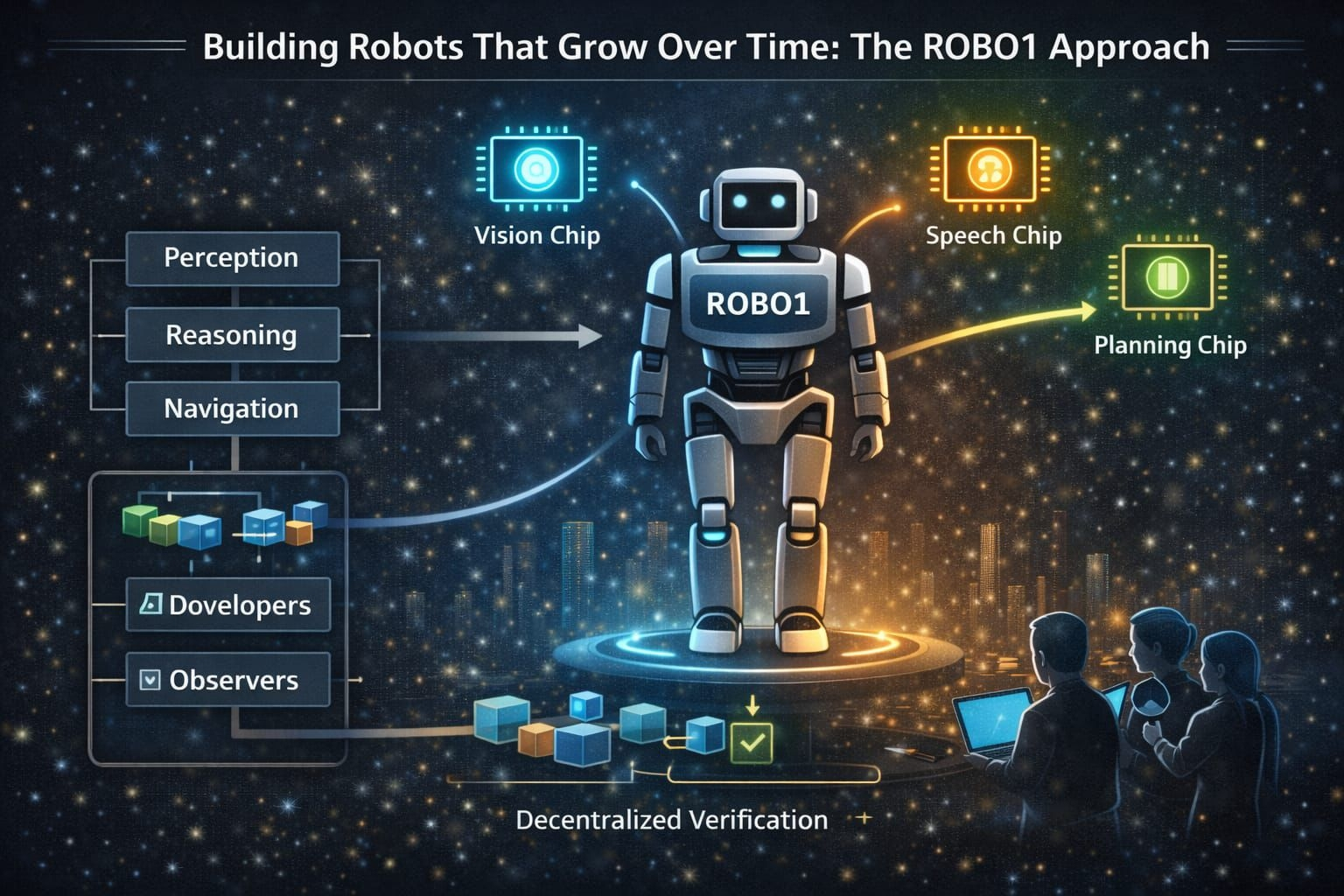
Instead of building robots that remain static after deployment, the goal is to create machines that can grow and evolve over time.
At the center of this idea is a modular approach to robot intelligence.
Rather than relying on one large system that controls everything, ROBO1 uses an AI-first cognition stack composed of many specialized modules. Each module focuses on a particular function, such as perception, reasoning or navigation.
These capabilities can be introduced through components known as skill chips.
Skill chips act like individual packages of ability. A new chip might allow the robot to understand a new environment, perform a different task or interact with humans in new ways.
Instead of rebuilding the entire machine, new capabilities can simply be added to the system.
This structure allows robots to adapt more easily as technology evolves.
But the architecture goes further than modular intelligence. Fabric coordinates computation, ownership and governance through a public protocol supported by distributed ledgers.
This creates an environment where development does not remain inside one organization. Contributors can introduce improvements and the system can track and verify how capabilities are added and used.
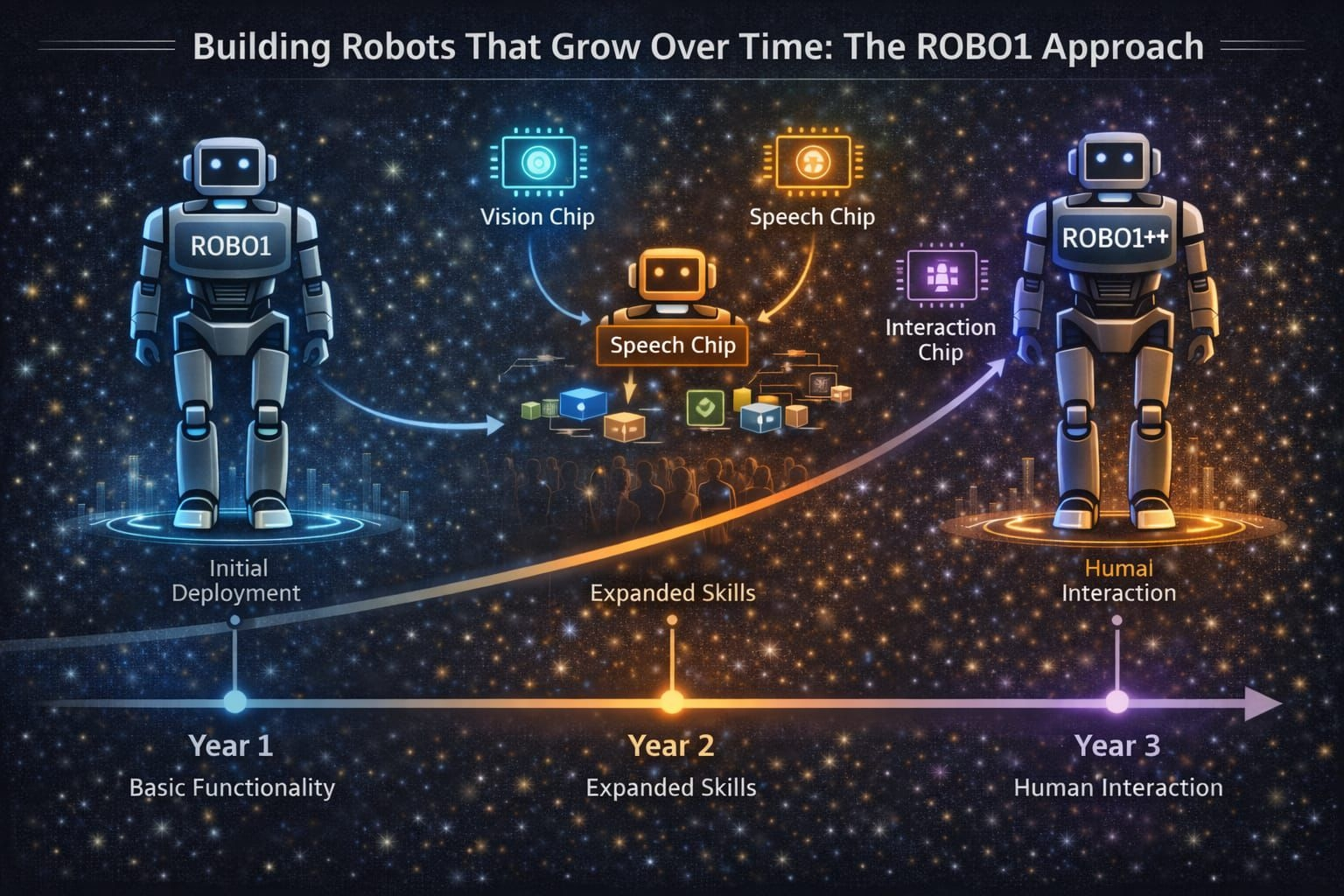
In this way, robots become part of an evolving ecosystem rather than isolated machines.
The vision behind ROBO1 suggests that the future of robotics may not depend only on stronger hardware or better algorithms.
It may depend on building machines that can continuously grow through open infrastructure and shared development.
#RFKJr.RunningforUSPresidentin2028


