

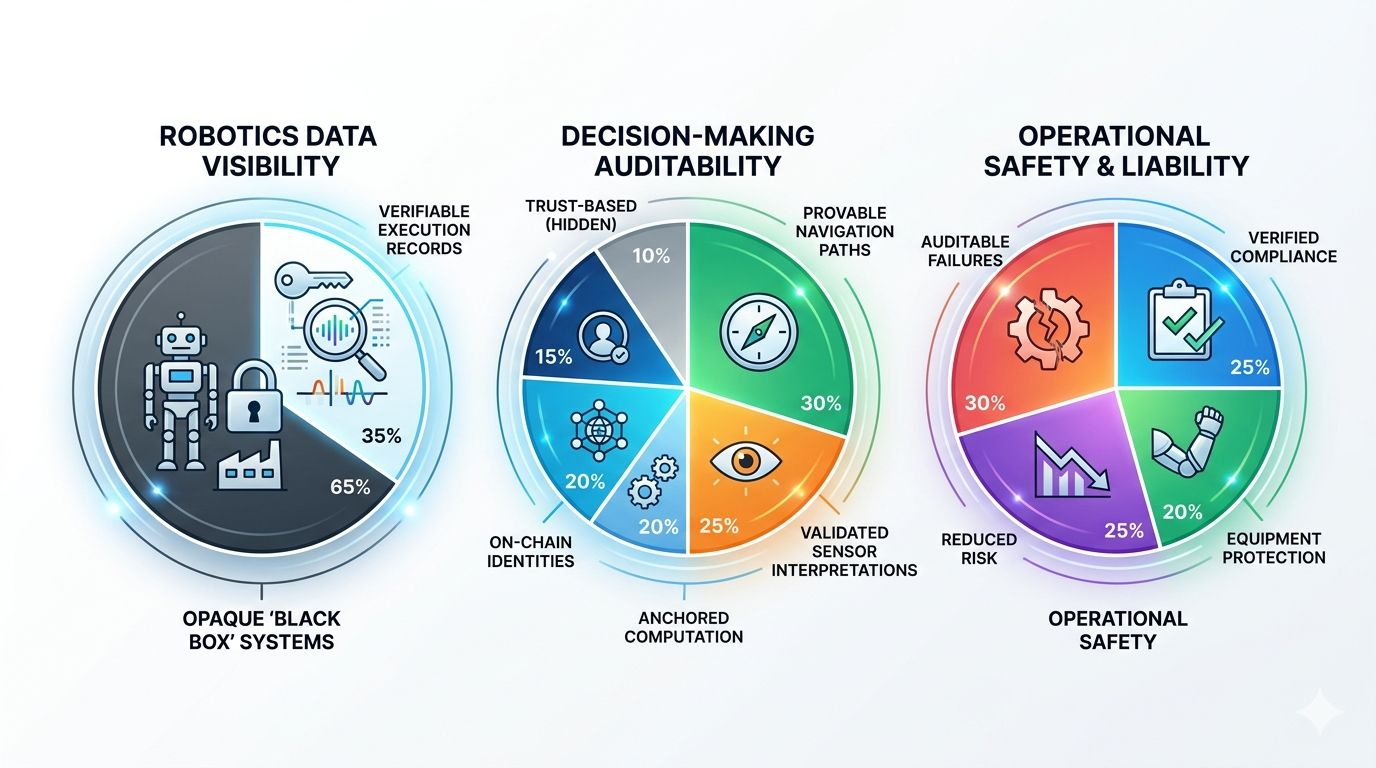
I have spent enough time around robotics systems to know that the biggest issue in the industry isn’t sensors, AI models, or even hardware reliability. It’s trust. We’re deploying autonomous machines everywhere UGVs in warehouses, robotic arms on factory floors, inspection drones crawling through infrastructure but the decision layer behind those machines is still locked inside corporate black boxes. The robots collect enormous streams of data from LiDAR arrays, stereo cameras, IMUs, and edge AI processors. Yet if something goes wrong, we usually can’t verify what the machine actually saw or how it made its decision.
That’s the uncomfortable reality. We’ve built incredibly capable machines, but the systems governing them are still opaque. In my view, that’s not just a technical gap it’s a safety problem waiting to scale.
I have seen logistics environments where dozens of autonomous mobile robots move inventory around the clock. Everything looks smooth on the surface. But when you start asking deeper questions how navigation decisions are logged, how sensor data is validated, how failures are audited you quickly hit a wall. Most platforms simply say, trust the system. For a technology operating in physical environments where mistakes can damage equipment or harm people, that’s not a great answer.
This is where Fabric Protocol caught my attention. Not because it’s another robotics platform. We already have plenty of those. What Fabric seems to be pushing is something more fundamental verifiable infrastructure for machines.
Instead of treating robots like isolated automation tools, the protocol treats them as participants in a network where actions can be proven. A robot’s navigation path, its sensor interpretations, even parts of its computation pipeline can be anchored into verifiable execution records tied to on-chain identities. That might sound abstract at first, but the implication is simple. Machines stop being mysterious black boxes and start becoming accountable systems.
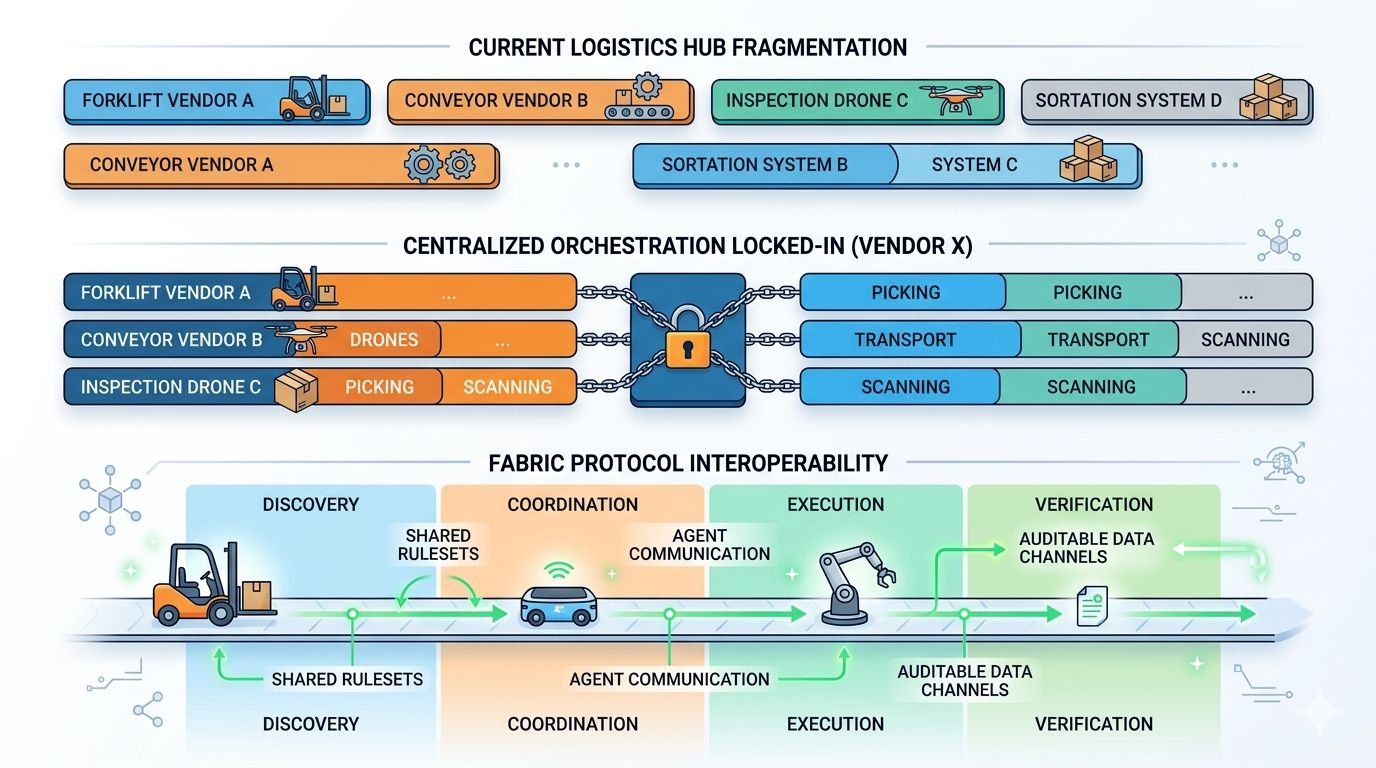
But here’s the real kicker. The robotics industry isn’t just opaque it’s fragmented. Walk into any modern logistics hub and you’ll find a patchwork of systems. Autonomous forklifts from one vendor. Conveyor automation from another. Vision-based inspection drones running on completely different software stacks. Getting them to coordinate often requires centralized orchestration software that locks the entire facility into a single vendor’s ecosystem.
I have seen how messy that gets.
Fabric’s idea of an agent-native coordination layer is an attempt to break that pattern. Instead of every robot being trapped inside proprietary control systems, machines could interact through shared protocol rules and verifiable data channels. Different robots. Different manufacturers. Same coordination layer. If that works the way it’s supposed to, it changes the dynamics of automation completely.
And this leads us to the part most robotics discussions conveniently avoid governance.
Autonomous machines are moving out of labs and factories into infrastructure, logistics networks, and eventually public environments. When that happens, the rules that govern machine behavior start to matter a lot. Right now those rules are quietly written by a handful of corporations that control the platforms.

Personally, I think that’s a fragile foundation for the future of robotics.
Fabric’s open network model supported by the Fabric Foundation looks like an attempt to push back against that. Protocol rules, operational standards, and system upgrades evolve through open participation rather than closed vendor ecosystems. It’s less about ideology and more about resilience. When infrastructure is open, the system becomes harder to monopolize and easier to audit.
And honestly, that’s the direction robotics probably needs to move.
Because the scale we’re heading toward is massive. Warehouses, manufacturing lines, ports, energy infrastructure machines are going to operate across all of it. Continuously. Autonomously. Generating and acting on data faster than humans ever could.
The real challenge isn’t building smarter robots anymore. We’re already doing that.
The challenge is building an infrastructure layer that makes those machines verifiable, accountable, and interoperable. Without that, we’re just stacking more automation on top of opaque systems and hoping nothing breaks.
Fabric feels less like another robotics project and more like a quiet rebellion against the black-box model that’s dominated tech for the last decade.
And in my view, robotics desperately needs that rebellion.
