
Fabric Protocol is one of those networks that behaves differently on the chart long before most people understand why. When you watch markets closely every day, you start noticing patterns that don’t come from hype cycles or social media narratives. They come from structure. Fabric sits in that category. The price of $ROBO tends to move in bursts followed by strangely quiet periods where liquidity feels thinner than expected, almost as if the market itself hasn’t decided how to price the idea yet. That’s usually a sign the protocol underneath is doing something structurally different.
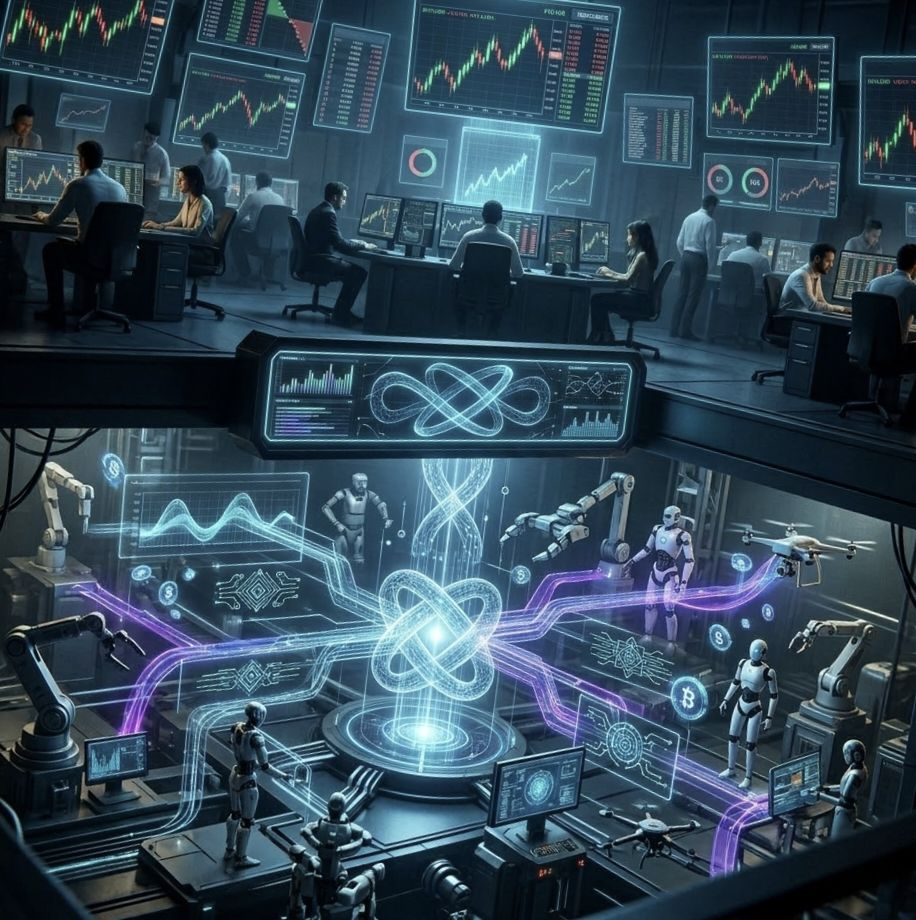
Most traders approach robotics protocols the same way they approach AI tokens: they assume the story is about intelligence. But when you actually look at Fabric Foundation’s design, the real focus is coordination. The network isn’t just trying to build smarter machines; it’s trying to build a system where machines can prove what they’ve done. That difference sounds subtle until you think about what markets price. Traders can speculate on intelligence all day, but verification changes how systems interact economically. When computation, decisions, and actions can be verified on a public ledger, the behavior of machines stops being opaque.
You can see hints of this design choice in how people misunderstand the token. Early buyers often expect $ROBO to behave like a classic infrastructure coin — steady growth, clear narrative alignment, predictable liquidity expansion. Instead, what happens is uneven participation. Interest spikes when the robotics narrative gets attention, then fades when people realize the protocol isn’t about flashy robot demos. It’s about verifiable computation and agent coordination. Those are slower narratives. They take time to translate into visible economic activity.
From a market structure perspective, this creates a strange environment for traders. Liquidity clusters appear around narrative cycles rather than around usage milestones. You’ll see this when volume rises quickly after a robotics headline, then collapses when speculators realize the real work of the protocol happens at the infrastructure layer. That disconnect between narrative attention and protocol development often produces temporary mispricing. Traders are reacting to stories while the protocol is quietly solving a coordination problem most people haven’t recognized yet.
The underlying architecture matters here. Fabric Protocol uses a public ledger to coordinate data, computation, and governance between autonomous systems. That means robots or AI agents operating within the network can have their actions verified. In theory, this creates a foundation where autonomous machines don’t just operate independently but interact within shared rules that can be enforced cryptographically. From a systems perspective, that’s far more ambitious than simply building robotic applications. It’s closer to creating a regulatory environment for machine behavior.
Markets struggle to price things like that because the payoff curve is long. You don’t get immediate speculation loops the way you do with consumer-facing protocols. Instead, value accumulates quietly if adoption begins to happen. Traders watching order books can sometimes sense this uncertainty. Liquidity providers hesitate to commit large depth because the timing of demand isn’t obvious. That’s why the chart often looks calmer than the narrative suggests.
Another interesting dynamic shows up when you compare token activity with broader AI market cycles. During periods when AI tokens run aggressively, $ROBO doesn’t always follow the same pattern. It participates, but usually with less explosive behavior. That’s partly because Fabric’s design sits closer to infrastructure than application hype. Infrastructure projects tend to lag narratives at first. They only catch up once the market realizes the applications depend on them.
There’s also a trade-off embedded in the protocol design that traders eventually notice. Building verifiable computing systems introduces complexity. That complexity slows down adoption compared to simpler AI or robotics platforms. Developers have to integrate with the ledger, coordinate computation, and ensure verification layers work properly. From a technology standpoint that’s necessary, but from a market standpoint it delays visible traction. Traders who expect quick ecosystem explosions often misread that slowdown as weakness.
Yet the same complexity can become a long-term advantage. When networks attempt to coordinate autonomous machines without verifiable infrastructure, trust problems emerge quickly. Systems interact unpredictably, and accountability disappears. Fabric’s approach tries to solve that before the ecosystem scales. If it works, the protocol becomes less like a robotics platform and more like a governance layer for machine activity.
What makes this particularly interesting for traders is how slowly that realization spreads. Most people scanning token lists categorize $ROBO as another robotics narrative asset. They don’t look at how the protocol actually structures coordination. Because of that, price discovery tends to lag understanding. The market moves on sentiment cycles while the deeper architectural implications remain underpriced.
Watching the order flow over time, you begin to see the difference between speculative interest and structural conviction. Speculative interest arrives suddenly and leaves just as quickly. Structural conviction builds slowly through quieter accumulation phases when attention moves elsewhere. Fabric has shown signs of both. The question traders eventually confront is whether the network’s coordination model becomes essential infrastructure or remains an experimental layer that never quite reaches critical mass.
The real way to read Fabric Protocol isn’t through robotics hype or AI narratives. It’s through the lens of verification. If autonomous systems are going to operate at scale, someone has to build the framework where their actions can be trusted, audited, and coordinated. Markets don’t always recognize those layers early because they’re invisible compared to flashy applications.
That’s why $ROBO often looks confusing on the chart. The token isn’t just tied to a product; it’s tied to a structural idea about how machines should interact. Until the market decides whether that idea is necessary or optional, the price will continue behaving like a question mark.
And sometimes the most interesting assets in crypto are exactly those — protocols the market hasn’t fully figured out yet.
@Fabric Foundation #ROBO $ROBO
