
One of the interesting tensions in blockchain is that the same transparency that makes the technology trustworthy can sometimes expose more information than people expect. Public ledgers allow anyone to verify transactions, which is part of their strength. But at the same time, this openness can make financial activity, wallet behavior, and other details visible in ways that many users might not fully anticipate.
This tension has slowly started shaping a broader conversation about privacy in decentralized systems.
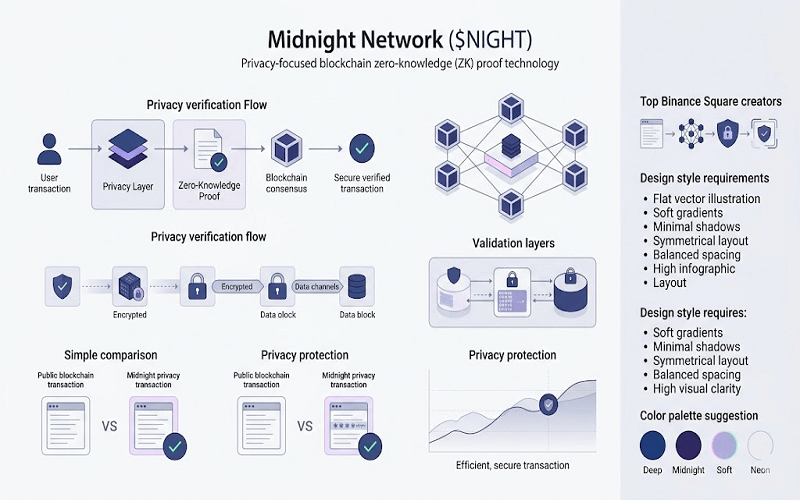
Projects like @MidnightNetwork are part of that conversation. Instead of rejecting transparency entirely, the idea behind Midnight Network is to explore how blockchains can keep their decentralized structure while offering stronger control over what information becomes public. It’s not an attempt to hide everything, but rather to give users more flexibility about what data is revealed.
The project approaches this problem using zero-knowledge proof technology. In simple terms, zero-knowledge proofs allow a system to confirm that something is true without revealing the underlying data itself. A transaction can be verified, for example, without exposing every detail about the participants or the amounts involved.
That concept sounds abstract at first, but it has practical implications.
If applied carefully, zero-knowledge systems could allow for confidential transactions, where validation happens publicly while sensitive data remains private. The same idea can extend to private smart contracts, where contract logic executes on-chain without broadcasting every piece of information connected to it.
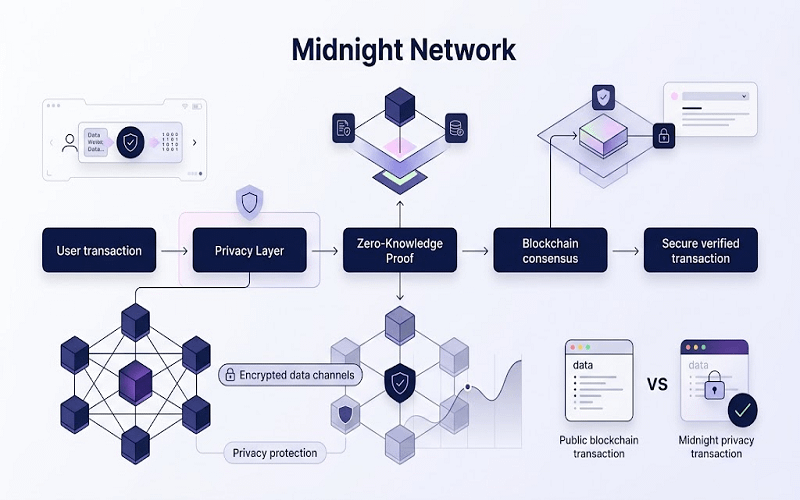
This is the space where Midnight is experimenting.
Instead of treating privacy as an add-on, the network appears to be exploring privacy as part of the base infrastructure. In that sense, Midnight is less about hiding activity and more about protecting data ownership in decentralized environments.
Accounts discussing the project, including the official profile at
https://www.binance.com/en/square/profile/midnightnetwork, often frame it as an attempt to build privacy tools that can still function within open blockchain ecosystems.
Within that ecosystem, the token $NIGHT naturally becomes part of how participants interact with the network and its infrastructure. Like many blockchain projects, the token sits alongside the technology as a way to coordinate activity across the system.
Of course, privacy-focused blockchain infrastructure is still developing. Zero-knowledge technology is powerful but technically complex, and projects working in this area face the usual challenges of early Web3 development—building tools, attracting developers, and distinguishing themselves in a growing field of privacy solutions.
Competition in this area is also increasing as more people recognize the limits of fully transparent systems.
That’s partly why conversations around projects connected to #night tend to revolve less around short-term trends and more around longer-term questions about how decentralized networks should handle information in the first place.
In the end, the real question might not be whether blockchains should be transparent or private, but how they can responsibly balance both as the technology continues to mature.
